

In this episode of Pushing Up Lilies, I continue the heartbreaking case of 7-year-old Athena Strand. This is Part Two of a story that is as heavy as it is important. As we move forward, I walk through what happened after Athena’s disappearance, the investigation, the critical moments that unfolded, and the pieces that began to come together in a case that gripped so many people. This part of the story brings more clarity, but it also brings a deeper understanding of just how quickly lives can change forever. I approach this episode with the same care and intention, honoring Athena, respecting her family, and being mindful of the weight this story carries for listeners. From an investigative standpoint, I also share insight into how cases evolve once key information is uncovered, how law enforcement works against time, how decisions are made in real-time, and how those early hours can shape everything that follows. But even as more details emerge…I want to keep the focus where it belongs. On Athena. On her life, her light, and the love that surrounds her. This episode continues discussions of child abduction and violence. Please take care of yourself while listening, and step away if you need to. EPISODE TRANSCRIPT: 00:06 Welcome to Pushing Up Lilies. I’m your host, Julie Mattson. Pushing Up Lilies is a weekly true crime podcast with spine-tingling, unusual, and terrifyingly true stories from my perspective as a forensic death investigator and a sexual assault nurse examiner. 00:24 Do I have some stories for you? Are you ready? Hey guys, Julie here with Pushing Up Lilies. We’re back for part two of the story of Athena Strand. It’s one week closer to Chrome-Con. I’m so excited. I am getting ready to start shipping my stuff. 00:46 I decided we’re going to fly instead of drive. Obviously, I can’t get it all in my suitcases. So, I’m going to have tons of pens and stickers and the special bloodbath soaps made just for us by Soaping Up Life here in Crumb. 01:07 She’s amazing. All of her soaps are handmade, hand-poured, and they smell delicious. This is lavender and lemongrass, and you’re going to love it. And then also I’m going to have the hoodies and the T-shirts and the canvas bags and our special poker chips. 01:25 And these are clay poker chips. So, they’re heavy. They’re great keepsakes. And I think I decided I’m going to go around to all the podcasters and collect their pins. That’s kind of something I think that I can put in my office. 01:38 It’s going to be super cool to collect. It’s just going to be fun. I have never been even as a spectator. So, I’m excited to see what it’s all about. And maybe next year I can get on Creator’s Row. I’ve applied for about three years and haven’t been able to get on, but they swear there’s no rhyme or reason that they choose podcasters, not based on how long they’ve been podcasting, but just kind of randomly. 02:07 So, I don’t know how that works. Evidently, there is no secret, but we’ll just cross our fingers for next year. I’m super excited. So, I can’t wait to go again at Caesar’s Palace, May 29th through 31st. 02:22 If you don’t have a ticket, you should go online and get it now and meet me there. So, this week again, we’re going to talk about Athena Strand. And as we know, this case is still unwinding. I do also want to cover the days in court and what has taken place during the courtroom testimony. 02:45 Again, I think when we left off, we were talking a little bit about autopsy findings and how critical that information is for prosecutors. It definitely supports the charges and clarifies the timeline and helps juries to really understand the physical reality of the crime that was committed. 03:06 Medical testimony often becomes one of the most influential elements in a trial. That’s because when the pathologist gets on the stand, they can actually describe the injuries and explain the possible cause. 03:23 News of Athena’s death spread very quickly, and the community of Paradise responded obviously with shock and sorrow. There have been a lot of vigils held to honor her memory and families gathering to support one another. 03:38 And of course, the schools have offered counseling services for the students and the staff there. But the case also received national attention because media outlets reported on the investigation and the arrest and also on the impact on the community. 03:55 Conversations about child safety and the screening of delivery drivers and community awareness emerged across the country. Public attention can bring support and pressure. Families often receive messages of sympathy, but of course they also face scrutiny. 04:18 And so, investigators have to balance transparency with the need to protect the integrity of the case. Now, following this investigation, prosecutors charged Tanner Horner with capital murder and aggravated kidnapping. 04:34 And these charges reflected the severity of the crime and the circumstances surrounding Athena’s death. Capital murder – let’s talk a little bit about that. It’s one of the most serious charges in the criminal justice system. 04:49 It carries the possibility of life imprisonment without parole or the death penalty. Now, the case moved through the legal process, including hearings and evidence review and preparation for trial. Prosecutors gathered all the information and documentation, witness testimony, forensic findings, all the things. 05:12 Defense attorneys examined the evidence and prepared their arguments. And then from a forensic perspective, the transition from investigation to courtroom is a very important phase. Evidence has to be organized and presented clearly because every detail from photographs to laboratory reports has to withstand legal scrutiny. 05:36 Now, as the months turned into years after Athena’s death, the legal process moved forward, seemed slow, but it was deliberate. That pace can be frustrating for
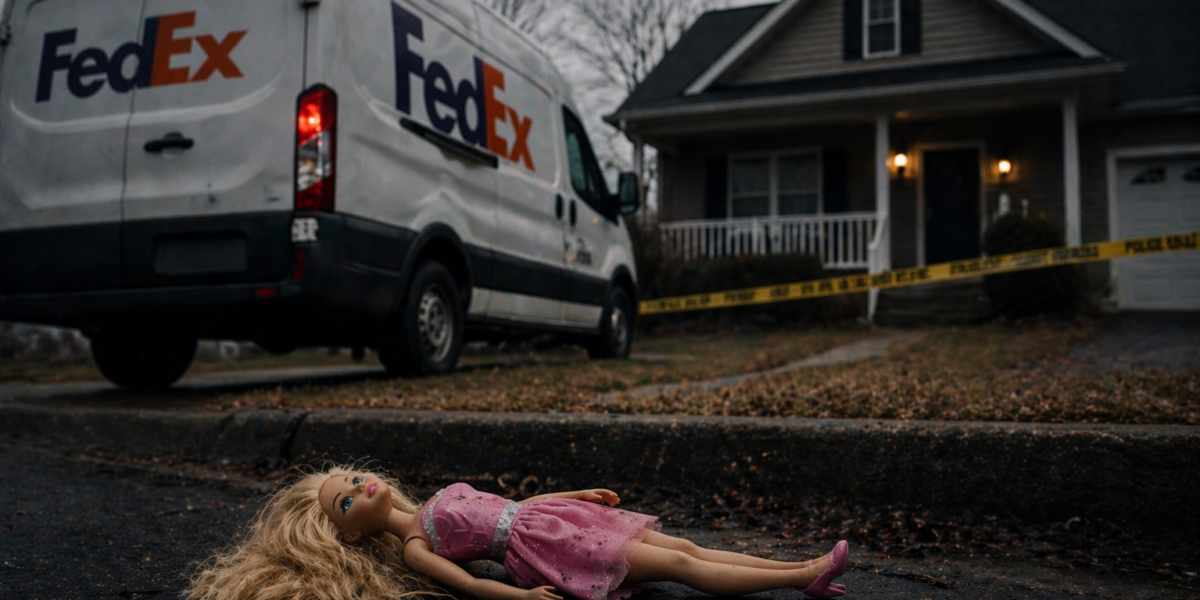
Inside the Crime that Shook a Community -Part One
In this episode of Pushing Up Lilies, I’m covering a case that is incredibly difficult to talk about, the kidnapping and murder of 7-year-old Athena Strand, and the man responsible, Tanner Lynn Horner. This is one of those stories that stays with you. Athena was just a child, full of life, curiosity, and innocence, and her disappearance quickly turned into something far more devastating than anyone could have imagined. What makes this case even more unsettling is how ordinary the circumstances seemed at first… and how quickly everything changed. As I walk through the timeline of what happened, I do so with great care, for Athena, for her family, and for anyone listening who may find this story especially heavy. This episode is not about sensationalizing tragedy. It’s about acknowledging it, understanding it, and honoring a life that should have had so much more time. From an investigative perspective, I also touch on how cases like this unfold, how quickly information moves, how critical those first hours are, and the realities behind scenes that most people never see. But at the center of this episode is not the perpetrator.It’s Athena. Her story matters. Her life matters. This episode contains discussion of child abduction and violence, and I encourage you to take care of yourself while listening. EPISODE TRANSCRIPT: 00:06 Welcome to Pushing Up Lilies. I’m your host, Julie Mattson. Pushing Up Lilies is a weekly true crime podcast with spine-tingling, unusual, and terrifyingly true stories from my perspective as a forensic death investigator and a sexual assault nurse examiner. 00:24 Do I have some stories for you? Are you ready? Hey guys, welcome to another episode of Pushing Up Lilies. This is your host, Julie Mattson. I still can’t get over how much fun I had last week at Beyond the Crime. 00:41 And I am really looking forward to CrimeCon. I have so much new merchandise that y’all are going to love. And so, if you get a chance, I’m an exhibitor. Stop by and visit with me and get your pushing up lilies poker chip. 00:57 I want to talk this week about a case that is here in Texas. I know that y’all have heard about it. It’s been all over the news. It’s been on Court TV, and it’s definitely been talked about here because it’s literally right down the road from me. 01:13 I want to start this episode by being completely honest with you. I was not planning to cover this story. In my work as a forensic nurse death investigator, I encounter many cases. A lot of them are widely known and others never make the headlines. 01:31 But over time, you kind of learn to be a little selective about which stories you share publicly, especially when they involve children. Because those cases stay with you in a different way. They’re a lot heavier, they’re harder to talk about, and they require a level of care and respect that really goes beyond ordinary storytelling. 01:54 The reality is that this trial is being broadcast live on court TV, and I know that many people are following this case very closely. Conversations about Athena Strand are happening everywhere, online, in workplaces, in homes, and across the country. 02:13 And when a case involving a child reaches this level of public attention, it really becomes important to discuss the facts very clearly, responsibly, and with professional context. And that’s why I made the decision to cover this story. 02:30 As a forensic nurse death investigator, my role in real life is to examine deaths that occur under suspicious, sudden, or violent circumstances. And so, I’ve worked very closely with law enforcement and prosecutors. 02:48 My job is to document what happened and maybe collect evidence and help determine the cause and manner of death. And it’s very detailed and it’s also very emotional. And it’s work that requires a lot of objectivity and compassion and precision. 03:07 And so, when I talk about this case today, I’m not speaking as a sensational storyteller. I’m speaking as a professional who understands how investigations unfold and how evidence is actually gathered and how the justice system evaluates what happened. 03:26 And more importantly, I’m speaking as someone who understands the impact that cases have on families and communities. So, this episode is going to walk through the full story of Athena Strand, who she was, what happened on November 30th, 2022, how investigators responded, and what jurors are now considering as they decide the sentence for this man who pleaded guilty to her murder. 03:55 Everything discussed here is based on reported facts from news coverage and court proceedings. So, my goal is actually to provide clarity, context, and understanding while also honoring the life of a child whose future was taken far too soon. 04:13 So, before we talk about crime scenes and investigations or courtrooms, we talk a little bit about Athena, because every case begins with a person and not just a headline. Athena was only seven. So many of us can relate. 04:29 We’ve got kids or grandkids her age. She was a first grader. She lived in Paradise, Texas, which is a very small rural community northwest of Fort Worth. And people who knew her described her as energetic, curious, and talkative. 04:47 She loved animals very much. She loved school. She loved learning. And like many kids her age, she had big dreams and a very vivid imagination. She was at a stage in life filled with discovery, reading new books and building friendships and looking forward to the holidays. 05:07 And in late November of 2022, when this was all happening, Christmas was approaching. Now, for children, Christmas carries a special kind of excitement. Now, if you’re like me, it carries an excitement for me, and I’m 58. 05:21 But it represents magic and anticipation and possibility. Athena was no different. Her stepmother had ordered a Christmas present
Julie Mattson: LIVE From Beyond The Crime 2026
In this episode of Pushing Up Lilies, I’m coming to you live from Beyond the Crime 2026 at the Isleta Casino and Resort! And instead of focusing on just one case, I’m sharing something a little more personal… and a lot more unpredictable. I take you through my journey from the emergency room to becoming a forensic death investigator, and how my perspective on death, trauma, and investigation completely transformed along the way. This career wasn’t something I ever imagined for myself, especially as someone who once feared death so deeply, but it became one of the most defining parts of my life. From there, I share some of the cases that have stayed with me over the years, the strange, the shocking, the heartbreaking, and yes… even the ones that make you shake your head and say, there’s no way that actually happened. Because in this field, no two scenes are ever the same. We’re talking about everything from unexpected discoveries and bizarre death scenes to the realities of working with families on the worst day of their lives. I also open up about the emotional weight of this work, the importance of mental health, and how I learned to balance compassion with professionalism in situations most people never experience. This episode is raw, real, and at times unbelievable, but it’s also a look behind the curtain at what death investigation truly looks like, beyond what you see on TV. And if you’ve ever wondered what it’s really like to do this job…this is one you won’t forget. * Listener discretion is advised. EPISODE TRANSCRIPT: 00:06 Welcome to Pushing Up Lilies. I’m your host, Julie Mattson. Pushing Up Lilies is a weekly true crime podcast with spine-tingling, unusual, and terrifyingly true stories from my perspective as a forensic death investigator and a sexual assault nurse examiner. 00:24 Do I have some stories for you? Are you ready? Hey, this is Julie with Pushing Up Lilies again here for another episode. I’m happy to be LIVE, here at the Isleta Casino and Resort, and we’re at Beyond the Crime. 00:43 So, this is really exciting. And I thought instead of like telling one specific story, I would kind of share a little bit about my career and then tell some stories that kind of stand out because some of them are strange, really strange. 00:57 So, if you told me, though, years ago that I was going to be around death, I would have said there’s absolutely no way. I was terrified of death when I was a kid. I was afraid of dying. Every day I thought that might be the last day I saw my parents. 01:09 So, it was really weird. Like I obsessed about it. So, it was really crazy that I ended up in this career field. I worked in the ER for a long time. I was a brand new nurse. And of course, I wanted to fix everything and help everybody get better and stabilize them. 01:24 And so, when someone died, I felt like a failure. I would go home and kind of feel defeated. Like, what did we do wrong? What could we have done different? It was just heavy, you know, just a heavy feeling. 01:37 I always felt like we’d done something wrong, even when I knew we did everything right. So it was, it was a weird guilt feeling. But I learned fast in the ER. It’s very fast, unpredictable. And we never knew what we were going to get. 01:50 Saw a lot of trauma, did a lot of CPR. And we still had to be calm, which was learned. Because at first, you just want to panic because everything’s going fast and people are hurting and screaming and crying and pushing their call bell. 02:06 And it’s just, you start to get frantic, but you can’t ever show it. So, we always had to stay calm, but it really built confidence and resilience in me and exposed me to a lot of situations that people never see. 02:20 CPR was always hard, especially when it was someone I knew. Many times, in a small town, you end up doing CPR on, I did CPR on my doctor. Like, yeah, he coded comes in, you know, and it was like, oh my God. 02:33 And he did not make it. And again, you just feel because I knew his family. I knew his dad. I knew his kids. But that silence is really heavy and is really hard for me when they gave up the fight. We had to give up the fight. 02:49 But I always saw people in their worst day, and I saw trauma and fear and illness and a lot of resilience. But I had to stay focused, and I found myself asking questions like beyond treatment. So that’s when I realized maybe I would be a good investigator, you know, like I want to be nosy, but we always want to ask questions that are inappropriate. 03:13 And so, when I got a job as a death investigator, it was my job. So, I could be nosy and I was getting paid for it. So, it was kind of cool. But I remember the first time I saw a death investigator come into the ER when we lost a patient. 03:26 And I think it was a hanging. He’s 80 years old now. So, he’s still alive. But I asked him, what can I do to get your job? And a lot of people ask me that now. And he’s like, go to all the trainings you can. 03:38 You don’t have to pay a million dollars but get a certificate that says you learned and keep it behind your resume and just keep building it. When people see your desire to learn and the fact that you’ve educated yourself, they will know that you’re serious about it and take you
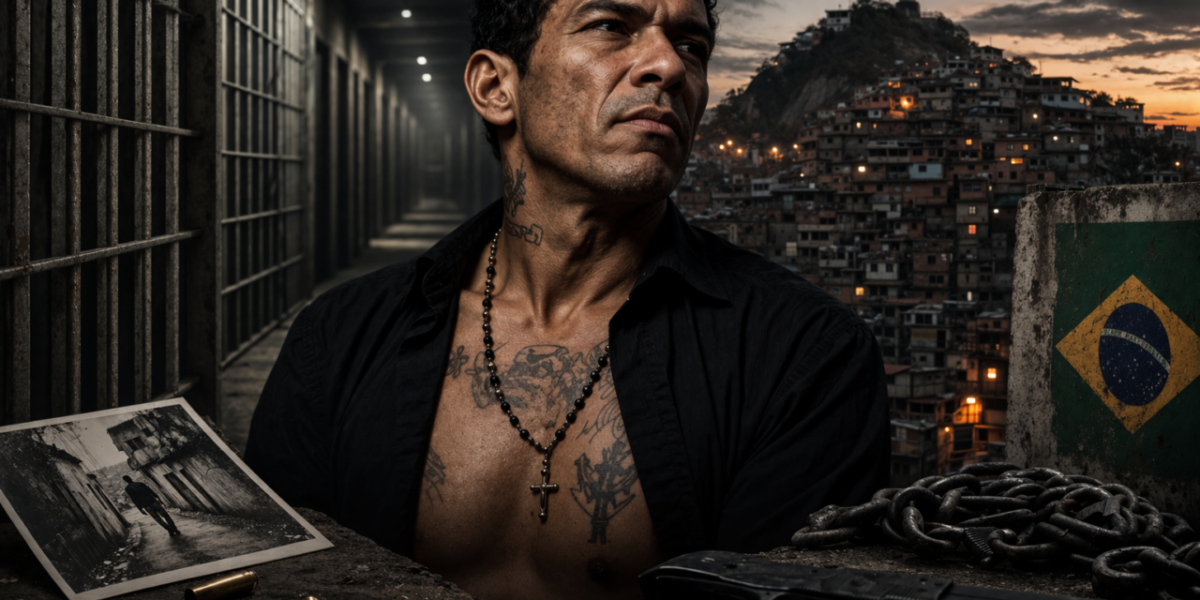
Pedro Rodrigues Filho: The Man Who Killed Killers
Hey y’all, it’s Julie Mattson, and in this episode of Pushing Up Lilies, I’m taking you into one of the most complex and controversial cases I’ve ever explored, the story of Pedro Rodrigues Filho, also known as the Brazilian “Dexter”. This is not your typical serial killer case. Pedro didn’t just target innocent victims, he claimed to hunt criminals. Murderers. People he believed deserved to die. Over the course of his life, he confessed to dozens of killings, many of them carried out inside prison walls. And somehow, instead of fading into obscurity, he later reemerged as a public figure, sharing his story openly, even building a following online. But here’s the question that sits at the center of this case… Was he a vigilante delivering his own version of justice?Or simply a serial killer rewriting his narrative? In this episode, I walk through his early life, the violence that shaped him, and the psychology behind someone who blurs the line between revenge and murder. As a forensic death investigator, I also look at what cases like this reveal about motive, trauma, and the dangerous territory between justice and personal vengeance. Because when someone decides who deserves to live or die…we have to ask, where does that end? This episode contains discussions of violence, homicide, and moral ambiguity. * Listener discretion is advised. EPISODE TRANSCRIPT: 00:06 Welcome to Pushing Up Lilies. I’m your host, Julie Mattson. Pushing Up Lilies is a weekly true crime podcast with spine-tingling, unusual, and terrifyingly true stories from my perspective as a forensic death investigator and a sexual assault nurse examiner. 00:24 Do I have some stories for you? Are you ready? Hey guys, welcome to another episode of Pushing Up Lilies. My name is Julie. Again, I’m your host and I have my voice back, I think almost completely. I may be still a little bit squeaky, but hopefully you can tolerate me this time. 00:46 Super excited leaving Friday to go to Beyond the Crime, which is a true crime convention. And it happens April 11th and 12th in Albuquerque. And it’s going to feature advocacy for families of the missing and also feature several podcasts. 01:07 While I’m there, I will be part of the podcast Mingle, which is the first night we’re there. We’re going to get to visit a lot of the guests and the guests will get to meet all the podcasters that are there. 01:19 And we’ll be selling our merch at the merch tables. And then on Sunday, I will be doing a live podcast on the podcasting stage. So super exciting. We’re really gung-ho on going. We decided to fly. So I’m going to have luggage full of merchandise and I just hope I can get it all in there. 01:39 It’ll be fun. We’re really excited to go. This is our first event. And so traveling out of state is a really big deal for us. And so I’m looking forward to this and hoping for many more. I’ll be attending CrimeCon at the end of May. 01:53 And that’s an even bigger event. But I’m excited about this. There will be attention brought to some missing persons cases and some of the keynote speakers. Super interesting. There’s over 30 guest speakers, including the mothers of Gabby Petito and also the death row defense attorney for John Wayne Gacy. 02:18 It’s going to be interesting. It is ticketed. I’m excited. So I’d like to see who’s going. And if you are going, I would love for you to stop by and visit. I want to talk to you this week about the man who killed killers. 02:34 And I don’t know if y’all have heard this story before, but a lot of killers become infamous because of the number of people that they kill. But a lot of them become notorious because of how cruel or unpredictable their crimes are. 02:49 Ever so often, a criminal will emerge whose story unsettles people in a different way. And that’s not because the violence is random, but because it seems, at least on the surface, intentional and targeted. 03:05 Now, Pedro Rodriguez Filho was one of those men. Over the course of his life, he would kill at least 70 people. Some stories state that there were at least 100, but possibly more than 100. And many of his victims were criminals themselves, drug dealers, rapists, murderers. 03:27 And because of that, some people saw him not as a monster, but as a vigilante. Others believed he was simply a killer who tried to justify his actions with some sort of twisted moral code. But either way, his story would eventually earn him a nickname that echoed around the world as the real-life Dexter. 03:50 And many of you know about Dexter. Dexter aired from 2006 to 2013. It was set in Miami, and it was centered on Dexter Morgan. And he was a forensic technician who specialized in bloodstain pattern analysis for a fictional police department. 04:08 He led a secret parallel life as a vigilante serial killer, and he hunted down murderers who really weren’t adequately punished by the justice system. So this is the real life Dexter. Now, what makes this story so disturbing is not really just the number of people that he killed, but the way violence kind of shaped every stage of his life. 04:35 From the moment he was born, brutality surrounded him. It was present in his home, in his relationships, in his decisions, and then ultimately in his identity. To understand how Pedro became one of the most feared criminals in Brazil, we have to really begin at the beginning. 04:55 Before his first crime and before his first arrest and even before his first breath.

Walter Carl Kenney: Twice a John Doe
Hey y’all, it’s Julie Mattson! In this episode of Pushing Up Lilies, I’m diving into one of the most unusual and haunting cases I’ve come across in years, a case where one man was identified not once… but twice. It starts with a simple walk along a Northern California beach, where a family discovers a human bone in the sand. What follows is a forensic journey that stretches back decades, connecting that bone to Walter Carl Kenney, a man who disappeared in 1999 and had already been identified years earlier from different remains. As a forensic death investigator, I walk you through the timeline, the science, and the unsettling reality of how this case unfolded. From partial remains and surgical hardware to the incredible role of forensic genealogy, this story challenges everything we think we know about identification, closure, and what it means to truly “solve” a case. But even with a name… we’re still left with the biggest question of all: what actually happened to him? This episode discusses partial remains, unresolved loss, and the complexities of cases shaped by time, distance, and the unpredictable power of the ocean. It’s not just a mystery, it’s a reminder that sometimes, even when we find answers, they come in fragments. * Listener discretion is advised. EPISODE TRANSCRIPT: 00:06 Welcome to Pushing Up Lilies. I’m your host, Julie Mattson. Pushing Up Lilies is a weekly true crime podcast with spine-tingling, unusual, and terrifyingly true stories from my perspective as a forensic death investigator and a sexual assault nurse examiner. 00:24 Do I have some stories for you? Are you ready? Hey guys, welcome to another episode of Pushing Up Lilies. I’m your host, Julie Matson, and I am starting to get my voice back, but I’m still super squeaky. 00:42 I had to go to the doctor today, and I have a sinus infection. It’s weird because everybody got this crap from me, and then they’re all well now, and I’m still hanging on to it. So it’s been about three weeks. 00:55 Now I’m on Augmentin and Flonase, and then I had to get some of my shots for school. So yeah, not a fun day for me. Trying to get over it. A little short of breath when I start coughing, but I feel fine. 01:10 It’s so weird. I think a big part of it is allergies. I can’t even tell you how excited I am to be going to be on the crumb next weekend. Or actually, it’s the 10th. So I’ve got 10 days. But I’m so excited. 01:27 I’m starting to get my merch in. I ordered t-shirts, hoodies. I have tumblers. I have tote bags. I have lapel pins. It’s so fun. And I’m just looking forward to meeting a lot of true crime lovers there. 01:46 So if you’re going, give me a shout out. Definitely like to meet you. I wanted to talk this week about a different kind of story, Twice a John Doe. And this is kind of one that I’m excited to kind of input what I have to offer as a forensic death investigator because there’s a lot of things with this story that are super interesting. 02:14 You’ll see what I’m talking about. But just imagine a family is walking a Northern California beach doing something that’s pretty ordinary, looking for shells, watching the surf, letting the afternoon move slow. 02:29 And then they see a long bone sticking out of the sand. It’s not driftwood. It’s not a branch. It’s a human bone. And attached to it is surgical hardware. The beach is Salmon Creek. It’s in Sonoma County, California. 02:47 And we’re looking at June 17th, 2022. At first, of course, there’s no name attached to this leg bone. It’s just another entry in the ledger of unidentified dead people. But nearly four years later, forensic genealogy actually gives that bone a name. 03:07 And that is Walter Carl Kenney. He is a former banker from Santa Rosa who had been missing since 1999. Now, what makes this story even stranger is that this is not the first time that Walter Kinney had become a John Doe. 03:25 It was the second. This is twice John Doe. The story of a man who disappeared, the ocean that returned him in pieces, and the forensic science that finally linked two mysteries into one. This is kind of interesting because, you know, in the death investigation world, when bones are found, no one really gets to make the decision as to whether or not they’re human except our forensic anthropologists at the medical examiner’s office. 03:59 Many times when I worked there, we would send them pictures of bones if bones were found, and the doctor had to determine whether or not they were human. And many times they weren’t, but many times they were. 04:14 And sometimes to the normal person like you and I, it wouldn’t be obvious. I mean, unless it’s like a skull or something like that. So today’s episode is about one of the strangest cold case identifications I’ve come across in years. 04:31 It has all the elements of a classic unsolved mystery. Missing man, dangerous coastline, partial remains, family distance, years of uncertainty, and eventual breakthrough through DNA. But what sets us apart is the shape of the timeline. 04:51 Because in this case, the man at the center of the story appears to be, to have been identified and then identified again. And it’s not because investigators made a mistake the first time. It’s not because there were two different men, but because the Pacific Ocean kept giving the case back. 05:12 Now, before I go further, this episode discusses partial human remains, disappearance, alcoholism, incarceration, estrangement,