

The Death of Barrett Walsh: Psychosis, a Murder Charge, and the Lindsay Clancy Connection
When I first started looking into the death of two-year-old Barrett Walsh, one detail immediately stood out to me: his mother, Corie Walsh, had reportedly been closely following the Lindsay Clancy trial and discussing it with friends just hours before Barrett was found. The similarities between the two cases are difficult to ignore. Both involve mothers accused of killing young children inside their family homes, suicide attempts, ligatures, and defenses centered around severe mental illness or psychosis. But similarities aren’t evidence, and they certainly don’t prove that one case inspired another. In this episode of Pushing Up Lilies, I want to slow the story down and look beyond that headline. Barrett, whose nickname was Bear, was found in the basement of his Illinois home with a ligature around his neck. A neighbor lowered him, began CPR, and called 911. Corie was found elsewhere in the home with injuries believed to be self-inflicted. Prosecutors have since charged her with three counts of first-degree murder, while her attorneys say she was experiencing a psychotic episode. From a death investigator’s perspective, though, those facts are only the beginning. I’m taking you through how I would approach a scene like this: documenting Barrett’s original position before lifesaving efforts changed the scene, examining the ligature and suspension point, preserving digital evidence, reconstructing the timeline, documenting medications and other evidence inside the home, and separating what witnesses actually observed from what they interpreted. We’ll also talk about Corie’s reported statements, the role mental illness may ultimately play in her defense, and why investigators have to be extremely careful about confirmation bias. If you walk into a case already believing it’s a Lindsay Clancy copycat, every message, search, and piece of evidence risks being interpreted through that assumption. There is still a great deal we don’t know. As of the recording of this episode, the final autopsy and toxicology findings had not been publicly released, the digital investigation was still incomplete, and Corie Walsh had not gone to trial. She remains presumed innocent unless and until the charges against her are proven in court. And through all of this, I don’t want Barrett to become a footnote in a story about his mother or the Lindsay Clancy comparison. He was two years old. His nickname was Bear. He deserved protection in life, and in death, he deserves an investigation built on facts, accuracy, and dignity. Content Note: This episode discusses the death of a child, ligature asphyxia, self-harm, alleged homicide, suicide, and severe mental illness. EPISODE TRANSCRIPT: 00:06 Welcome to Pushing Up Lilies. I’m your host, Julie Mattson. 00:10 Pushing Up Lilies is a weekly true crime podcast with spine-tingling, unusual, and terrifyingly true stories from my perspective as a forensic death investigator and a sexual assault nurse examiner. 00:24 Do I have some stories for you? Are you ready? Hey, guys, I’m coming to you from my closet again tonight. I wanna tell you a little bit about a case that I’ve been investigating. 00:39 It does allege violence against a child, self-harm, severe mental illness. So again, I like to say this at the very beginning, decide right now whether listening to this is right for you or not. 00:54 This is a case about Corie Walsh. Now, I don’t know if y’all have heard of Corie. It has a lot of clear parallels to Lindsay Clancy. 01:03 There’s also a lot of differences, so we’re gonna kinda talk about that. 01:06 Both of the cases, of course, involve mothers accused of killing a young child or children inside a family home, followed by a suicide attempt. 01:17 Now, mental illness also sits on the center of both of these defenses. Clancy’s attorney said that she was suffering from postpartum psychosis and that she was not criminally responsible. 01:29 Now, Walsh’s attorney, who’s Andrea Lyon is her name, she says that Walsh experienced just a psychotic episode. Now, the biggest difference is what authorities say about the mental states. 01:42 In Walsh’s case, prosecutors said that she told investigators that she believed that two-year-old Barrett was the devil and the Antichrist, and her attorney says that this supports the fact that she was psychotic at the time. 01:57 Now, Clancy’s case is a little bit different. 01:59 As we all know, the dispute at trial focused heavily on whether or not she understood the nature of her actions despite the fact that she had psychiatric illness. 02:11 We know that she had a psychiatric illness, but did she understand what she did? Did she know that it was wrong? Now, there’s another real unusual connection between these two cases. 02:23 Walsh had been, strangely enough, very invested in the Clancy trial, and so she had been texting friends about the Clancy trial hours before Barrett was found. 02:34 Now, that makes the comparison really interesting. 02:37 But still, it has not been established that Clancy’s case caused or inspired Barrett’s killing, and so Walsh’s defense strongly rejects the idea that this was a copycat crime. 02:53 Now, I know I talked about this last week. I’m always fearful when I watch a movie that somebody’s gonna be like, “Hey, that looks like a good idea. Let’s do that. Let’s try that. 03:02 I’ve always wanted to do it.” Most of the time, criminals have probably already got in their mind what they wanna do, but the stories always kinda scare me that somebody’s gonna jump out and be like, “I wanna try that.” Now, the outcomes of these two cases are also at very different stages. 03:18 As we all know, Clancy admitted to killing the three children. Her trial that recently ended in a mistrial because the jury failed to reach a unanimous verdict. 03:28 Now, Walsh has only recently been charged, so the allegations against her have not been tested. She’s not gone to trial. We don’t know what’s happening with this one. 03:37 Now, the really compelling question, was she copying

The Lindsay Clancy Trial: The Case Is Now in the Jury’s Hands
The Lindsay Clancy trial has reached one of its most important moments. The witnesses are finished, both sides have made their closing arguments, and now twelve jurors are left to decide what happened inside that home on January 24, 2023, and whether Lindsay was criminally responsible when Cora, Dawson, and Callan died. In this episode of Pushing Up Lilies, I’m taking you through the final stretch of testimony without making you sit through every minute of psychiatrists and psychologists arguing over diagnoses. Because, y’all, even I recorded that version, and decided I wasn’t going to do that to you. Instead, I want to focus on what actually matters. The Commonwealth brought in its final three experts, and while none of them suggested Lindsay was well or that her suicide attempt wasn’t real, they disagreed with the defense over two critical issues: whether she was psychotic and whether she still had the capacity to understand that what she was doing was wrong. We’ll also talk about the moment religion entered the testimony and the defense asked for a mistrial, what happened during closing arguments, and the five possible decisions the jury can reach for each child, including what a finding of lack of criminal responsibility would actually mean. As a forensic nurse death investigator, I keep coming back to something I learned working scenes: evidence doesn’t narrate itself. Phones, medications, searches, timelines, medical records and witness statements give us pieces. It’s investigators, experts, attorneys, and ultimately jurors, who have to determine what those pieces mean. And that is exactly where this case now sits. The jury doesn’t have to decide whether Lindsay suffered. Every expert agreed that she did. Their job is to determine whether the Commonwealth proved criminal responsibility beyond a reasonable doubt. And while we talk about mental illness, diagnoses, criminal responsibility and everything surrounding this trial, I don’t want us to lose sight of the reason that courtroom exists in the first place: Cora, Dawson, and Callan. I’ll continue following the case and bring you an update when something moves. Content Note: This episode discusses the deaths of children, strangulation, suicide, self-harm, and serious mental illness. EPISODE TRANSCRIPT: 00:06 Welcome to Pushing Up Lilies. I’m your host, Julie Mattson. 00:10 Pushing Up Lilies is a weekly true crime podcast with spine-tingling, unusual, and terrifyingly true stories from my perspective as a forensic death investigator and a sexual assault nurse examiner. 00:24 Do I have some stories for you? Are you ready? Hey, guys, it’s Julie with Pushing Up Lilies. I wanted to tell y’all that I actually went to the North Texas Overdose Awareness Day last night. 00:41 I love that people were getting together and discussing, like, their history of abuse and recovery, and it was just heartwarming to hear their stories. 00:56 And there were a lot of recovery facilities there to provide support. 01:02 And I had a couple of stickers made for the event, and these are gonna be available on my website, but this one is like a Narcan sticker, and this one is overdose awareness, and those are gonna be available on the website. 01:16 I have a ton of cute stickers, y’all. I’m super excited because I designed them all, and so most of them have our website on them. I only have one that have a QR code, but they’re just fun. 01:30 They’re fun. And then also, I don’t know if y’all have seen the tumblers. I’ve got so much stuff on my desk here. The tumblers. So, these super cute Pushing Up Lilies tumblers. 01:41 I believe they’re 16 ounce and lots of fun. Those are also available. 01:47 Now, these are in my store at the Mercantile in Crumb, but they’re also gonna be available at the Murder Mystery Dinner, which again is October 10th at Studio 141 in Crumb, catered by Our Blended Table, my friend Tiana. 02:05 And it’s gonna be fun. It’s gonna be exciting. It’s put on by murdermysterytexas.com. So, I’m looking forward to the actors being there. Very interactive, great meal. 02:18 You’ll get to visit with Jan Bonham. Again, she’s the mother of Kelly Ann Cox, who is the UNT student that was abducted back in 1997 and found murdered in the Houston area. 02:29 So, it’s gonna be a lot of fun. It’s gonna be a fun night, and we’ll get to talk with Jan, and she has been gracious enough to come down from Houston to be my guest. 02:41 And looking forward to that and looking forward to meeting her. Also, I will be at the Day of the Dead Festival, October 24th, as a vendor, and all my merch will be there. 02:52 I will have the comic books. I’ll have all the stickers. I’ll have the T-shirts, and I have a special giveaway sticker. I only have 200 of them, so get to my booth quick. 03:01 But it is a Day of the Dead sticker that I had designed, so I think y’all will love it. Also, I am attending as an exhibitor the Texas EMS Conference. 03:14 Gonna be in Fort Worth in the end of July, at the Omni Hotel. I think I missed out on getting a hotel room at the Omni, which is not good, but I’m not happy about that. But anyway, I’ll get one close by. 03:26 We’ll figure it out. But lots of events coming up. I’m just already looking forward to and looking for events for 2027, and I feel like 2027 we’re gonna blow up, y’all. 03:41 So, if you will share this podcast with your friends, I would so appreciate it. I am so stinking close to 100,000 downloads. 03:50 Like, it’s amazing, and never ever would I have thought that I would be there. I mean, it’s just, it’s nuts to me. I love it, though. I absolutely love it. Also, I’m just trying to think. 04:03 I feel like there’s something else
The Lindsay Clancy Trial: New Testimony, New Questions
The Lindsay Clancy trial continues, and with each new day of testimony, the questions surrounding this case seem to become even more complicated. In this episode of Pushing Up Lilies, I’m continuing my coverage as the defense presents its case and the jury hears from family members, mental health professionals, and forensic experts offering very different perspectives on Lindsay’s state of mind. As a forensic nurse death investigator, I’m especially interested in what happens when experts examine the same evidence and reach very different conclusions. What does the testimony tell us? What questions remain unanswered? And how will the jury ultimately determine where severe mental illness ends and criminal responsibility begins? I’ll also take you inside some of the more unexpected moments in the courtroom and share my perspective on what stood out to me as the trial moves closer to its conclusion. There is a lot to unpack in this week’s testimony, and some of it may change the way you look at this case. Through it all, I’ll continue to keep Cora, Dawson, and Callan at the center of this story as we follow the evidence and wait to see what comes next. Content Note: This episode discusses the deaths of children, suicide, self-harm, postpartum mental illness, and other subjects that may be difficult for some listeners. EPISODE TRANSCRIPT: 00:06 Welcome to Pushing Up Lilies. I’m your host, Julie Mattson. 00:10 Pushing Up Lilies is a weekly true crime podcast with spine-tingling, unusual, and terrifyingly true stories from my perspective as a forensic death investigator and a sexual assault nurse examiner. 00:24 Do I have some stories for you? Are you ready? Hey, guys. I’m coming to you today from my med spa, so it’s a little bit different. 00:36 I think I was here last week, and I feel like I’m here all the time. 00:41 So many of you know that I have a med spa in Denton, Texas, and I do a lot of behind-the-scenes work, and then I also work as an injector three days a week. 00:52 So, I’m typically here on Tuesday, Friday, Saturday, and then I… See my new little fella right here. He’s so cute. I need to name him. 01:01 But going to be adding more when I finish my nurse practitioner degree. School starts back in about three weeks, and I have a quick little four-day trip to Mexico planned between now and then. 01:12 So that ought to be fun. I need a trip where I don’t have to do homework. Seem like every time I travel, I’ve got homework to do, and it’s not very relaxing, as many of you who are in school know. 01:24 Anyway, I wanna cover a little bit about what has happened in the Lindsay Clancy murder trial since August seventeenth. 01:32 So, August seventeenth through August twenty-fourth, I’m speaking as a forensic nurse death investigator, and I followed every day of this case. 01:39 I haven’t been able to watch every minute of it, but I follow it the same way I review a scene or a medical chart: evidence first, clinical pattern second, and the human cost, especially the three children, always at the center. 01:56 So, my voice is not here to root for a verdict. 01:59 It’s here to lay out what the record actually shows so that anyone listening can understand where this trial stands and why it matters just beyond one courtroom. 02:11 Now, on August seventeenth, the prosecution rested, so that was after nearly seventy witnesses, and then the defense began. 02:21 What followed was five intense days of family testimony, competing forensic experts, a rejected TikTok witness, early jury dismissals, a mid-trial motion for a mistrial, and the clearest statements about yet what was happening inside Lindsay Clancy’s mind on January twenty-fourth of twenty-twenty-three. 02:44 Lindsay has not taken the stand. Closing arguments are expected as early as tomorrow. Now, the jury has not yet begun to deliberate. 02:55 Let’s walk a little bit through it carefully day by day, and we’re gonna go a little bit through, like, what each witness said and what happened. 03:05 So, on August seventeenth, the prosecution rested, and the defense opened with family members. 03:13 The Commonwealth’s final witness was digital forensics specialist Ian Wiffin of Cellebrite, and he actually detailed data from Lindsay’s iPhone and her Apple Watch. 03:25 Searches in the days before the killings for symptoms of postpartum psychosis, psychosis symptoms, and ketamine for suicidal ideation. 03:36 Apple Maps queries for the restaurant and CVS on the afternoon of January twenty-fourth went over heart rate readings ending at fifty-seven beats per minute at around five twenty-three PM and stair climbing data around five thirty-three PM. 03:53 Now, the defense challenged the gaps in the data after those times and what could reliably be inferred from them. Now, with that, the prosecution rested. 04:05 Now, the defense began immediately as you would assume that it would, and a former coworker got on the stand and described Lindsay as kind, compassionate, very dedicated as a nurse, and a very devoted mother, again, who constantly sought parenting advice from her coworkers. 04:25 And then Lindsay’s sister came on, Allison Ozga, and she is a licensed social worker. 04:30 She testified that by December of twenty-twenty-two, Lindsay was reporting daily suicidal ideations, feeling numb and hopeless. 04:40 And after leaving McLean Hospital in early January, Lindsay told her that she was starting to feel a little better, so she was a little more optimistic. 04:50 Now, Lindsay’s mother, Paula Musgrove, testified through tears that she loved her grandchildren with all of her heart, and she described texts from Lindsay in the fall of twenty-twenty-two. 05:03 One of those texts said, “I’m really sick. Something’s wrong. I’m afraid to be alone.” And she recalled Lindsay saying that the medications were basically destroying her mind. 05:15 In December, she expressed thoughts of harming the children. And now these
The Lindsay Clancy Trial: Psychosis, Premeditation, or Both?
Last week, I took you through the devastating events of January 24, 2023, the night Lindsay Clancy’s three young children, Cora, Dawson, and Callan, were fatally harmed inside their family home in Duxbury, Massachusetts. This week, we move from the home to the courtroom. In The Lindsay Clancy Trial: Psychosis, Premeditation, or Both?, I take a closer look at one of the most complicated questions surrounding this case: What was happening in Lindsay Clancy’s mind when her children died? Lindsay’s mental health before the deaths has become a critical part of understanding the case. Her treatment, medications, reported symptoms, and concerns surrounding postpartum mental illness raise difficult questions about postpartum depression and postpartum psychosis, and about how severe psychiatric illness affects criminal responsibility. But there is another side to this case. The circumstances surrounding that night also raise questions about planning and awareness. Lindsay’s husband, Patrick, left the home to run errands. During the relatively short period he was gone, the lives of all three children were changed forever. So how does the legal system distinguish between an intentional, premeditated act and an act committed by someone experiencing profound psychosis? Can a person appear organized or purposeful while simultaneously experiencing a severe break from reality? And where does mental illness end and legal responsibility begin? As a nurse and former forensic death investigator, I’m particularly interested in the intersection between the medical evidence and the investigative evidence. A case like this cannot be understood through one piece of information alone. We have to look at the timeline, behavior, medical and psychiatric history, physical evidence, statements, expert opinions, and what investigators were able to establish. We also have to remember why this trial is happening. Three young children lost their lives. Whatever conclusions are ultimately reached about Lindsay’s mental state and criminal responsibility, Cora, Dawson, and Callan remain at the center of this case. In this episode, I explore the competing questions surrounding the Lindsay Clancy trial and the challenge of evaluating a case in which mental illness and evidence of apparent planning may exist alongside one another. Was this postpartum psychosis? Was it premeditation? Or is the truth more complicated than either explanation alone? Join me for Part Two of the Lindsay Clancy case on Pushing Up Lilies: The Lindsay Clancy Trial: Psychosis, Premeditation, or Both? EPISODE TRANSCRIPT: 00:06 Welcome to Pushing Up Lilies. I’m your host, Julie Mattson. 00:10 Pushing Up Lilies is a weekly true crime podcast with spine-tingling, unusual, and terrifyingly true stories from my perspective as a forensic death investigator and a sexual assault nurse examiner. 00:24 Do I have some stories for you. Are you ready? Hey, guys, welcome to another episode of Pushing Up Lilies. I’m your host, Julie. I’m recording today from my med spa. 00:40 I have to admit I love, love, love this microphone. I hope it sounds as good as it sounds in my headset. 00:48 But wanted to bring to your attention, and I know I may have mentioned it last week, but we are having our second annual Murder Mystery Dinner. 00:58 This year is gonna be on October 10th in Krum, Texas, at Studio 141, and we’re gonna have an amazing, immersive murder mystery dinner catered by Our Blended Table. 01:13 And if you haven’t had their food, let me just tell you, it’s amazing. 01:18 It’s gonna be very interactive, a great chance to meet people who love true crime, and also an opportunity to meet and speak with Ann Byrum. 01:30 Now, many of you may not know who Ann is, but Ann is the mother of Kelly Ann Cox, and Kelly was actually abducted in Denton back in 1997 from a gas station in- very near the Denton Police Department after a tour of the jail with her criminal justice class from UNT. 01:54 And Ann loves to remind us how important it is to kinda watch your back and always use the buddy system. This happened to Kelly Ann during the day. 02:09 I mean, it was daylight right in front of the police department with officers going in and out on a very busy road. 02:17 I’m so thankful and grateful that Ann has offered to come up from Houston and be my speaker, and so I’m very much looking forward to talking to her. 02:29 We’re gonna do an interview with her, and then we’re gonna open up the floor for questions. Now, I’m also going to have a booth at the Day of the Dead Festival. I’m not racing this year. 02:42 They went up a little bit on the cost, and I just decided that I would rather spend that money advocating, so I turned it around a little bit. 02:51 This year I’ll just have a merch booth, but we’re gonna have hoodies, we’ll have T-shirts, we’ll have pins, we’ll have plenty of stickers, and the comic book. 03:02 The comic book will be there, and I’ll be glad to sign those as well. 03:07 And we’ll also be at the Overdose Awareness event on the square in Denton, Texas, on August 31st, so that’s coming up right around the corner. 03:18 It’s so crazy to think that it’s already September or almost September. It makes me wanna go Christmas shopping. 03:24 It’s never too early, I think, to just go look around, see what you can find, and the Hobby Lobby already has their Christmas stuff out. 03:32 That kinda drives me crazy to think that really in July they started doing that. I don’t like it, because I like to just celebrate my seasons. 03:42 I wanna celebrate Thanksgiving without my Christmas tree up. So anyway, I don’t know if y’all feel the same way about it, but there’s my piece. 03:50 Wanna talk a little bit more about the Lindsay Clancy trial, and I know that many of you have been watching it, and I’m so upset that I haven’t been able to watch

Grand Haven: The Karolkiewicz Family
When an entire family is lost, it’s easy for the headlines to focus on the person responsible. In this episode, I wanted to do something different. I’m taking you to Grand Haven Township, Michigan, where Mandy Karolkiewicz and her six children lost their lives in one of the most heartbreaking family annihilation cases of the year. Before we talk about the investigation, I want to remember the people whose lives mattered most, the victims. Using my experience as a forensic death investigator, I’ll walk you through how investigators process a scene involving multiple homicide victims, how forensic evidence helps determine the sequence of events, and why details like wound analysis, fire patterns, and scene reconstruction are so important. We’ll also discuss the research surrounding family annihilation, the psychological and behavioral patterns often seen in these cases, and why recognizing risk factors may help save lives in the future. While we may never fully understand why these tragedies occur, we can learn from them, support those in crisis, and continue advocating for families before violence reaches a devastating conclusion. This episode is shared with deep respect for Mandy, her six children, and everyone whose lives were forever changed by this tragedy. * Listener Discretion Advised EPISODE TRANSCRIPT: 00:06 Welcome to Pushing Up Lilies. I’m your host, Julie Matson. Pushing Up Lilies is a weekly true crime podcast with spine-tingling, unusual, and terrifyingly true stories from my perspective as a forensic death investigator and a sexual assault nurse examiner. Do I have some stories for you? Are you ready? Hey, guys. Welcome back to another episode of Pushing Up Lilies. I have several guest host appearances this month and next month, and I haven’t really mentioned what shows they were gonna be on because I don’t know the air dates yet. But when I know a little bit more about when they’re gonna air, I’ll be sure and let y’all know. I will say that Pushing Up Lilies will be at the Denton Day of the Dead Festival this year. Again, we are not participating in the coffin races this year, but I went ahead and applied for a booth, so we will have merch there, and that’s October 24th, which is a Saturday. So, we’ll be there all day with special merchandise, and we will probably do some live interviews with some of the fans and do some videos for our YouTube channel. Also, we are in the process of planning our second annual Pushing Up Lilies murder mystery event, and we’re not 100% sure where it’s gonna be yet. It will be a weekend in October, obviously not the 24th ’cause we’ll be at the Day of the Dead Festival, but we’ve got a lot of exciting things coming up. We’ve got some specials we’re gonna run on the subscription box. I need to make sure that everything is up to date on the website for purchase because we do have some exciting new merch that I brought back from CrimeCon with me. I have already applied for Creators Row for CrimeCon 2027, which is in Orlando, Florida. It’s gonna be in September of next year, and I’ve already got my hotel, and it’s sold out. So, I’m really glad that I was able to get in on that because it’s so difficult when you’re traveling with merch and you have to be at an event, to have to Uber back and forth and stay at a different hotel. I’m sure that many of y’all have done that before, and it’s just difficult. It complicates things tremendously, and it’s not always easy to get a ride when you’re traveling, especially in places like Vegas and Orlando, and there’s just a lot of traffic, and it is heavily populated during the summer months. Hopefully, everything will go smoothly, and hopefully, y’all can all go ahead and secure your rooms at a nearby hotel so that you can gear up for CrimeCon 2027. This week, I wanna talk about a case in Michigan, and we kinda talked about the huge influx of murder-suicides last week. We see them all the time, even in a small town where I was, but it just seems like we’ve had a lot of cases lately, and there’s a lot of people going through a lot of things. I just want everybody to be nice to each other. I know it’s hard sometimes. Sometimes that’s the hardest part of life is smiling and just pretending everything’s okay but just be nice to other people. It can make a big difference in how their day goes. Sometimes when we’re traveling, I’ll go to Starbucks and buy even a $5 gift card, and I’ll give them to my flight attendants, just something to make someone’s day. 03:50 And so, I try to do one thing a day for somebody, even if it’s as simple as letting someone in front of me when they’re trying to get onto the road and there’s a lot of traffic or holding the door open for somebody. It doesn’t have to be a family of 12’s dinner. Just put it in your mind that you should do one nice thing for one person a day. And that’s my challenge for you. But I wanna talk about this Friday morning in late July when a call came in. There was a fire, a house on Riverside Trail in Grand Haven Township, Michigan, a quiet stretch of West Michigan near the eastern shore of Lake Michigan. And this was the kind of place where people raise big families. They’re comfortable leaving their garage doors open. Ottawa County sheriff’s deputies and fires crews rolled out, and when they got there, there were eight people dead. A mother, a father, and six children ages five to 15. Every single one of them had been shot in the head. And then someone had set the house on fire. Now, I’ve worked death scenes for a long time, and
When Murder Ends in Suicide: A Recent Wave of American Murder-Suicides
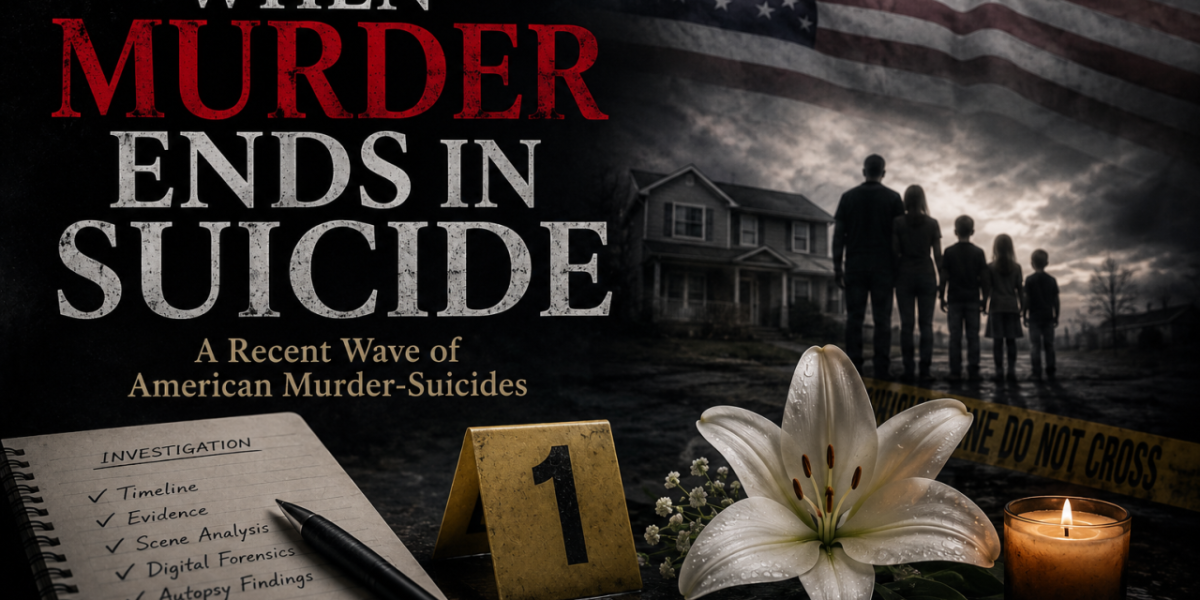
When a murder ends in suicide, investigators lose one of the most important pieces of the puzzle—the person who could explain why. In this episode, I take you inside several recent murder-suicide cases from across the United States, including tragedies involving entire families, intimate partners, and parents and children. From Michigan to Oklahoma, Delaware, and Florida, these heartbreaking cases remind us that every scene tells a story, but it’s the evidence that reveals what truly happened. As a forensic death investigator, I explain how investigators reconstruct these complex scenes by examining body position, injuries, blood evidence, trajectories, fire damage, digital evidence, timelines, and countless other details. When there is no suspect to interview, no trial, and often no suicide note, the investigation must rely on science, careful documentation, and the facts left behind. We’ll also discuss why protective orders don’t always prevent violence, why investigators avoid speculation during active cases, and why it’s important to distinguish between homicide and suicide when understanding these tragedies. Throughout the episode, I share the questions investigators ask, the evidence they search for, and why the answers aren’t always immediately clear. These cases are difficult to hear, but they also highlight the dedication of investigators, first responders, and forensic professionals who work tirelessly to uncover the truth for victims and their families. Join me as we explore the investigative process behind one of the most challenging types of death investigations, and the questions that often remain when murder ends in suicide. * Listener discretion is advised. EPISODE TRANSCRIPT: 00:06 Welcome to Pushing Up Lilies. I’m your host, Julie Mattson. 00:10 Pushing Up Lilies is a weekly true crime podcast with spine-tingling, unusual, and terrifyingly true stories from my perspective as a forensic death investigator and a sexual assault nurse examiner. 00:24 Do I have some stories for you? Are you ready? Hey, guys. Welcome back to another episode of Pushing Up Lilies. We are home this week and back from North Dakota. We had a great trip. Travel’s exhausting. 00:42 I don’t know if y’all feel the same way about it that I do. I’m always so excited to get there, but I’m also equally excited to get home. 00:50 Of course, I recorded the podcast from there and did homework from there, and so life didn’t really stop. 00:59 I’m really looking forward to three days from now when this semester’s over, and I can actually relax for about seven weeks before my next semester starts. 01:11 That gives me a little bit to look forward to. Maybe I can take a little trip to Fredericksburg or something to wine country during that time. That’d be kinda relaxing. I would love that. 01:22 Now, this week I planned on having Kelsey on from last week’s episode, and that is not happening just because our schedules are hard to coincide right now. 01:37 Working on having her within the next couple of weeks, but while I was gone, we had this wave of murder-suicides, and so I kinda wanted to talk a little bit about that this week instead of having Kelsey on and give her some time to get her bearings. 01:57 I know that case is relatively new, having just happened in June. 02:01 I don’t want to overwhelm her and bother her too much, so I did reach out to her, and we’ll try to get together in the next couple of weeks. 02:09 I’ve also been scheduling myself as guest host on a lot of other podcasts. 02:16 That has resulted in me hiring an executive assistant to actually help me set up all of my guest appearances and travel and that kind of stuff ’cause it gets hectic, and I don’t wanna forget something, and I always wanna be able to reach out to people, and that just keeps me on my toes a little bit more so that I can respond a little bit quicker. 02:39 Anyway, we’re gonna talk again about this recent wave of murder-suicides, and the truth is it happens every day, and not a lot of people know that. 02:51 I know that because I worked as a death investigator, but even in the small county that I worked in, there were a lot of them, and when I worked in Harris County, there were even more. 03:02 In Dallas County, there were even more. 03:05 So of course, the larger the area, the more frequently this happens, and because there’s been a wave recently, we’re hearing about it a lot in the news, but then also the recent case of the family and then also the influencers, those cases tend to make the news because family of eight and two TikTok influencers. 03:31 As social media has grown, so do the instances where we’re hearing of these more frequently. But I know we’ve all been following the news lately. 03:41 It’s very disturbing, and in a matter of weeks, we’ve seen families, husbands, wives, parents, children, and former partners become victims in cases that are described as murder-suicides. 03:55 It’s happened in Michigan, Oklahoma, Delaware, Florida, and other communities all across the country. 04:03 They’re all different people and different circumstances and different relationships, but they have the same basic ending, and that is someone decides another human being is gonna die, and then after committing the homicide, the person responsible dies by suicide. 04:22 And so tonight I wanna kinda talk you through these recent cases, but I wanna approach the episode a little bit differently because I’ve spent years investigating death, and I’ve walked into homes where someone dies unexpectedly and, of course, examined the bodies and talked to families during the worst moments of their lives. 04:45 One thing you learn quickly in death investigation is that the scene does not arrive with an explanation, so you basically have to build it. 04:54 You look at the body, you look at the environment, you look at the evidence, and of
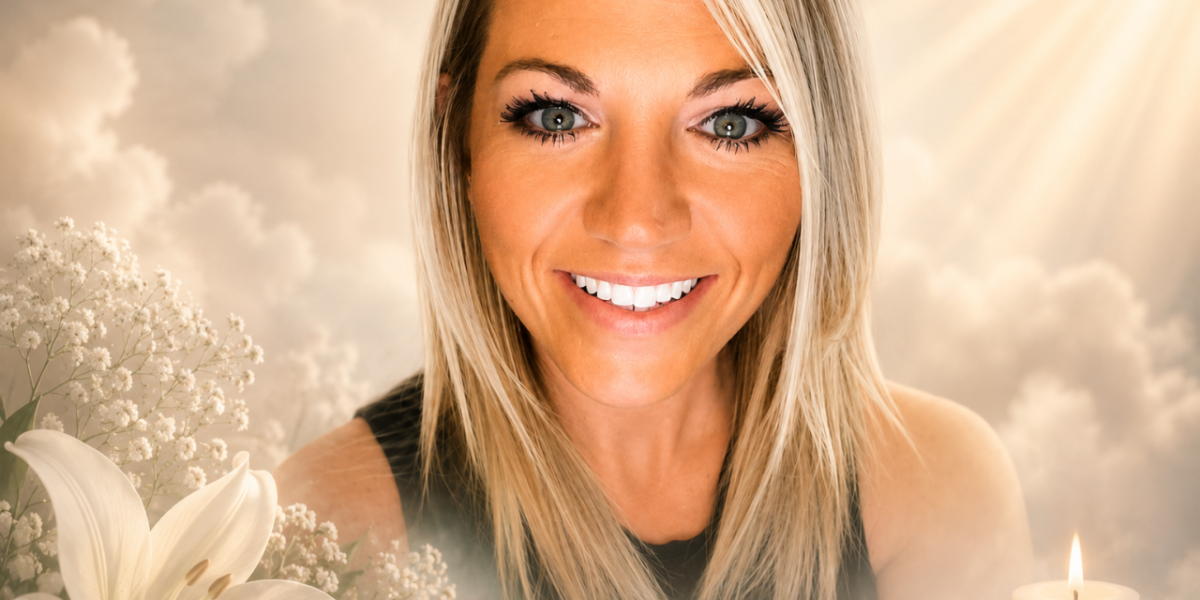
The Questions Left Behind: What Happened to Allie Hummel?
BONUS AUDIO: SHARED WITH PERMISSION FROM ALLIE’S FRIEND BONUS AUDIO: SHARED WITH PERMISSION FROM ALLIE’S FRIEND What happens when a young, healthy woman is found dead in her own home… and the questions begin long before the investigation has answers? This week on Pushing Up Lilies, I’m taking a closer look at the life and death of Alexandra “Allie” Hummel, a 36-year-old licensed nurse from Missouri whose unexpected death remains under investigation. Based on publicly available information, I walk through the timeline of events leading up to her death, including a documented domestic violence incident that occurred less than a year earlier and why that history is significant in any death investigation. From the 911 call to the pending toxicology results, I’ll explain what investigators look for when responding to an unexpected death in the home, how prior incidents become part of the investigative process, and why every piece of evidence matters. As a forensic death investigator, I also share my professional perspective on scene documentation, autopsy findings, toxicology testing, and the importance of remaining objective while allowing the facts to determine the outcome. Most importantly, this episode is about Allie, a dedicated nurse, mother, daughter, sister, and friend whose loved ones continue to seek answers. While this investigation is still ongoing, her story also shines a light on the realities of domestic violence, the challenges victims often face, and why support systems are so important. Next week, I’ll be joined by Allie’s close friend, Kelsey, who will share personal memories of Allie and offer additional insight into the woman behind the headlines. If you or someone you love is experiencing domestic violence, please know that help is available. You are not alone. EPISODE TRANSCRIPT: 00:06 Welcome to Pushing Up Lilies. I’m your host, Julie Mattson. Pushing Up Lilies is a weekly true crime podcast with spine-tingling, unusual, and terrifyingly true stories from my perspective as a forensic death investigator and a sexual assault nurse examiner. 00:24 Do I have some stories for you? Are you ready? Hey guys, welcome to another episode of Pushing Up Lilies. I’m coming to you this week from Deadwood, South Dakota. I don’t know how many of you have been here before, but it is such a beautiful countryside. 00:44 We flew into Rapid City yesterday and we’re here for a couple of days. Then we’re going to go visit my husband’s family farm in Rock Lake, North Dakota. And then we’re going to go to Minot and spend a day at the fair, I believe, before we go home. 01:03 So just needed a little opportunity to get away. School is still schooling. I guess next week is my last week of this semester. So, I’ll be taking my final exam, which I’m extremely nervous about for this clinical. 01:19 And I have one more clinical day, and I will have my 180 hours and 180 patients in for this semester. And then we’re going to do the same thing next semester, but next semester is going to be pediatrics and family medicine. 01:34 And then my last semester is the same. So, I will be doing those rotations in Louisville as well. So, I should be done in March, y’all. So, I’m just hoping that everything goes smoothly. School is hard when you’ve been out for 30 years. 01:52 It’s really hard to try to go back. And my memory’s not what it used to be. I think I’ve told you all that before. When you’re 58, you just don’t remember things like you should. And so, it’s more difficult, even if it’s something that’s instilled in your brain that you’ve been doing for 30 years. 02:07 But today we are dedicating a full episode to the life and death of Alexandra, also known as Allie Leanne Barton Hummel. She was a 36-year-old licensed nurse from New London, Missouri. And Allie was found unresponsive in her home on June 23rd of this year, 2026. 02:31 And her death remains under investigation. Now, again, as I’ve told y’all before, this is a fully factual account based on public records, news reports, court documents, family statements, statements from friends that I have spoken to, and official statements that have been made public since the middle of this month. 02:58 There is no speculation here beyond what’s reported. I’m just going to stick to the facts. But Allie’s story is one of a dedicated healthcare professional, a sister, a friend, and a mother, and a woman whose final chapter has left her loved ones in her community seeking answers. 03:18 This is a story very similar to ones that we hear every day and very similar to ones that I have worked in the death investigation field. Now, later in this episode, I’m going to give you some professional insights into the death investigation process in cases like this. 03:38 And I’m going to announce next week’s episode. That’s going to be an interview with Allie’s friend Kelsey, who will share her perspective and memories surrounding her friend’s life and passing. Now, Alexandra, or we’ll just call her Allie. 03:55 Allie Hummel was born on July 7th of 1989. So, she would have turned 37 just two weeks after her death. She grew up in Missouri area and pursued a career in nursing, and she became a licensed nurse in that state. 04:16 She is remembered by those who knew her as a caring individual with passion for helping others. Now, Allie worked as a nurse, and we all know this is a demanding profession that often involves long hours. 04:29 It’s a lot of stress, and it has a profound impact on patients’ lives, which is why we love it. But colleagues and friends who interacted with her professionally described her positively following her death. 04:43 She was very well loved. Now, she married Dr. Andrew Michael Hummel, who was an anesthesiologist, and he operated Northern Ozark Anesthesia Solutions, which is his own

A Mother’s Life Stolen: The Murder of Caroline Piña Cairo
In this episode of Pushing Up Lilies, I’m examining the heartbreaking murder of 32-year-old Caroline Piña Cairo, a mother of five whose life was taken in a brutal daylight attack that stunned the Del Rio, Texas community. When Caroline arrived at the hospital suffering from multiple stab wounds, medical teams fought to save her life. Despite their efforts, she later succumbed to her injuries. Three women were arrested and charged with her murder, but many questions surrounding the case remain unanswered as the investigation continues. As a forensic death investigator and former emergency room nurse, I walk through what happens in the critical moments after a stabbing victim arrives at the hospital, why injuries like these can be far more severe than they first appear, and how investigators begin reconstructing a violent crime through witness statements, surveillance footage, forensic evidence, and medical findings. I also discuss why it’s so important to separate verified facts from speculation while a case is still unfolding. But more than anything, I want to remember Caroline. She wasn’t simply the victim in a headline. She was a mother, a friend, and someone remembered for her generosity and the kindness she showed others, even during difficult times in her own life. Behind every investigation is a family whose world has been forever changed, and five children who will grow up without their mother. This episode contains discussion of homicide, stabbing violence, and death. Listener discretion is advised. EPISODE TRANSCRIPT:

Amy Steadman and the Mechanicville Family Deaths
In this episode of Pushing Up Lilies, I’m covering the heartbreaking case involving Amy Steadman and the tragic family deaths that shook the community of Mechanicville, New York. Cases involving multiple family members are among the most emotionally difficult for investigators, first responders, and the communities left searching for answers. As details emerged, investigators were faced with the complex task of piecing together what happened inside a home where several lives were lost, while loved ones struggled to make sense of an unimaginable tragedy. As a forensic death investigator, I discuss the investigative process behind cases like this, the importance of carefully documenting the scene, evaluating the evidence without assumptions, and understanding how investigators work to reconstruct the events that led to such devastating outcomes. I also explore the emotional toll these cases can have, not only on surviving family members, but on the professionals responsible for uncovering the truth. But beyond the investigation, I want to remember the people at the center of this story. Behind every report are individuals whose lives mattered, families forever changed, and a community left grieving. Every death investigation is about more than determining what happened, it’s about honoring those who can no longer speak for themselves and seeking answers with compassion, professionalism, and respect. This episode contains discussion of family violence, homicide, and death. Listener discretion is advised. EPISODE TRANSCRIPT: 00:06 Welcome to Pushing Up Lilies. I’m your host, Julie Mattson. Pushing Up Lilies is a weekly true crime podcast with spine-tingling, unusual, and terrifyingly true stories from my perspective as a forensic death investigator and a sexual assault nurse examiner. 00:24 Do I have some stories for you? Are you ready? Welcome to another episode of Pushing Up Lilies. I’m so happy that y’all joined us today. Still recovering from all the CrimeCon stuff. My items that I had there were boxed up and shipped back to me, and I just got them all back. 00:46 So, I’m trying to get them into my store at the Mercantile in Krum. Thank you for being patient with me. My plan was to try to do that today, but I ended up having to make a doctor’s appointment. So, it’s been kind of crazy. 00:58 Clinical tomorrow and then meds fall, med spa, and, you know, the routine. Trying to keep my head afloat while I’m finishing school. I’ve got one month left of this semester. So, I get a month and a half off and then I have two more small three-month semesters finished or left. 01:18 So hopefully it will go quickly. It seems like so far away, but I know that these days’ time flies super-fast. I want to make sure that y’all have a super safe 4th of July. I know at the medical examiner’s office, we would always frequently have drownings during the holidays when everyone’s at the lake and having their hold my beer and watch this moment. 01:41 So, keep a close eye on your friends. And my biggest thing is don’t always assume that your friends that can swim don’t still need to be watched because if they’re drinking or if they’re not super healthy, they could have a medical emergency in the water. 02:02 There are, in many cases, free life jackets available at the lakes. So, everyone in your boat should have one. There’s just a lot of ways to think ahead about how to be safe and prevent accidents and injuries and deaths. 02:19 Just kind of keep that in your head when you’re going to the lake or even when you’re just outside in the heat. Take water. Stay hydrated. We don’t want a bunch of heat strokes going on. Think about your health and the health of the others with you. 02:32 And that will help tremendously in preventing deaths and accidents and injuries. So, okay, that’s my spiel. Gonna get into this week’s episode. This week, I want to talk to you a little bit about the case regarding Amy Steadman, and this is the Mechanicville family deaths. 02:51 Now, this happened on June 23rd, so it wasn’t that long ago. This year, police in Mechanicville, New York responded to a wellness check at an apartment on Harris Avenue. Now, a neighbor had grown worried. 03:05 The family had not been seen, and the air around the apartment smelled wrong, and flies were gathering. And we’ve talked about this before when someone’s in their home, haven’t been seen in a while. They call the police for a welfare check, and it smells bad. 03:23 I mean, you’ve smelled an animal that has been decaying in the road or in the ditch, and it’s just not a pleasant smell. Those details actually matter in death investigation. Odor and flies, they tell you, obviously, that time has passed. 03:40 They tell you that something inside has changed, and they tell you that the body or bodies are no longer in an early stage of death, but they are decomposing. So, when officers actually entered Amy Steadman’s apartment, they found six people dead. 03:58 Amy Steadman was 64. Her daughter, Sarah Myers, was 44. Sarah’s daughter, Harper Harmon, was 13. Sarah’s son, Hudson Harmon, was 11. And Sarah’s 10-year-old twins were Gavin Harmon and Gracelyn Harmon. 04:17 So, all six were found inside Amy’s apartment. And even though Sarah and the children actually lived in a separate unit in the same apartment complex. Police later said that the deaths appeared criminal and evidence suggested intentional poisoning. 04:35 Investigators also said that one of the children had suffered fatal sharp force injuries. So, a handwritten note found inside the home strongly pointed towards Amy Stedman. According to the police, that’s just what they said. 04:51 Toxicology results and final medical examiner findings were still pending when these details were released. Today we’re talking about what police believe Amy Steadman did. So, we’re talking about the crime scene and the poisoning, sharp force injury,