
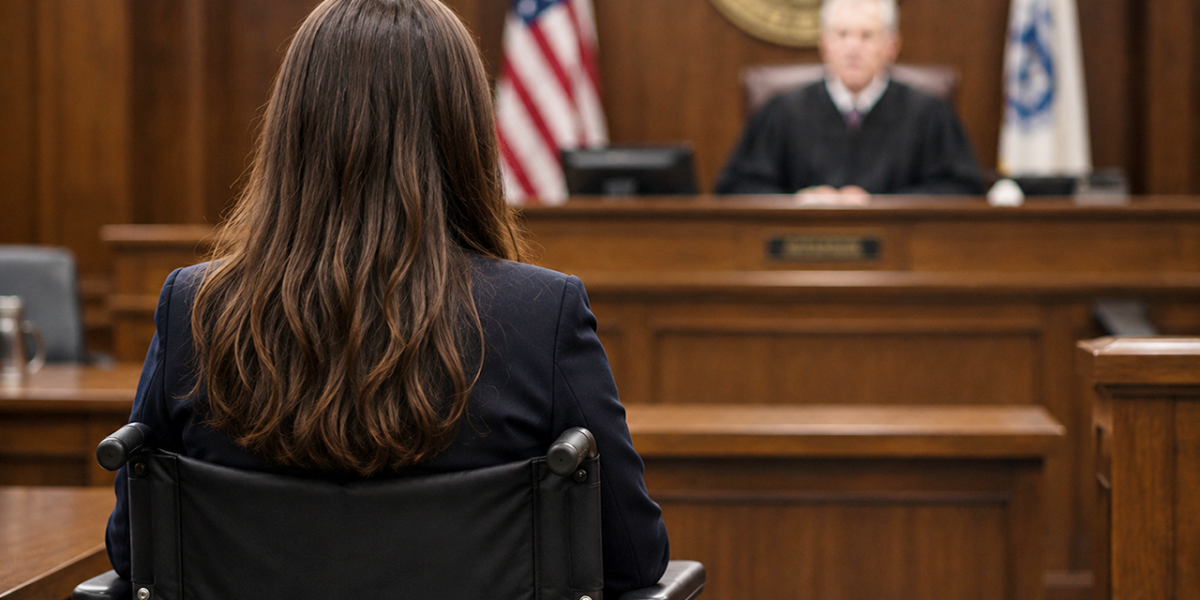
Last week, I took you through the devastating events of January 24, 2023, the night Lindsay Clancy’s three young children, Cora, Dawson, and Callan, were fatally harmed inside their family home in Duxbury, Massachusetts.
This week, we move from the home to the courtroom.
In The Lindsay Clancy Trial: Psychosis, Premeditation, or Both?, I take a closer look at one of the most complicated questions surrounding this case:
What was happening in Lindsay Clancy’s mind when her children died?
Lindsay’s mental health before the deaths has become a critical part of understanding the case. Her treatment, medications, reported symptoms, and concerns surrounding postpartum mental illness raise difficult questions about postpartum depression and postpartum psychosis, and about how severe psychiatric illness affects criminal responsibility.
But there is another side to this case.
The circumstances surrounding that night also raise questions about planning and awareness. Lindsay’s husband, Patrick, left the home to run errands. During the relatively short period he was gone, the lives of all three children were changed forever.
So how does the legal system distinguish between an intentional, premeditated act and an act committed by someone experiencing profound psychosis?
Can a person appear organized or purposeful while simultaneously experiencing a severe break from reality?
And where does mental illness end and legal responsibility begin?
As a nurse and former forensic death investigator, I’m particularly interested in the intersection between the medical evidence and the investigative evidence. A case like this cannot be understood through one piece of information alone. We have to look at the timeline, behavior, medical and psychiatric history, physical evidence, statements, expert opinions, and what investigators were able to establish.
We also have to remember why this trial is happening.
Three young children lost their lives.
Whatever conclusions are ultimately reached about Lindsay’s mental state and criminal responsibility, Cora, Dawson, and Callan remain at the center of this case.
In this episode, I explore the competing questions surrounding the Lindsay Clancy trial and the challenge of evaluating a case in which mental illness and evidence of apparent planning may exist alongside one another.
Was this postpartum psychosis?
Was it premeditation?
Or is the truth more complicated than either explanation alone?
Join me for Part Two of the Lindsay Clancy case on Pushing Up Lilies:
The Lindsay Clancy Trial: Psychosis, Premeditation, or Both?
EPISODE TRANSCRIPT:
00:06
Welcome to Pushing Up Lilies. I’m your host, Julie Mattson.
00:10
Pushing Up Lilies is a weekly true crime podcast with spine-tingling, unusual, and terrifyingly true stories from my perspective as a forensic death investigator and a sexual assault nurse examiner.
00:24
Do I have some stories for you. Are you ready? Hey, guys, welcome to another episode of Pushing Up Lilies. I’m your host, Julie. I’m recording today from my med spa.
00:40
I have to admit I love, love, love this microphone. I hope it sounds as good as it sounds in my headset.
00:48
But wanted to bring to your attention, and I know I may have mentioned it last week, but we are having our second annual Murder Mystery Dinner.
00:58
This year is gonna be on October 10th in Krum, Texas, at Studio 141, and we’re gonna have an amazing, immersive murder mystery dinner catered by Our Blended Table.
01:13
And if you haven’t had their food, let me just tell you, it’s amazing.
01:18
It’s gonna be very interactive, a great chance to meet people who love true crime, and also an opportunity to meet and speak with Ann Byrum.
01:30
Now, many of you may not know who Ann is, but Ann is the mother of Kelly Ann Cox, and Kelly was actually abducted in Denton back in 1997 from a gas station in- very near the Denton Police Department after a tour of the jail with her criminal justice class from UNT.
01:54
And Ann loves to remind us how important it is to kinda watch your back and always use the buddy system. This happened to Kelly Ann during the day.
02:09
I mean, it was daylight right in front of the police department with officers going in and out on a very busy road.
02:17
I’m so thankful and grateful that Ann has offered to come up from Houston and be my speaker, and so I’m very much looking forward to talking to her.
02:29
We’re gonna do an interview with her, and then we’re gonna open up the floor for questions. Now, I’m also going to have a booth at the Day of the Dead Festival. I’m not racing this year.
02:42
They went up a little bit on the cost, and I just decided that I would rather spend that money advocating, so I turned it around a little bit.
02:51
This year I’ll just have a merch booth, but we’re gonna have hoodies, we’ll have T-shirts, we’ll have pins, we’ll have plenty of stickers, and the comic book.
03:02
The comic book will be there, and I’ll be glad to sign those as well.
03:07
And we’ll also be at the Overdose Awareness event on the square in Denton, Texas, on August 31st, so that’s coming up right around the corner.
03:18
It’s so crazy to think that it’s already September or almost September. It makes me wanna go Christmas shopping.
03:24
It’s never too early, I think, to just go look around, see what you can find, and the Hobby Lobby already has their Christmas stuff out.
03:32
That kinda drives me crazy to think that really in July they started doing that. I don’t like it, because I like to just celebrate my seasons.
03:42
I wanna celebrate Thanksgiving without my Christmas tree up. So anyway, I don’t know if y’all feel the same way about it, but there’s my piece.
03:50
Wanna talk a little bit more about the Lindsay Clancy trial, and I know that many of you have been watching it, and I’m so upset that I haven’t been able to watch it every day, but when I go home, I try to catch the tail end, and then I have gone back and watched a couple of them on YouTube just because I wanna see it actually happening.
04:12
I just remember years ago, like I said last week, watching the O.J. Simpson trial and watching the Phil Spector trial, and it’s so interesting to me to just see it all go down.
04:23
I’d love even more to be in the courtroom, as I’m sure many of you would, but we just can’t. We can’t be there, so…
04:31
Wanna talk a little bit again about the court records as of August 17th, which was yesterday, including the testimony and the evidence and the legal framework and why this case really demands careful attention.
04:50
Lindsay does not dispute that she performed the physical acts that caused the deaths of her three children.
04:59
Now, again, Cora was five, Dawson was three, and Callen was eight months old when this happened on January 24th of 2023.
05:09
She has pleaded not guilty to three counts of first-degree murder under the theories of deliberate premeditation and extreme atrocity or cruelty.
05:23
The original strangulation charges were dropped before trial as redundant. The sole contested issue here is whether or not she is criminally responsible, and everyone has an opinion about this.
05:39
It’s all over Facebook. Everyone’s like, “Who’s watching the Lindsay Clancy trial?” I think everyone is. Everyone is watching this. Everyone is on pins and needles.
05:49
Many people suffer from postpartum psychosis and postpartum depression, and it’s not always recognized, and it’s not always treated, as we know, appropriately.
06:01
But the sole contested issue here is criminal responsibility.
06:06
Whether at the moment of the acts, a mental disease or defect, specifically postpartum psychiatric illness, which the defense calls postpartum psychosis, aggravated by rapidly changing regimen of all these multiple medications, actually left her unable to appreciate the wrongfulness of her conduct or to conform her behavior to the law.
06:36
Now, as of Monday, and so this is as of yesterday, twenty twenty-six, which was the fourteenth day of testimony and the start of the fourth week of the trial, the prosecution has actually rested its case after calling nearly seventy witnesses.
06:56
Now, the defense has begun presenting its case, starting with Lindsay’s coworker, her sister, her mother, and the first of its expert witnesses.
07:07
Lindsay continues to appear, as we have all seen, in court, in a wheelchair, paralyzed from the waist down as a result of the spinal injuries that she sustained when she jumped from the second-story window.
07:24
Now, she does still remain held without bail at Tewksbury State Hospital, and every day she’s wheeled into the courtroom, and the physical cost of that night is visible.
07:42
The children that she once rocked and kissed and cared for are gone, and the family that once filled a house on Summer Street has been permanently broken.
07:55
So, the legal framework is straightforward, but the human weight of it is enormous. If this jury finds her not guilty by lack of criminal responsibility, she won’t walk free.
08:10
She still is not going to be a free woman. She’ll be committed to a state psychiatric facility subject to periodic review.
08:20
And the goal in those psychiatric facilities is for them to be released to prison, not to home.
08:28
Now, a conviction for first-degree murder actually carries a mandatory sentence of life without the possibility of parole. So, the jury can consider the lesser offense of second-degree murder.
08:42
Behind all of these legal categories, we’ve got to remember that there sits three small lives that ended too soon and a mother who once devoted herself to bringing other women’s babies safely into the world.
08:59
She was a labor and delivery nurse. Prosecutors opened by arguing that the killings were planned.
09:07
As we know, the prosecution’s job is to bring across all the points that make her appear guilty and make it appear that this was premeditated.
09:18
Their opening arguments are saying basically that this was planned and that this was deliberate.
09:25
They pointed to Lindsay’s request that Patrick leave the house for takeout and to go to the pharmacy to run errands, the methodical use of the exercise resistance bands, and her later communications, all as evidence of awareness and intent.
09:44
Her defense attorney, Kevin Reddington, acknowledged the physical acts but told the jury that Lindsay was in the grip of command hallucinations.
09:55
So, there was a man’s voice telling her, “This is your last chance.
10:01
Kill the children so that you can kill yourself.” And the combination of untreated or mistreated postpartum illness and polypharmacy destroyed her capacity for criminal responsibility.
10:18
Patrick Clancy, as we all know, was the first witness, and he testified over two full days. And you know this had to be difficult for him.
10:27
Although, yes, he’s remarried, he still lost his three children.
10:32
He described the children with a father’s particular tenderness, Cora’s infectious laugh, her desire to be a doctor and a mother, and her love of princesses, and just the way she practiced giving Callan checkups.
10:48
And he talked about Dawson, how just kind he was, and his sense of humor, and how he loved Paw Patrol, and he loved trucks. And that morning, he again celebrated dressing himself for the first time.
11:03
And in Callan, being very easygoing with a smiling nature and the way he rested his head on his father’s shoulder each morning.
11:12
Patrick actually recounted the last ordinary moments on January twenty-fourth. He kissed Cora on the head, he rocked Callan, and he saw Dawson eating chicken nuggets.
11:23
He said that Lindsay actually appeared to be having one of her best days. And he described when he returned to the house that it was very quiet.
11:33
And you know that’s unusual when someone walks into their home with three children. Children are rambunctious, or they should be. But when he got home, it was very quiet.
11:45
And he found blood in the locked bedroom and an open window. And then he discovered Lindsay injured outside. And then he found the children in the basement with the band still around their necks.
12:00
The seven-minute nine one one recording Was played while Patrick was outside the courtroom, and jurors and Lindsay reacted with obvious visible emotion.
12:13
Lindsay sobbed and covered her face multiple times. And on the call, the nine one one call, when they played it, you can hear Patrick screaming that she had killed the kids.
12:27
And he also testified about Lindsay’s months-long mental health decline, her repeated help-seeking, the many medications she was prescribed, intrusive thoughts she reported, and then a later phone call in which she told him that she’d heard a man’s voice.
12:48
And the man’s voice basically said that if she did not act, then she would lose her chance. He said she’d never mentioned hearing voices before that call.
13:01
Now, under cross-examination, he confirmed that no medical professional had ever told him not to leave the children alone with Lindsay. And, you know, I don’t know, is that common sense to us?
13:18
Yes, probably most of us. But at the same time, like, we just never really know, unless we’re going through it, exactly how we’re gonna think or how we’re gonna react or what we’re gonna do.
13:31
But the courtroom felt the full measure of a father’s loss and the impossible position that he had been left in.
13:39
Now, multiple Duxbury police officers and firefighters described arriving at the house and finding Patrick frantic and then discovering the children.
13:51
And one officer even remembered Patrick screaming, “She killed the effing kids.” Now, paramedics and emergency physicians detailed the unsuccessful efforts to revive Cora and Dawson, and then the later determination that Callan had no brain activity.
14:13
After that, the jury was actually taken on a view of the former family home so they could understand the layout of the basement and the second-story window, and then how far the house was from CVS and from the restaurant that Lindsay had sent Patrick to.
14:34
And that’s always important, you know, for the jury to see. Distance is important to get just a picture of what it was like to be there.
14:44
And again, that’s the reason we take photos as death investigators, because our doctors wanna see what the residence looks like. They wanna see the second-story window.
14:56
They wanna see where she jumped from. They wanna see how far was it from the house to CVS. There’s so many things.
15:07
So, walking those same floors and seeing the places where ordinary family life had once unfolded really makes this tragedy concrete in a way that photographs can’t.
15:21
Looking back, they actually read some journal entries out loud that were written by Lindsay, and prosecutors highlighted certain passages in which she had written that she felt completely overwhelmed, and she felt like she was drowning.
15:42
And then the defense highlighted other entries in which she wrote, “I want help.” And she also wrote, “I want to be well.” And she expressed distress about sleep training and brain fog and guilt and her relationship with Patrick.
16:03
So, it sounds like, especially, you know, according to all the different times that she had reached out to practitioners for help and for medication and for some relief, and by these entries into this journal, that she truly did want help, that she knew that she had a problem.
16:24
She was a nurse, and she was educated, and she knew. These were the private words of a woman who definitely knew something was terribly wrong, and she was pleading in writing for relief.
16:37
And I remember seeing the family’s former nanny, Elaine Rossi, she testified that Lindsay was a wonderful mom, and that Lindsay always gave her detailed instructions about how to take care of Callan and never gave any indication that the children were unsafe when they were home alone with her.
17:01
Now, medical examiners describe the autopsy findings of ligature strangulation, and the photographs were shown.
17:10
And Lindsay sobbed audibly, and then the judge temporarily cleared the jury when she became overwhelmed and was heard saying that she just couldn’t do it.
17:21
And so, you know that had to have been hard to see those photos. And yes, she did cause the deaths, but it’s still hard because at that time, she may have been under-medicated or over-medicated.
17:35
And to be in the courtroom and to have it in front of you again and relive it can be really hard.
17:43
In that moment, the courtroom was reminded that the defendant is also the mother who once held those children, and the weight of what she had done was visible on her face.
17:58
Psychiatrists and nurse practitioners who treated Lindsay in the months before the deaths also testified.
18:05
Some stated that they did observe severe depression, anxiety, insomnia, and passive suicidal ideation, but did not diagnose psychosis or see signs of imminent danger to the children during these encounters, and many of the encounters were virtual.
18:26
Others documented high scores on her depression scales, frequent medication changes, and reports of intrusive thoughts.
18:35
A toxicologist actually testified about medications that were detected in Lindsay’s system after what happened, and the picture that emerged was of a woman who kept seeking help, whose symptoms kept shifting, and whose medication list just kept growing.
18:56
You know, I always think this about polypharmacy.
18:59
Even when I was in the hospital taking care of elderly people, and they were on a blood pressure medication and two statins for high cholesterol, and you just have to wonder sometimes if all those different medications actually make people feel worse or help them.
19:15
I know there were several instances when I did home health where some of my clients would just quit taking their meds because they simply didn’t have the money, and in many cases, their blood pressure was still okay, and they felt better.
19:28
It kinda makes you wonder. Digital forensic evidence formed a major part of the later prosecution.
19:37
State police troopers and a digital intelligence specialist named Ian Wiffen actually testified about data extracted from Lindsay’s iPhone and some other devices that she had access to.
19:51
There were searches in the days and weeks before January twenty-fourth that included symptoms of psychosis or ketamine for suicidal ideation.
20:04
And then another was asking, “Can you treat a sociopath?” And then she had also looked up various medications and mental health terms.
20:14
So, it all looks like she was very much trying to get help and very much understood that she had a problem.
20:24
There were also Apple Map searches on the afternoon of the killings that showed the routes to the restaurant that Lindsay sent Patrick to and the CVS that she sent him to to pick up medications.
20:38
Her Apple Watch and health app data recorded heart rate readings to be around fifty-seven beats per minute at around five twenty-three, and then stair-climbing activity at around five thirty-three.
20:54
The defense challenged the completeness and the reliability of the watch and the phone data because there were gaps after those times, and they questioned what could be inferred about Lindsay’s movements or state of mind.
21:09
But the digital trail showed both ordinary motherly tasks and a mind searching for language to describe its own unraveling.
21:20
The defense began on August seventeenth, which was just yesterday, after nearly seventy witnesses spanning fourteen days of testimony.
21:31
Commonwealth rested its case at that time, and the defense immediately began calling witnesses.
21:39
One was a former coworker of Lindsay’s, Margaret Hamp, and Margaret described Lindsay as kind, compassionate, and a devoted mother and dedicated nurse who constantly sought parenting advice.
21:56
You gotta love that about her, you know, not pretending to know everything and having questions, you know, asking her friends questions about what they thought was the right thing to do in certain situations.
22:10
Lindsay’s sister, Allyson Ozga, who is, by the way, a licensed social worker, testified that Lindsay’s mental health declined sharply from November into December of twenty twenty-two, and that Lindsay reported feeling numb and hopeless and having daily suicidal ideation.
22:33
And after leaving McLean Hospital in early January, she was optimistic about things and life in general, but she was cautiously optimistic.
22:47
Lindsay’s mother, Paula Musgrove, testified through tears about her love for her grandchildren and how devastating it was to watch her daughter Lindsay decline.
22:59
And she described texts in which Lindsay said she was really sick and that something was wrong and that she was afraid to be alone.
23:09
And she recalled Lindsay expressing thoughts of harming the children back in December of twenty twenty-two and saying that medications were destroying her mind.
23:19
And I’m sure Patrick knew about that, and it just kinda makes you wonder why he would leave her alone, even if she was having a good day.
23:32
Now, the defense also began presenting expert medical testimony, and that included an emergency medicine physician, and he actually reviewed records and seen photos.
23:43
These were the voices of people who had known Lindsay before the illness took hold and people who watched her struggle and still, despite all that happened, recognized the loving mother that she had been.
23:59
Throughout the trial, and I know that y’all have seen multiple Facebook and Instagram posts on this, but especially after Patrick’s remarriage became public knowledge Online discussion has included widespread speculation that Patrick was already having an affair with the lady that he later married, and that he had planned or somehow participated in the killings, that he framed Lindsay or pushed her from the window, or that minor details such as an apparent change of clothes or shoes during the errands somehow prove that he was involved.
24:38
Some commenters have actually claimed that he left the house never intending to return, or that somehow, he would benefit from this tragedy.
24:49
And these theories all appear repeatedly, again, across social media and true crime forums. There are no charging documents.
24:59
Again, I know I said this last week, but I want to reiterate, there are no investigative findings, any exhibits in the trial, or any testimony that has supported any assertion that Patrick Clancy caused or assisted in the children’s deaths, that he inflicted Lindsay’s injuries, or engaged in any kind of a cover-up.
25:21
Now, phone records, surveillance, the nine one one call, first responders’ accounts, and the physical evidence actually do place him outside the home during this critical window and show him discovering the scene and responding with distress like anyone would.
25:40
And the theories remain unsubstantiated public speculation that contradicts the evidence that has been presented in court.
25:49
The fact is, grief and anger seek targets, and the record does not support turning Patrick into a target.
25:58
Let’s talk again, and I do like to always add that my perspective, that’s part of this, adding my perspective as a forensic nurse death investigator and evaluating the evidence.
26:12
The focus shifts from the initial scene reconstruction to how the testimony and how all these exhibits align or fail to align with known patterns of perinatal psychiatric crisis, medication effects, and behavioral capacity.
26:31
The physical mechanism of death is not in dispute here. We all know what happened.
26:37
Ligature strangulation with soft resistance bands produced the patterned injuries documented by the medical examiners.
26:46
What the trial evidence requires is careful correlation between that mechanism and the surrounding clinical and digital record.
26:56
The short window created by the errands and the sequential positioning of the children and the subsequent self-inflicted wounds followed by the fall from the height remain consistent with an acute behavioral sequence.
27:12
The question the jury must resolve is whether that sequence occurred while Lindsay Clancy retained the capacity to understand the nature and wrongfulness of her actions or to conform her conduct to the requirements of law.
27:30
Court testimony has supplied several data points that a forensic nurse investigator would weigh carefully.
27:37
So, there were multiple treating providers documenting severe insomnia and high scores on her depression scales, passive suicidal ideation, and frequent medication changes in the months before January twenty-fourth.
27:55
And some providers testified that they saw no frank psychosis or imminent risk to the children during limited encounters, which were often virtual, by the way.
28:08
Digital evidence introduced by the prosecution includes searches for symptoms of postpartum psychosis and ketamine for suicidal ideation and related mental health terms in the days immediately preceding the event, and then the Apple Map queries for the restaurant and pharmacy on that afternoon.
28:30
And then, of course, we remember the Apple Watch and the health app that recorded her heart rate and stair climbing and her activity in the late afternoon.
28:40
The defense has kind of challenged the completeness of that data and that inferences can be drawn from gaps after five thirty PM.
28:51
A forensic death investigator would note that command hallucinations directing harm to children and self are actually recognized features in some cases of postpartum psychosis.
29:04
And polypharmacy, especially changing your medications quickly between antidepressants and antipsychotics, can actually produce or worsen agitation or impaired reality testing.
29:21
So, the presence of all of these searches and the clinical notes of distress do not by themselves prove or disprove Lindsay’s criminal responsibility.
29:33
They form part of the larger pattern that experts on both sides are actually being asked to interpret.
29:40
And the absence of any warning from treating clinicians that the children should not be left alone with Lindsay is also part of the evidentiary landscape that the jury has heard.
29:54
In short, the forensic role at this stage of the trial is not to relitigate the scene, but to assess whether the cumulative clinical, toxicological, and digital record is consistent with an acute illness-driven loss of capacity or with retained awareness and planning.
30:13
Now, that assessment belongs ultimately to the jury after they hear the defense experts and after they hear the closing arguments. But the physical facts are fixed.
30:25
The interpretation of mental state at the critical moments remain the contested core of this case. Now, as of August 17th, again yesterday, the prosecution has completed its case in chief.
30:41
The defense is presenting its evidence beginning with family members who observe Lindsay’s decline, and then they’ll move into expert testimony on postpartum psychosis and medication effects and criminal responsibility.
30:55
Lindsay is still at the Tewksbury State Hospital. She’s wheelchair dependent, and as most of you know, she appears daily in court.
31:06
And Patrick has testified he has remarried and has previously expressed profound grief and forgiveness. He forgives her.
31:15
Separate civil medical malpractice actions are pending outside of the criminal case. But these three victims must remain central.
31:26
Cora was the caring older sister who practiced being a doctor and a mother on her baby brother. And she loved princesses. When she wanted to grow up, she wanted to take care of others.
31:38
And Dawson was humorous and shared his toys and loved trucks and celebrated the ordinary milestone of dressing himself.
31:47
And Callan was always smiling and loved resting his head on his dad’s shoulder in the mornings and still had a pulse when rescuers arrived on scene.
31:58
Their deaths by ligature strangulation are the irreversible facts that give every day of this trial its weight.
32:06
But no legal outcome can restore those mornings and the laughter and the small ordinary moments that once filled that house.
32:16
The case requires sustained accurate public attention precisely because it sits at the intersection of maternal mental health, medication safety, forensic psychiatry, and criminal law.
32:31
Postpartum psychosis is rare, but it is treatable and it’s still under-recognized, and I know that they covered this in the trial.
32:40
When a mother who repeatedly sought help receives all this cascade of medications and then commits acts of this severity, the public has a legitimate interest in understanding whether diagnostic and treatment failures occurred.
32:56
Because at the same time, the physical evidence and the legal standards for criminal responsibility must be explained without sentimentality or unsupported speculation.
33:10
Coverage that ignores the evidence or elevates online theories about Patrick Clancy risks distorting the record and compounding the family’s pain.
33:21
And so accurate reporting serves justice for Cora, Dawson, and Callan, and the imperative of better recognition and treatment of severe perinatal mental illness.
33:33
So, this trial is gonna determine Lindsay Clancy’s legal responsibility.
33:39
The larger system of perinatal mental health care must determine whether it’s learned enough from the documented sequence of help-seeking, medication changes, incomplete diagnoses, and this catastrophic outcome.
33:54
Cora, Dawson, and Callan deserved to live, and their mother deserved effective treatment for a severe and treatable condition.
34:03
Holding both truths in view without distortion by unsupported speculation is the minimum obligation of any responsible account in this case.
34:15
So, the children can’t be brought back, and the least we can do is to refuse to look away from what their deaths reveal about how we care for mothers in crisis.
34:26
And so, this is very important, and that’s kind of some of the ground that I stand on is helping moms who suffer from postpartum psychosis, postpartum depression. It’s real. I’ve seen it.
34:39
I’ve seen it in the hospital. I’ve seen it in the doctor’s offices during my clinical rotation in women’s health, and it’s a real thing. These are not unhappy people that hate their lives.
34:53
These are moms who have five and six kids who suddenly find themselves struggling, and they don’t wanna go on, but they know their children need them, and it’s devastating.
35:05
It’s devastating to see and hear, and I’ve seen and heard it.
35:09
And so, I’m gonna continue to cover this again in another episode just because this kind of goes through the trial from yesterday, and it’s still going on.
35:21
And I just want to make sure that I give y’all all the facts as far as what came out in the courtroom. And if you get a chance, watch it on Court TV. It’s super interesting.
35:30
I don’t know how hard it is to get on your television, but it’s really interesting. But again, just a devastating case and so sad that three children lost their lives.
35:42
And I just, you know, can’t imagine. I can’t imagine being a member of that family and having lost, you know, a niece or a nephew or a grandchild. It has to be devastating for Patrick as well.
35:55
Anyway, I look forward to talking to y’all next week a little bit more about this case, and I do have an interview, I think, on Thursday, True Crime with Tiff Klein.
36:05
I’m really looking forward to talking to her. I was on the Neil Haley Show last week. I’m sure that y’all may have seen that on YouTube. It’s already aired.
36:14
It’s live, and I didn’t know it was gonna be live. But anyway, it is what it is.
36:19
But excited to be guest host on a couple of other podcasts next month and just to continue interviewing people and to have a, a mission. Hope y’all have a great rest of your week.
36:35
Stay safe and watch your back, and, uh, we’ll see you soon. Bye, y’all. Thank you so much for joining me today on Pushing Up Lilies.
36:45
If you like this podcast and would like to share with others, please do me a quick favor and leave a review on Apple Podcast. This helps to make the podcast more visible to the public.
36:56
Thanks again for spending your time with me, and be sure to visit me at pushinguplilies.com for merchandise and past episodes.