

When I first started looking into the death of two-year-old Barrett Walsh, one detail immediately stood out to me: his mother, Corie Walsh, had reportedly been closely following the Lindsay Clancy trial and discussing it with friends just hours before Barrett was found. The similarities between the two cases are difficult to ignore. Both involve mothers accused of killing young children inside their family homes, suicide attempts, ligatures, and defenses centered around severe mental illness or psychosis. But similarities aren’t evidence, and they certainly don’t prove that one case inspired another. In this episode of Pushing Up Lilies, I want to slow the story down and look beyond that headline. Barrett, whose nickname was Bear, was found in the basement of his Illinois home with a ligature around his neck. A neighbor lowered him, began CPR, and called 911. Corie was found elsewhere in the home with injuries believed to be self-inflicted. Prosecutors have since charged her with three counts of first-degree murder, while her attorneys say she was experiencing a psychotic episode. From a death investigator’s perspective, though, those facts are only the beginning. I’m taking you through how I would approach a scene like this: documenting Barrett’s original position before lifesaving efforts changed the scene, examining the ligature and suspension point, preserving digital evidence, reconstructing the timeline, documenting medications and other evidence inside the home, and separating what witnesses actually observed from what they interpreted. We’ll also talk about Corie’s reported statements, the role mental illness may ultimately play in her defense, and why investigators have to be extremely careful about confirmation bias. If you walk into a case already believing it’s a Lindsay Clancy copycat, every message, search, and piece of evidence risks being interpreted through that assumption. There is still a great deal we don’t know. As of the recording of this episode, the final autopsy and toxicology findings had not been publicly released, the digital investigation was still incomplete, and Corie Walsh had not gone to trial. She remains presumed innocent unless and until the charges against her are proven in court. And through all of this, I don’t want Barrett to become a footnote in a story about his mother or the Lindsay Clancy comparison. He was two years old. His nickname was Bear. He deserved protection in life, and in death, he deserves an investigation built on facts, accuracy, and dignity. Content Note: This episode discusses the death of a child, ligature asphyxia, self-harm, alleged homicide, suicide, and severe mental illness. EPISODE TRANSCRIPT: 00:06 Welcome to Pushing Up Lilies. I’m your host, Julie Mattson. 00:10 Pushing Up Lilies is a weekly true crime podcast with spine-tingling, unusual, and terrifyingly true stories from my perspective as a forensic death investigator and a sexual assault nurse examiner. 00:24 Do I have some stories for you? Are you ready? Hey, guys, I’m coming to you from my closet again tonight. I wanna tell you a little bit about a case that I’ve been investigating. 00:39 It does allege violence against a child, self-harm, severe mental illness. So again, I like to say this at the very beginning, decide right now whether listening to this is right for you or not. 00:54 This is a case about Corie Walsh. Now, I don’t know if y’all have heard of Corie. It has a lot of clear parallels to Lindsay Clancy. 01:03 There’s also a lot of differences, so we’re gonna kinda talk about that. 01:06 Both of the cases, of course, involve mothers accused of killing a young child or children inside a family home, followed by a suicide attempt. 01:17 Now, mental illness also sits on the center of both of these defenses. Clancy’s attorney said that she was suffering from postpartum psychosis and that she was not criminally responsible. 01:29 Now, Walsh’s attorney, who’s Andrea Lyon is her name, she says that Walsh experienced just a psychotic episode. Now, the biggest difference is what authorities say about the mental states. 01:42 In Walsh’s case, prosecutors said that she told investigators that she believed that two-year-old Barrett was the devil and the Antichrist, and her attorney says that this supports the fact that she was psychotic at the time. 01:57 Now, Clancy’s case is a little bit different. 01:59 As we all know, the dispute at trial focused heavily on whether or not she understood the nature of her actions despite the fact that she had psychiatric illness. 02:11 We know that she had a psychiatric illness, but did she understand what she did? Did she know that it was wrong? Now, there’s another real unusual connection between these two cases. 02:23 Walsh had been, strangely enough, very invested in the Clancy trial, and so she had been texting friends about the Clancy trial hours before Barrett was found. 02:34 Now, that makes the comparison really interesting. 02:37 But still, it has not been established that Clancy’s case caused or inspired Barrett’s killing, and so Walsh’s defense strongly rejects the idea that this was a copycat crime. 02:53 Now, I know I talked about this last week. I’m always fearful when I watch a movie that somebody’s gonna be like, “Hey, that looks like a good idea. Let’s do that. Let’s try that. 03:02 I’ve always wanted to do it.” Most of the time, criminals have probably already got in their mind what they wanna do, but the stories always kinda scare me that somebody’s gonna jump out and be like, “I wanna try that.” Now, the outcomes of these two cases are also at very different stages. 03:18 As we all know, Clancy admitted to killing the three children. Her trial that recently ended in a mistrial because the jury failed to reach a unanimous verdict. 03:28 Now, Walsh has only recently been charged, so the allegations against her have not been tested. She’s not gone to trial. We don’t know what’s happening with this one. 03:37 Now, the really compelling question, was she copying
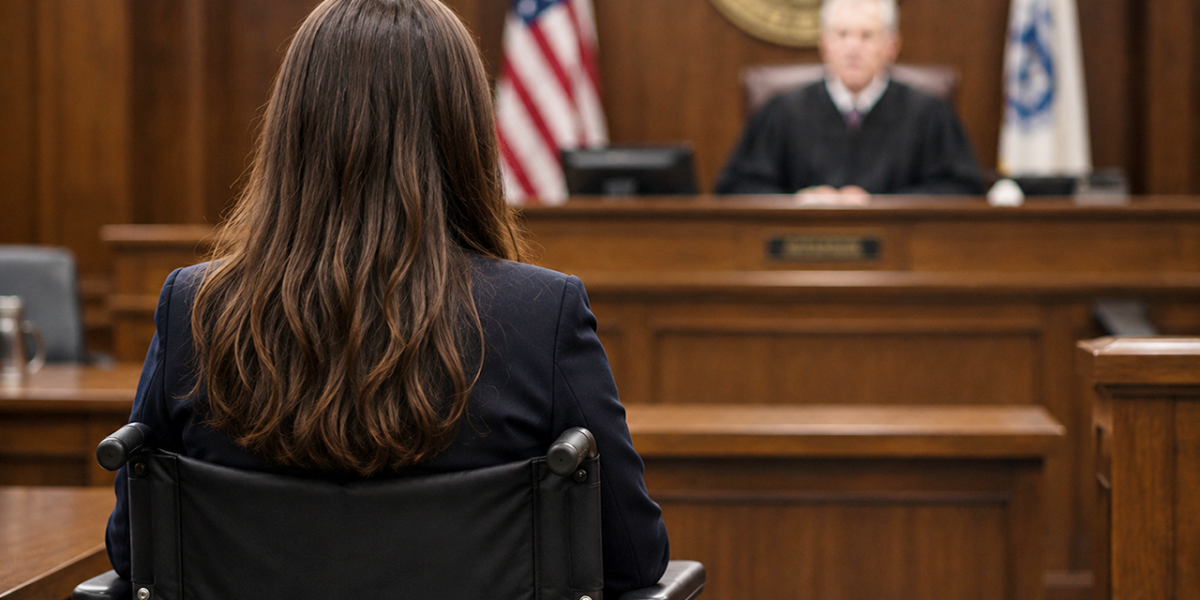
The Lindsay Clancy Trial: Psychosis, Premeditation, or Both?
Last week, I took you through the devastating events of January 24, 2023, the night Lindsay Clancy’s three young children, Cora, Dawson, and Callan, were fatally harmed inside their family home in Duxbury, Massachusetts. This week, we move from the home to the courtroom. In The Lindsay Clancy Trial: Psychosis, Premeditation, or Both?, I take a closer look at one of the most complicated questions surrounding this case: What was happening in Lindsay Clancy’s mind when her children died? Lindsay’s mental health before the deaths has become a critical part of understanding the case. Her treatment, medications, reported symptoms, and concerns surrounding postpartum mental illness raise difficult questions about postpartum depression and postpartum psychosis, and about how severe psychiatric illness affects criminal responsibility. But there is another side to this case. The circumstances surrounding that night also raise questions about planning and awareness. Lindsay’s husband, Patrick, left the home to run errands. During the relatively short period he was gone, the lives of all three children were changed forever. So how does the legal system distinguish between an intentional, premeditated act and an act committed by someone experiencing profound psychosis? Can a person appear organized or purposeful while simultaneously experiencing a severe break from reality? And where does mental illness end and legal responsibility begin? As a nurse and former forensic death investigator, I’m particularly interested in the intersection between the medical evidence and the investigative evidence. A case like this cannot be understood through one piece of information alone. We have to look at the timeline, behavior, medical and psychiatric history, physical evidence, statements, expert opinions, and what investigators were able to establish. We also have to remember why this trial is happening. Three young children lost their lives. Whatever conclusions are ultimately reached about Lindsay’s mental state and criminal responsibility, Cora, Dawson, and Callan remain at the center of this case. In this episode, I explore the competing questions surrounding the Lindsay Clancy trial and the challenge of evaluating a case in which mental illness and evidence of apparent planning may exist alongside one another. Was this postpartum psychosis? Was it premeditation? Or is the truth more complicated than either explanation alone? Join me for Part Two of the Lindsay Clancy case on Pushing Up Lilies: The Lindsay Clancy Trial: Psychosis, Premeditation, or Both? EPISODE TRANSCRIPT: 00:06 Welcome to Pushing Up Lilies. I’m your host, Julie Mattson. 00:10 Pushing Up Lilies is a weekly true crime podcast with spine-tingling, unusual, and terrifyingly true stories from my perspective as a forensic death investigator and a sexual assault nurse examiner. 00:24 Do I have some stories for you. Are you ready? Hey, guys, welcome to another episode of Pushing Up Lilies. I’m your host, Julie. I’m recording today from my med spa. 00:40 I have to admit I love, love, love this microphone. I hope it sounds as good as it sounds in my headset. 00:48 But wanted to bring to your attention, and I know I may have mentioned it last week, but we are having our second annual Murder Mystery Dinner. 00:58 This year is gonna be on October 10th in Krum, Texas, at Studio 141, and we’re gonna have an amazing, immersive murder mystery dinner catered by Our Blended Table. 01:13 And if you haven’t had their food, let me just tell you, it’s amazing. 01:18 It’s gonna be very interactive, a great chance to meet people who love true crime, and also an opportunity to meet and speak with Ann Byrum. 01:30 Now, many of you may not know who Ann is, but Ann is the mother of Kelly Ann Cox, and Kelly was actually abducted in Denton back in 1997 from a gas station in- very near the Denton Police Department after a tour of the jail with her criminal justice class from UNT. 01:54 And Ann loves to remind us how important it is to kinda watch your back and always use the buddy system. This happened to Kelly Ann during the day. 02:09 I mean, it was daylight right in front of the police department with officers going in and out on a very busy road. 02:17 I’m so thankful and grateful that Ann has offered to come up from Houston and be my speaker, and so I’m very much looking forward to talking to her. 02:29 We’re gonna do an interview with her, and then we’re gonna open up the floor for questions. Now, I’m also going to have a booth at the Day of the Dead Festival. I’m not racing this year. 02:42 They went up a little bit on the cost, and I just decided that I would rather spend that money advocating, so I turned it around a little bit. 02:51 This year I’ll just have a merch booth, but we’re gonna have hoodies, we’ll have T-shirts, we’ll have pins, we’ll have plenty of stickers, and the comic book. 03:02 The comic book will be there, and I’ll be glad to sign those as well. 03:07 And we’ll also be at the Overdose Awareness event on the square in Denton, Texas, on August 31st, so that’s coming up right around the corner. 03:18 It’s so crazy to think that it’s already September or almost September. It makes me wanna go Christmas shopping. 03:24 It’s never too early, I think, to just go look around, see what you can find, and the Hobby Lobby already has their Christmas stuff out. 03:32 That kinda drives me crazy to think that really in July they started doing that. I don’t like it, because I like to just celebrate my seasons. 03:42 I wanna celebrate Thanksgiving without my Christmas tree up. So anyway, I don’t know if y’all feel the same way about it, but there’s my piece. 03:50 Wanna talk a little bit more about the Lindsay Clancy trial, and I know that many of you have been watching it, and I’m so upset that I haven’t been able to watch