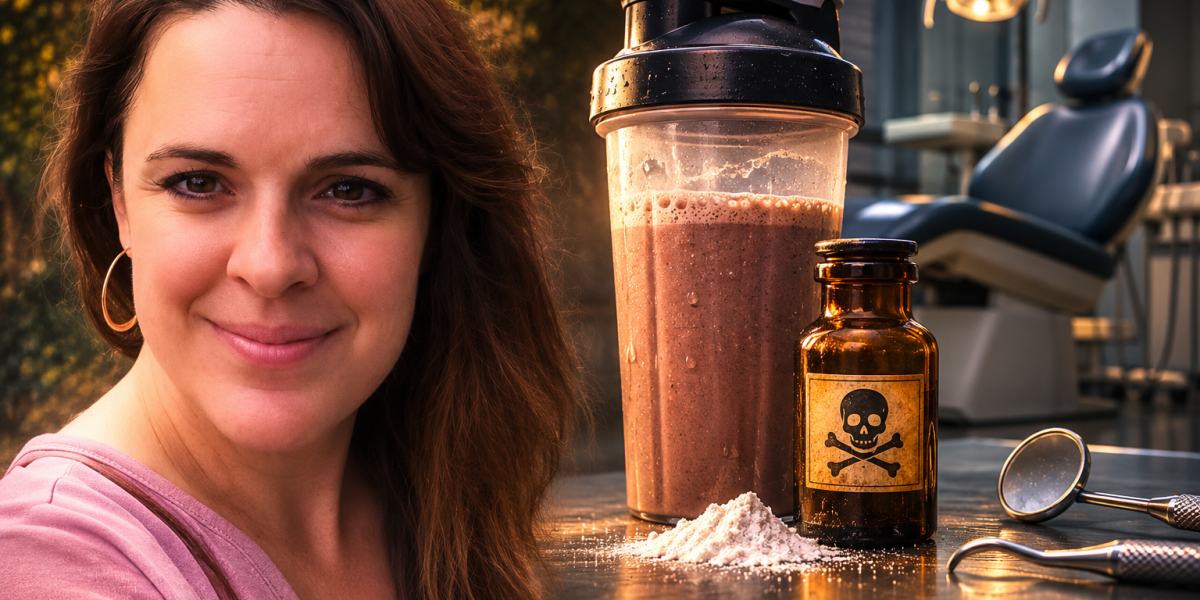
What happens when a woman repeatedly seeks medical help, but the person responsible for her illness is someone she trusts most? This week on Pushing Up Lilies, I’m examining the tragic death of Angela Craig, a 43-year-old Colorado mother of six whose husband, dentist James Craig, was convicted of poisoning her. What began with dizziness, repeated hospital visits, and unexplained symptoms developed into a murder investigation involving arsenic, cyanide, suspicious purchases, and evidence that raised disturbing questions about what happened both at home and inside the hospital. As a nurse and retired forensic death investigator, I’ll walk you through the medical and investigative evidence, the importance of toxicology testing, and how a concerned dental office employee and a nurse helped bring critical information to investigators. We’ll also discuss the challenges of recognizing poisoning, the difference between medical findings and criminal responsibility, and why Angela deserves to be remembered as more than a victim in her husband’s story. * Listener Discretion Advised Products Mentioned in Podcast: Invisawear The Nok Box EPISODE TRANSCRIPT: 00:06 Welcome to Pushing Up Lilies. I’m your host, Julie Mattson. 00:10 Pushing Up Lilies is a weekly true crime podcast with spine-tingling, unusual, and terrifyingly true stories from my perspective as a forensic death investigator and a sexual assault nurse examiner. 00:24 Do I have some stories for you? Are you ready? Hey, y’all. I’ve had to restart my video a couple of times. 00:35 If you are listening and not watching on YouTube, I have the cutest new puppy, but he was literally attacking my feet, and it hurt so bad, and I had to start over. 00:45 So welcome back to Pushing Up Lilies. I’m Julie Mattson, a registered nurse and retired forensic death investigator. Today, I wanna talk to you about James Craig. 00:55 So, Craig is a Colorado dentist, and he was convicted of poisoning his wife, Angela. 01:00 But as I always do, I wanna begin with her because when you hear about this case, you hear the dentist’s name, and you hear about protein shakes and poison and an affair. 01:11 Before long, the woman who died just becomes a detail in a story about her husband, and we try to avoid that here. Angela deserves more attention than her cause of death. She was forty-thirty. 01:23 She had six children, and she had people who loved her and expected many more years with her. And in March of twenty twenty-three, she became seriously ill, and she sought medical care repeatedly. 01:34 Her family and medical team needed an explanation for what was happening to her. But that explanation unfortunately involved the person that she had married. 01:44 Now, as a nurse, I think about her vulnerability as a patient, and as a forensic death investigator, I think about how the investigation moved from unexplained illness to evidence of deliberate poisoning. 01:57 Those are different perspectives, but both definitely matter. Now, this happened in Colorado. I wasn’t involved in Angela’s investigation. 02:06 I’m looking at the public evidence and explaining the questions that I would bring as an investigator to a death like hers. But some of those questions start before an autopsy. 02:15 They start with a conversation, a medical record, or someone noticing something unusual and deciding to actually speak up. So, let’s start with Angela’s life before the hospital visits. 02:28 Angela and James had been married for twenty-three years, and they lived in Colorado, where James practiced dentistry in Aurora. Now, Angela, again, was the youngest of ten siblings. 02:38 Her family described her as dependable and very organized. 02:42 Apparently, she took responsibility for the family’s genealogy, which is an important part of her faith as a member of the Church of Jesus Christ of Latter-day Saints. 02:52 Now, I like knowing details about this because we all know keeping track of family history takes a lot of time, and it tells us something about how she spent her life beyond the final days. 03:03 Now, her brother remembered a positive, happy sister, and other testimony said that there were very serious problems in her marriage, including James’ infidelity. Now, both belong in the account. 03:17 A person has a life outside her relationship, even when problems inside the relationship take up enormous emotional space. 03:25 And I don’t want us looking backward and asking why Angela didn’t make different choices. She didn’t have the evidence that we have today. 03:33 She was living her marriage, and we’re examining it after a murder conviction, and those are very, very different positions. Now, James’ profession definitely adds another concern for me. 03:46 Dentistry, as we know, just like nursing, requires a lot of clinical education, and so patients depend on the dentist’s judgment about medications and their health and procedures. 03:57 So, I wouldn’t assume that professional training makes someone honest. I also wouldn’t assume that it makes someone guilty. 04:03 His credentials belong in the background of the investigation, but they don’t replace evidence. 04:08 Still, there is a particular betrayal in a health professional that uses his knowledge against a member of his very own family. So, let’s move into March. 04:19 According to the arrest affidavit, Angela first went to the hospital on March sixth of twenty twenty-three. 04:25 She felt faint and dizzy, and she had worked out with James that morning, and then he fixed her a protein shake. She went home, but her illness continued. 04:34 She returned to the hospital on March ninth, and she remained there until the fourteenth. 04:39 And on the following day, the fifteenth, she needed hospital care again, and this time she went to University Hospital. But unfortunately, she deteriorated. 04:48 She had a seizure, and then she had to be admitted into intensive care. But on the eighteenth, Angela was pronounced brain dead. Now, think about the progression from the patient’s perspective. 05:00 You feel sick, you go to get help, you go through