What happens when someone is sentenced to death, the execution goes forward, but the person doesn’t die?
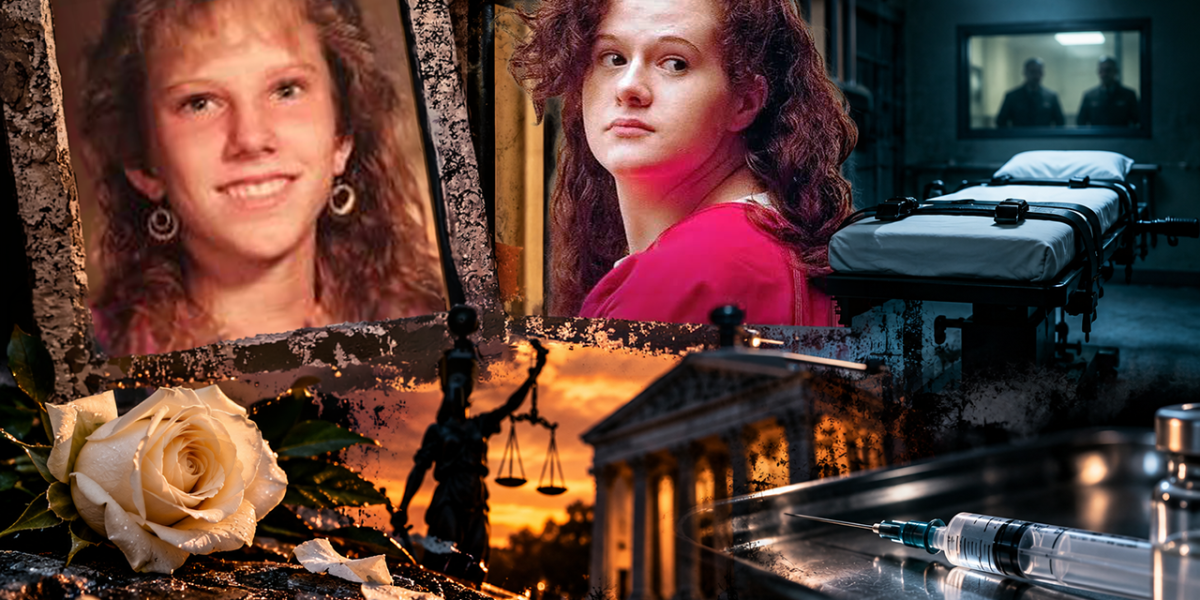
This week on Pushing Up Lilies, I’m talking about Christa Pike, who was convicted of the brutal 1995 murder of 19-year-old Colleen Slemmer in Knoxville, Tennessee. Pike was just 18 years old when the murder occurred, and she has spent roughly three decades on death row.
I want to start by telling you about Colleen, what happened to her, and the evidence that ultimately led to Pike’s conviction. As a former death investigator, I look at cases like this through the physical evidence, the injuries, the witness statements, and what those findings tell us about a victim’s final moments.
But there’s another side to this story that raises some serious medical questions.
On September 30, 2026, Tennessee reportedly attempted to execute Pike using pentobarbital. According to the account discussed in this episode, she survived the procedure and was hospitalized in critical condition. As a nurse, I have a lot of questions about what happened inside that execution chamber.
We’ll look at how lethal injection is supposed to work, what could potentially go wrong, and the medical and ethical questions that arise when an execution fails.
This case is disturbing on so many levels, and while the latest developments have brought renewed attention to Christa Pike, I don’t want us to forget the young woman whose murder started this entire story.
Join me as we examine the evidence, the medicine, and the unanswered questions surrounding this case.
EPISODE TRANSCRIPT:
00:06
Welcome to Pushing Up Lilies. I’m your host, Julie Mattson.
00:10
Pushing Up Lilies is a weekly true crime podcast with spine-tingling, unusual, and terrifyingly true stories from my perspective as a forensic death investigator and a sexual assault nurse examiner.
00:24
Do I have some stories for you? Are you ready? Hey, guys. Welcome to another episode of Pushing Up Lilies. I was so excited to be on an episode of Dani After Dark last night.
00:38
If you can, check out her YouTube channel. It’s amazing. She is so sweet. She’s an amazing podcaster.
00:46
I met her at Beyond the Crime back in April, and then I had the honor of talking to her again at Crime Con, and she was sporting my merch.
00:57
She had on a Pushing Up Lilies T-shirt, and I just adore her.
01:01
So, she has been on YouTube and has been doing this a lot longer than me, so I encourage you to log on to her channel and take a listen to her.
01:12
Also, just wanna remind you that the Pushing Up Lilies second annual Murder Mystery Dinner is Saturday. Jan Bynum, who’s the mother of Kelly Ann Cox, will be here.
01:23
She’s coming up to actually speak, and so we’re gonna do a live podcast on stage, and then the audience will have an opportunity to ask questions. So gonna be so much fun.
01:33
I’ve paid actors from Murder Mystery Texas, and they will be here to put on a completely interactive show. This is at Studio One forty-one, from 5:00 to 9:00 on Saturday, October 10th.
01:47
Tickets are almost sold out, y’all. So, if you really wanna come, get online and buy your tickets. I’ve lowered the price to $80 each. And so, if you really wanna come, now’s your opportunity.
02:00
It’s gonna be catered by Our Blended Table. We are gonna have an amazing menu, and it’s gonna be so much fun. We’re gonna have some signature drinks, and everyone will get a special gift.
02:12
So, I encourage you to log on to Eventbrite or go to my website, and you’ll see a link where you can actually buy tickets. So, this week, I wanna talk about Christa Pike.
02:24
I know that everyone’s been following her botched attempt at execution. So, let’s talk a little bit about that.
02:33
There are a lot of crimes that you remember because of what happened to the victim, but there are others that you remember because of what happened to the person convicted, and this is a case like that.
02:43
This case has become both. In January of 1995, and I know a lot of people don’t know this story, 19-year-old Colleen Slemmer was brutally murdered in Knoxville, Tennessee.
02:56
Now, the woman convicted of killing her was Christa Gail Pike. At the time, Christa was only 18 years old.
03:06
Now, she was eventually sentenced to death, and for roughly three decades, she remained on Tennessee’s death row.
03:14
Now, September 30th, just a few short days ago, Tennessee tried to execute Christa Pike. The state used a drug called pentobarbital, and the drug was administered, but Pike did not die.
03:30
So according to her attorneys, a second dose was administered, and she still didn’t die. So, Christa Pike eventually left the prison where she was supposed to die in an ambulance very much alive.
03:45
Now, in the days immediately following this execution attempt, Pike was unconscious, intubated, on a ventilator. And for several days, her attorney said that she had not regained consciousness.
04:00
But now, as I record this on October 6th, there’s been a major development. Christa Pike is conscious. Her attorney says she is awake and speaking.
04:11
Now, she does remain hospitalized, and she continues to receive medical care. She remains in ICU.
04:18
But what we still don’t know is the extent of any lasting injuries or exactly what long-term prognosis will be. Now, how did we get here? What exactly did Christa Pike do to Colleen Slemmer?
04:34
Why did a jury sentence an 18-year-old woman to death? And what happened inside that execution chamber? As a nurse, that’s another question that I just keep coming back to.
04:46
If the medication was administered as intended, why didn’t she die? So as most of you know, I’m Julie Matson.
04:55
I’ve spent more than 30 years as a nurse with much of my career involving forensic nursing and death investigation. Now, let’s talk a little bit about this case because it’s really crazy.
05:08
So, before I tell you about Christa Pike, I want you to know Colleen’s name, Colleen Slemmer. She was 19 years old, and in 1995, Colleen was enrolled in the Job Corps program in Knoxville, Tennessee.
05:24
Now, Christa Pike was there, too, and so was her boyfriend, Tadaryl Shipp. There was also another young woman, Shadolla Peterson. She was also involved in what happened.
05:36
Now, there had been tension between Pike and Colleen, and according to the case presented by prosecutors, Pike believed that Colleen was interested in Shipp.
05:48
But what happened next went far beyond jealousy or some argument between teenagers.
05:54
On January 11th, the day before the murder, Pike reportedly told another Job Corps student, Kim Lolilo That she intended to kill Colleen.
06:05
And the following night, January twelfth, Pike, Colleen, Shipp, and Peterson left the Job Corps center together.
06:12
Now, they headed towards an isolated area near the University of Tennessee agricultural campus. And according to the evidence, Colleen believed that they were gonna go resolve their differences.
06:24
She thought, “Finally, this is gonna be over.” She was wrong.
06:29
So, this portion is difficult, but I wanna give you enough detail so that you can fully understand the crime and why the prosecutors ultimately sought the death penalty.
06:41
So according to Pike’s own statement and the evidence presented at trial, once the group reached the area near the University of Tennessee campus, Pike began hitting Colleen.
06:52
Now, Pike described banging Colleen’s head against her knee, and then she threw Colleen to the ground. She then proceeded to kick her, and she slammed Colleen’s head against concrete.
07:06
Now, according to Pike’s statement, Colleen repeatedly asked her why she was doing this.
07:13
At some point, Colleen threatened to report Pike, and Pike said that she then kicked Colleen repeatedly in the face and in the side.
07:22
Now, Colleen cried, and then she tried to run, but she didn’t make it. She was caught and pushed back to the ground.
07:29
Now, this attack continued, which can you imagine what was going through her head? Colleen was cut repeatedly.
07:39
According to the court record, a box cutter and a small meat cleaver were involved in this attack, and Colleen’s blouse and bra were removed, and then Pike admitted tying a rag around Colleen’s mouth at one point to keep her from talking.
07:54
Now, as any of us would, Colleen continued to try to escape, and she continued to beg, and at one point, according to Pike’s own statement, Colleen attempted to bargain for her own life.
08:07
She reportedly offered to leave the Job Corps entirely. She said that she would return home to Florida, and she wouldn’t even go back to the Job Corps for her belongings.
08:17
She was trying to say at that point anything that she thought might then make them let her live.
08:25
Now, Pike told investigators something that I think gives you a very disturbing glimpse into what was happening psychologically during that assault.
08:34
She said it was harder to hurt somebody when they were talking to you. So, the more Colleen talked, the more Pike kicked her in the face.
08:44
At another point, Pike left Colleen temporarily to check the surrounding area because she thought she heard something.
08:51
She wanted to make sure that no one was nearby, but then she returned, and according to her own confession, she began cutting Colleen across the throat.
09:01
Now, Colleen continued talking, and she continued begging for her life, and Pike continued cutting. Colleen still tried to get up. She still tried to escape.
09:12
And according to the court record, Pike threw a piece of asphalt that actually struck Colleen in the back of the head. Now, another person also struck her.
09:22
And so, after Colleen fell, Pike continued hitting her, and Pike later described hearing Colleen breathing blood in and out.
09:31
So, she describes seeing her body jerking, and she told investigators that she still continued hitting her again and again. So, this entire ordeal lasted about thirty minutes to an hour.
09:44
Can you just imagine? Now, this is where my death investigator brain actually just really kicks in.
09:52
When you hear something described simply as multiple injuries, it’s real easy to lose sight of what those words represent.
09:59
Every injury in an investigation tells you something, where it’s located, what caused it. Is there hemorrhage in the surrounding tissue?
10:09
Did it occur while the person was alive, or were they already deceased?
10:14
Are there any injuries to the hands and arms, like indicating that maybe she tried to protect herself or tried to protect her face? Or did she try to shield her head?
10:24
Are there any different injury patterns suggesting that different objects might have been used? In a case like this, you look for evidence of survival. So, did she move after an injury?
10:34
Did she crawl? Did she attempt to escape? Was she conscious? Did she defend herself? Because when a victim can no longer tell investigators what happened, their body becomes part of the testimony.
10:47
Their body is a big part of the testimony. And Colleen’s body told, as you can imagine, an incredibly violent story.
10:56
The Knox County medical examiner describes so many cuts and stab wounds that she initially tried assigning letters to catalog them.
11:04
Eventually, she stopped trying to individually label each wound because there were so many. There were fresh bruises on her knees that were consistent with crawling.
11:14
There were defensive injuries to her arms, like she was holding her arms up.
11:18
And the medical evidence actually supported the conclusion that many of the injuries occurred while Colleen was still alive and conscious.
11:26
Her skull was described as virtually shattered, and ultimately the medical examiner determined that Colleen did die from blunt force injuries to her head.
11:36
Now, there was another injury that would become one of the most infamous details of this case. A pentagram had been carved into Colleen’s chest.
11:46
Now, there have been conflicting accounts over the years regarding exactly which person inflicted that particular injury.
11:54
Pike denied having done it herself, and she said that the other person involved had actually cut Colleen’s chest.
12:02
Now, court records involving Tadaryl Shipp describe his participation in cutting Colleen And state that the pentagram and much of the cutting happened while Colleen was alive.
12:14
So, I’m not gonna assign that injury to Pike when there’s a little bit of a disagreement about who physically carved it.
12:23
But what is clear is that the pentagram was carved into Colleen’s chest during this prolonged assault. And then there was something else, something I find even more disturbing.
12:36
A fragment of Colleen Slemmer’s skull was removed. Krista Pike took it with her. Let that sink in for a second. The attack was over. Colleen had been left behind.
12:49
Pike returned to the Job Corps, but according to witnesses’ testimony, she returned to Job Corps carrying a piece of Colleen’s skull.
12:58
And later, Pike went to see Kim Lolo, and she told her about killing Colleen, and she described details of the attack.
13:07
According to Tennessee Supreme Court’s account of that testimony, Pike was dancing in a circle. She was smiling and singing while talking about murdering Colleen.
13:19
And she showed her friend the piece of skull. So, the next morning, Lolo asked Pike what she’d done with it, and Pike said, “It’s still in my pocket.” So, she held onto it.
13:32
Another Job Corps student, Stephanie Wilson, testified that Pike showed her a piece of bone and actually told her that it belonged to Colleen.
13:40
So according to Wilson’s testimony, Pike also pointed towards brown spots on her own shoes and said, “These aren’t mud.” They were blood.
13:48
So, Pike reportedly told Wilson about cutting Colleen’s throat and beating her head with a rock. She said she’d picked up the piece of skull before she left the scene. It’s just unimaginable.
14:01
From an investigative standpoint, this is enormous because sometimes some of the strongest evidence against a suspect isn’t created during the murder itself. It’s created afterward.
14:13
What did the person keep, and what did they throw away? What did they clean? Who did they talk to? What details did they reveal in those conversations?
14:23
And do they know something that only somebody involved in this crime should know? Did they take something belonging to the victim? In this case, yes.
14:33
Did they behave in a way that directed investigators back towards them?
14:37
According to Pike’s own statement, after Colleen was killed, Pike and another person washed their hands and shoes in a mud puddle.
14:45
Now, the physical evidence, Pike’s statement, and the testimony of the other students all began fitting together.
14:52
Investigators eventually recovered the piece of Colleen’s skull, and Pike gave police a lengthy recorded statement detailing her involvement.
15:02
Now, as far as finding Colleen, her body was discovered the following morning near greenhouses on the University of Tennessee’s agricultural campus. She was partially unclothed at the time.
15:16
She had been cut extensively, and she suffered devastating blunt force trauma. So now investigators had something really important.
15:25
They had Pike’s account, they had witnesses, statements from the witnesses, and they had physical evidence.
15:32
And then they had Colleen’s body and the death scene against which those statements could all be compared. So, this is something that people sometimes misunderstand about confessions.
15:44
A confession isn’t valuable simply because somebody says that I did it. You corroborate it. Now, does the weapon they described correspond with the injuries? Does their description match the scene?
15:59
Do they know details that weren’t made public yet? Does the physical evidence support what they’re saying? And does something in the story contradict the evidence?
16:10
Because evidence doesn’t care whether somebody tells a convincing story. It either fits or it doesn’t. So, in this case, prosecutors had Pike’s statements.
16:22
They had witnesses who said that she talked about the killing afterward. They had a skull fragment. They had Colleen’s injuries that they were able to visualize on the body.
16:33
And they had testimony suggesting that Pike had talked about killing Colleen before this group of kids ever entered the woods.
16:42
And that mattered tremendously because prosecutors aren’t presenting this as an argument that suddenly spiraled out of control.
16:49
They were building this case for premeditated first-degree murder, and that’s exactly what it was. This was very planned out.
16:57
Krista Pike went to trial in nineteen ninety-six, and that jury convicted her of premeditated first-degree murder. She was also convicted of conspiracy to commit first-degree murder.
17:08
And then came the penalty phase.
17:11
So, in a capital murder trial, deciding whether someone committed the crime and deciding whether that person should receive the death penalty are two completely separate questions.
17:23
So, the jury had already answered the first question, guilty. Obviously, she admitted to it. Now they had to answer another question. Should Krista Pike die for what she had done?
17:36
So, the jury found statutory aggravating circumstances. One centered on the just extraordinary brutality of Colleen’s murder. Jurors determined that the killing was really heinous.
17:49
It was atrocious and cruel because it involved torture or serious physical abuse beyond what was necessary to actually cause her death.
17:58
So, after weighing all these circumstances against mitigating evidence presented by the defense, Krista Pike was sentenced to death.
18:08
She also received a consecutive twenty-five-year sentence for conspiracy. Now, the Tennessee Supreme Court later reviewed the case, and they upheld both Pike’s convictions and death sentence.
18:20
And Pike had only been eighteen years old when Colleen was murdered. So, imagine that.
18:27
Now, Pike’s age eventually became one of the major issues surrounding this case because under United States Supreme Court precedent, a person who was younger than eighteen when a murder was committed cannot actually be executed.
18:43
Now, Pike was eighteen at the time. Legally, she was on the other side of that line, but her attorneys argued that human brain development doesn’t suddenly finish when someone turns eighteen.
18:56
Her later legal challenges also focused on her upbringing, allegations of severe childhood sexual abuse, trauma, and mental health issues.
19:06
Now, her attorneys argued that the jury that sentenced Pike to death had not received a complete picture of her history and her background.
19:15
So those arguments became part of the decades of appeals and legal challenges. But Colleen’s family spent those same decades living with something entirely different.
19:26
They knew what happened to Colleen.
19:28
They knew that she tried to escape, and they knew that she begged for her life, and they’d been waiting for the sentence to be carried out, and that’s a long time to have to wait.
19:41
Now, eventually Tennessee set an execution date. So, there we were, September thirtieth, twenty twenty-six, just not very long ago. This is where the story takes a turn almost nobody expected.
19:54
So, on the day Pike was scheduled to die, a federal appeals court issued a stay.
20:00
So, for a brief period, the execution was stopped, and Tennessee challenged that decision, and the matter reached the United States Supreme Court.
20:10
And later that day, the Supreme Court allowed the execution to proceed. Pike was taken into the execution chamber at Riverbend Maximum Security Institution.
20:20
She was placed on a gurney, IV access was established, and the drug that Tennessee intended to use to kill her was pentobarbital. Now, let’s talk a little bit about what that is.
20:32
Those of you who are nurses are gonna know, but I’m gonna put my nurse hat on. Pentobarbital is a barbiturate, and barbiturates depress the central nervous system.
20:41
So, at therapeutic doses, when you are giving someone this, it’s supposed to just give a sedative effect, but an execution dose is an entirely different situation.
20:53
We’re talking about an amount intended to cause profound central nervous system depression.
20:58
So that person, given that large dose, should lose consciousness, respiratory function should become severely depressed, then their breathing should stop, and ultimately death occurs.
21:11
Tennessee was using pentobarbital as its lethal injection drug.
21:15
So, which brings us to the part of this case that I find medically fascinating and also deeply concerning is the execution was started, the pentobarbital was administered, but Christa Pike didn’t die.
21:29
So according to her attorneys and reporting from witnesses, they gave a second dose. She still didn’t die. So, witnesses watched an execution that went completely outside what they expected.
21:43
According to media witnesses interviewed by PBS, two rounds of the execution protocol were attempted, and Pike kept breathing, and at one point, she even lifted her head.
21:55
She was looking around the room, and she complained after being injected twice about an area of her arm burning and hurting, and she asked whether what she was feeling was normal.
22:09
Obviously, it was not. Witnesses described Pike’s breathing toward the end as ragged. So eventually the curtains were closed.
22:18
No one else could see what happened, but they did know that Pike remained alive.
22:23
Now, Tennessee had reached the end of the procedures contained within its lethal injection protocol, and a lot of us were like, “Why was she taken to the ER?
22:33
Why was EMS called?” The protocol only went to two attempts, and then it got to the point where, what do we do now?
22:41
No one knew because there was nothing written in their protocol telling them what the next steps were. So, death was not pronounced.
22:50
Christa Pike is alive and breathing, and she entered that execution chamber because the state of Tennessee intended to kill her.
22:59
But instead, at nearly nine o’clock that evening, she was transported to the hospital. Now, she entered the execution chamber to die, and she left in an ambulance, alive.
23:13
So, my questions as a nurse, and I’m sure that I have a lot of nurses that listen, but now I’m gonna stop thinking like a podcast host for a minute and start thinking like a nurse because I have a lot of questions, and I’m sure y’all do too.
23:28
If two doses of pentobarbital were administered, where did that medication go? Because if her arms are burning… Now, we don’t really know if that IV was truly intravascular.
23:39
Was the catheter inside the vein when that medication started, and did it stay there throughout the administration? I doubt it. I’ve had an IV infiltrate before.
23:49
I don’t know if y’all have, but the fluid that’s supposed to go into your vein ends up going under your skin, and that makes sense that it would infiltrate, and the medication, the pentobarbital, would extravasate into the surrounding tissue.
24:08
So that’s gonna cause burning and pain. But I’m curious, like, what the IV sites look like. Was there swelling and when they were given the drug, was there any resistance?
24:18
Normally, if you’re not in a vein, you’re gonna meet resistance. So, was there discoloration? And when she complained of burning, like what exactly was she feeling?
24:26
And then were her vital signs affected at all? I’m sure they kept them on a monitor, but I’m just wondering what her vital signs did and how she was monitored and what was documented.
24:38
And then also, what was the dose and the concentration that she was given, and who drew it up? Who gave it? What did her labs show also when she arrived at the hospital? It makes you wonder.
24:50
Those aren’t really political questions. Those are very clinical questions.
24:55
So, if a medication expected to cause a predictable response doesn’t produce that response, then you definitely have to investigate why.
25:04
And in this case, Pike’s attorney says the IVs were not functioning as intended, and that medication actually entered the tissue in her arms, and they’ve described burns and blistering.
25:17
There are also reports of difficulties associated with establishing and maintaining appropriate IV access. And we all know as nurses, not everyone’s an easy stick.
25:27
Sometimes it’s difficult to get an IV in. Mine have gotten more difficult as I’ve gotten older. I don’t tell anyone when I go to the hospital that I’m a nurse because many people are intimidated.
25:39
They think that you’re critiquing them, and they almost always miss my vein more than once. So, unless I know them and they just already know that I’m a nurse, I do not disclose that information.
25:52
Now, those details are now part of this investigation into this failed execution. And I wanna make a really important distinction here.
26:01
We know Tennessee attempted the execution, and we know pentobarbital was used. And we do know that two doses were administered, and that she survived, and that she was taken to a hospital.
26:14
The complete explanation for precisely how and why this execution failed is still being investigated, and I’m sure that they’re going to investigate this well.
26:26
Now, immediately after this failed execution, Pike’s condition, of course, was serious. She was unconscious. She ended up being intubated. She was placed on a ventilator.
26:37
And her attorneys did report that she had burns and blisters on her arms.
26:42
Now, for several days, she didn’t regain consciousness, and there were very real questions about whether she ever would regain consciousness. But now we have an important update.
26:54
So, as I record this on October sixth, Christa Pike has regained consciousness. Her attorneys now say that she is awake, and she’s actually speaking. Can you believe this?
27:06
Think about that progression. September thirtieth, Tennessee administers the lethal injection drugs intended to end her life.
27:15
Afterwards, she’s transported out of the prison, completely unconscious, requiring a ventilator, and for days her attorney said that she had not awakened, and now she has.
27:27
So, she remains, of course, under medical care. She’s still in ICU. Her attorneys say that she continues recovering from this failed execution attempt.
27:37
But what’s not really been established publicly is what lasting injuries she suffered. We don’t know whether she will have any permanent neurological effects.
27:48
We don’t know the final extent of the injuries to her arms. We just know that there were burnt and hurting. We don’t know what her long-term recovery will look like.
27:58
But one thing has changed since the first reports came out. We no longer have to ask whether Christa Pike will regain consciousness because she did, and she’s actually speaking. So, what happens now?
28:12
So, the fallout in Tennessee was pretty much immediate. Governor Bill Lee described what happened as deeply disturbing.
28:21
Now, executions in Tennessee were halted while the state investigates exactly what went wrong because no one knows.
28:29
That failed execution also intensified a lot of questions about Tennessee’s execution system because this was not their first serious problem.
28:38
Earlier in twenty twenty-six, another execution attempt had to be abandoned after officials were unable to establish appropriate IV access.
28:48
So now Tennessee has another failure, except this time, the drugs were actually administered twice, and the condemned prisoner survived.
28:59
Now, Pike’s attorneys are seeking preservation of evidence related to this execution. From an investigative standpoint, I can completely understand exactly why.
29:10
So, treat this like a forensic reconstruction. They’re gonna preserve the records. They’re gonna preserve the medication information. All the IV equipment, if it still exists, is gonna be preserved.
29:23
They’re gonna preserve the documentation concerning IV access, all the photographs, the timeline, the hospital records.
29:32
They’re gonna interview everyone involved and then reconstruct it minute by minute. They’re gonna wanna know who prepared the drug, who verified it, ’cause usually two nurses check it.
29:42
Who established these IVs, and why doesn’t this jail have somebody that knows how to put an IV in?
29:49
I mean, did the same person do this IV that attempted the last one this year that could not get access? Who administered the medication? Which IV line was used, and how quickly was it administered?
30:01
Did it go in freely when they were pushing it? And then I would wanna know what happened immediately afterwards. It sounds like she was talking and asking questions. So, witnesses saw that.
30:13
And when did they realize that this was not going as it should? And then when did they actually make the decision to call EMS? What condition was she in when the medical team got her?
30:25
And what did the physicians at the hospital find? Somewhere in all of that evidence is the answer as to why she survived.
30:34
So, Pike’s attorneys are now asking Governor Bill Lee to commute her death sentence to life without parole.
30:42
So, their argument has changed dramatically because Tennessee has now already attempted to execute her, and they aren’t talking about what might happen during an execution.
30:53
They’re talking about what did happen. And their client was basically strapped to a gurney, the drugs were administered, and the procedure failed. She suffered serious medical complications.
31:07
She was put in the hospital. She spent days unconscious on a ventilator. She survived. So now they’re arguing that Tennessee should not subject her to another execution attempt.
31:20
I’m curious to see what y’all think. Should they try again? And this brings us to one of the biggest questions surrounding the case. If she recovers, can they try to execute her again?
31:31
Surviving an execution attempt does not erase the underlying death sentence. There’s historical precedent for a government making a second attempt. One of the best-known cases is Willie Francis.
31:46
Francis survived an attempted execution in Louisiana’s electric chair. It was nineteen forty-six, so the equipment malfunctioned.
31:55
His case eventually went before the Supreme Court, and Louisiana was actually permitted to carry out another execution, and he was eventually executed in nineteen forty-seven.
32:06
But Pike’s case is a little bit different because it’ll probably generate some new litigation. Her attorneys no longer have to argue about whether or not she suffered.
32:20
They have the first execution attempt. They have her injuries, her hospitalization, the fact that she remained unconscious, and now they have her recovery.
32:29
So, a court will ultimately have to address whatever constitutional claims her attorneys raise if Tennessee seeks another execution date. So, who knows?
32:40
At this point, Tennessee has not carried out the sentence, though, and Christa Pike is alive.
32:47
So, let’s talk a little bit about Colleen, and this is where I want to bring the episode back to her at the center of this original crime. Because right now, Christa Pike is making headlines again.
32:59
The failed execution is making headlines, and pentobarbital is making headlines, and so is her hospitalization. And the fact that she regained consciousness is the story of the day.
33:13
So, the investigation into this is making headlines. Colleen is the reason any of us even know Christa Pike’s name. So, we don’t want to forget Colleen.
33:25
She was nineteen, and according to all the evidence, she entered the woods believing that a conflict was going to be resolved.
33:33
But instead, she was attacked and beaten and kicked and cut, and she tried to get away more than once. She begged for her life. She offered to leave the Job Corps.
33:45
She tried to talk her way out of dying, as any of us would. I don’t know if you’ve ever put yourself in a situation like that and wondered what you would do.
33:54
But even though she was doing all of that, the attack continued, and her injuries were so numerous that the medical examiners stopped cataloging the superficial cuts.
34:04
She did have defensive injuries, and she did have injuries that were consistent with her trying to crawl after she was injured. Her skull was shattered.
34:13
She suffered for somewhere between thirty minutes to an hour, and then her body was just left behind. And then a piece of her skull was taken away.
34:24
The next day, Colleen was dead while Pike was showing other students a piece of the bone and talking about killing her. Those facts mattered in nineteen ninety-six, and they still matter now.
34:38
And I think it’s possible to hold two things at the same time.
34:42
We can look directly at what happened to Colleen Slemmer, and we can acknowledge the cruelty of her murder, and we can acknowledge what her family has lived with for more than thirty years.
34:53
And we can still demand an accurate investigation into what happened in this execution chamber.
35:00
But just remember that investigating one does not diminish the other, and that’s what we do in forensic work. We follow the evidence. We let the facts lead. Evidence over emotion.
35:12
That’s what I’ve always said. And right now, we still don’t have all the evidence about what happened during this execution attempt.
35:19
So, the part I keep thinking about, there’s just another part of this case that will not leave me. I spent years working death scenes, and a huge part of death investigation is reconstruction.
35:33
And you arrive after something has already happened, but you weren’t actually standing there when the person died. So, you rebuild the story from what remains.
35:44
You rebuild the story from the injuries and the body position and the scene and the blood and the medical records and the toxicology, and then the witness statements, the timeline, and then you start fitting all these pieces together.
36:00
More than thirty years after Colleen’s murder, investigators are essentially facing another reconstruction connected to this same case.
36:07
Only this time, it didn’t happen in an isolated area near the University of Tennessee. It happened inside a government execution chamber.
36:16
Now, mind you, there should be documentation, all you nurses out there There should be drug records. There should be information about IV access, what size catheter was used, who did it.
36:27
There’s witnesses and there’s medical records and injuries and a timeline. And now this is a surviving patient who’s conscious and speaking.
36:37
And all of those piece’s matter in this case because Tennessee eventually needs to answer a pretty straightforward question. What happened? What on earth happened?
36:49
So, on January 12th, 1995, Colleen Slemmer walked into this isolated area in Knoxville and never walked out. She was only 19. Christa Pike was 18. A jury sentenced Christa to death.
37:03
And for roughly three decades, that sentence remained in place through appeals and all these legal challenges. And then came September 30th, 2026. Tennessee tried to carry it out.
37:15
Pentobarbital was administered. A second dose followed. And here we are. There was no pronouncement of death. Christa Pike continued breathing. This is just crazy.
37:29
So, this ambulance carried her away from Riverbend Maximum Security Institution completely alive. And she spent those following days unconscious and on this ventilator.
37:41
And now as I record this on October 6th, her attorneys say that she has regained consciousness and she’s awake. She’s talking, but she’s still in the hospital.
37:53
And the extent of these injuries, again, is still unclear. Her attorneys want her death sentence commuted to life. No parole.
38:04
Tennessee halted these executions while we wait for this investigation to take place. So, the state still has an enormous question to answer. Why didn’t she die?
38:16
We don’t have that complete answer yet. But we know where this story began. With Colleen. This 19-year-old woman who begged for her life and whose life was taken in a very violent way.
38:31
31 years later, the legal story surrounding her murder is still unfolding. And now the evidence from that night of the execution is going to determine what happens next. So here we sit.
38:45
We don’t know. We don’t really know her condition. We just know that she is awake and speaking. And so, I’m kind of waiting for the latest news to see what goes on.
38:55
I’m sure her attorneys are going to try to say that she was traumatized by this event. But yeah, so we’re just going to wait and see.
39:03
But it’s kind of crazy to me that she woke up today and started talking and she’s no longer on the ventilator. So, we’re going to follow this to see what happens next. Buy your tickets, y’all.
39:14
It’s almost sold out. Pushing Up Lilies second annual murder mystery. Don’t forget Eventbrite or pushinguplilies.com. All right. I’ll see y’all Saturday or I will talk to you next week.
39:29
Don’t forget Dani After Dark. Check out her YouTube page. Bye y’all. Thank you so much for joining me today on Pushing Up Lilies.
39:40
If you like this podcast and would like to share with others, please do me a quick favor and leave a review on Apple Podcast. This helps to make the podcast more visible to the public.
39:50
Thanks again for spending your time with me and be sure to visit me at pushinguplilies.com for merchandise and past episodes.