
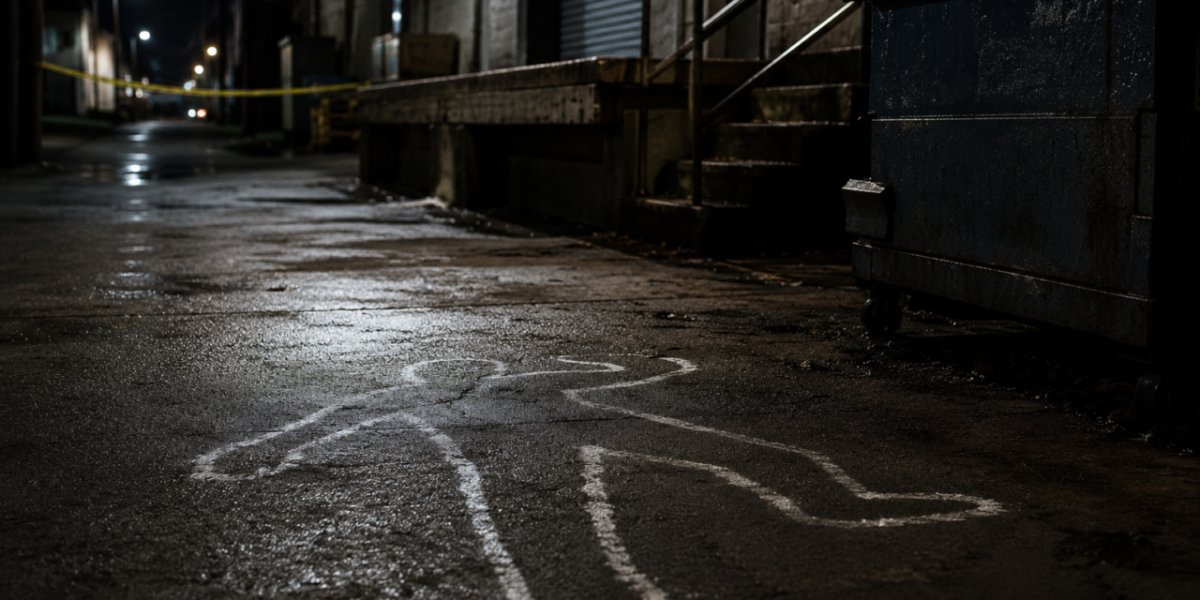
In this episode of Pushing Up Lilies, I’m covering the mysterious death of Spencer Irwin, a 30-year-old Fresno City College student whose body was discovered behind a business loading dock in Fresno, California, in August of 2024.
What initially appeared to authorities to be a tragic but straightforward case quickly became something far more complicated.
Spencer was found naked, with no obvious signs of trauma, and early assumptions pointed toward a drug overdose or transient-related death. But toxicology reports later came back clean. No overdose. No clear explanation. And despite the unanswered questions surrounding his death, the coroner ultimately ruled it “natural causes.”
What makes this case especially unsettling is what didn’t happen.
No autopsy was performed.
And Spencer’s body was cremated.
As a forensic death investigator, I discuss the difficult reality of cases that fall into gray areas, where evidence is limited, assumptions are made early, and families are left searching for answers long after a case is considered closed.
Because sometimes the hardest part of an investigation…
is not what we know.
It’s what we don’t.
This episode contains discussion of death, investigative uncertainty, and unresolved circumstances surrounding the case. Listener discretion is advised.
EPISODE TRANSCRIPT:
00:06
Welcome to Pushing Up Lilies. I’m your host, Julie Mattson. Pushing Up Lilies is a weekly true crime podcast with spine-tingling, unusual, and terrifyingly true stories from my perspective as a forensic death investigator and a sexual assault nurse examiner.
00:24
Do I have some stories for you? Are you ready? Hey guys, Julie here with Pushing Up Willies. Wanted to reach out and thank everybody again who came to our sip and solve event for the True Crime Club at McCart Street Mercantile this past week.
00:46
It was so much fun. We played crime or no crime and then a great icebreaker. We went around the room and talked about what our last meal request would be if we were on death row. So, it was really interesting to kind of hear what people’s answers were.
01:03
And most people responded with meals that brought them comfort when they were a child, which I found really interesting. And mine was potato salad, coconut cream pie, and chicken and dumplings, because my grandma used to make the best chicken and dumplings.
01:22
My mom used to make potato salad for me every time I was sick, and coconut cream pie is just my favorite. It was kind of fun to hear what everybody had to say. We did decide at the next meeting that we are probably going to dress as a serial killer.
01:41
And then we are going to cook one of the serial killers’ last meals that are in the death row cookbook that I sell in my merch shop. And we’re going to try to guess whose last meal it was. So that’ll be kind of fun.
01:58
Tiana, that owns our blended table, she also owns a food truck. She’s going to put together that meal for us. And so, I think it’ll be so much fun. So, if you love true crime and you love being around other people who love true crime and you want to have a good time, keep an eye out for our next event.
02:17
Again, Sip and Solve and it’s the True Crime Club. You can find it on Facebook. We’ll probably have monthly events maybe every couple of months. Look forward to seeing you there. We had a whole new group of people this time.
02:34
It’s a lot of fun. They had some special drinks. The one I had was embalming fluid and actually it was delicious. Non-alcoholic. We just had a great time. And heavenly encourage you to come out if you enjoy that kind of thing.
02:49
I’m super excited that CrimeCon is, it’s in 10 days, y’all. I cannot believe it. All my merchandise has arrived at the warehouse there. So, we will be leaving to head that direction on the 28th. Again, it’s at Caesar’s Palace, May 29th through 31st.
03:08
And I’m super excited. I’m so glad to be a part of it. Hopefully next year it can get on Creator’s Row, but this year I’m in exhibitor hall, booth 62. So, if you come to Vegas, come by and visit with me.
03:21
I also have my limited edition comic books there. And so, I’m super excited to roll those out so that y’all can see them. A lot going on. Tonight’s episode is kind of one of those stories that leaves more questions than answers.
03:36
It’s the kind that frustrates families and investigators and honestly anybody who even hears it. Because when a young person disappears under suspicious circumstances and then later turns up dead, people naturally expect a thorough investigation.
03:53
They want answers and they definitely want accountability, but sometimes families are left fighting for those answers themselves. This is the story of Spencer Irwin. Now, Spencer was a 30-year-old college student from Fresno, California, whose mother says he was dismissed, overlooked, and misjudged almost immediately after he was found dead.
04:18
And tonight I want to walk through this case chronologically, and I want to also discuss the forensic and investigative concerns that stand out to me as an investigator. So, on the morning of July 28th, 2024, Spencer Irwin spoke with his mother, Kelly, like he normally did.
04:40
According to reports, the two were very close. She described talking to him every single day and even meeting him for lunch between his classes at Fresno City College. Spencer was 30 years old and reportedly living in an apartment near McKinley Avenue in Fresno.
04:59
And so that Sunday morning seemed very routine. At some point during the conversation, Spencer reportedly told his mother that he was walking to the intersection of Shaw and Mark’s to get a new phone.
05:14
And so, he had apparently called her using someone else’s phone because his own phone was not working. And that would become the last conversation Kelly ever had with her son. As investigators, one of the things we look at in missing person and death investigation cases is the timeline of last known activity.
05:37
We ask a lot of questions. Who saw the person last? What were they doing? Did their behavior seem normal? Were they in the process of making plans for the future? Did they appear distressed or fearful or intoxicated or even confused?
05:59
But according to his mother, Spencer sounded completely normal. Nothing about that call suggested that he was about to disappear. So, several days passed, and then on Thursday, July 31st, Spencer’s body was reportedly discovered behind a business on Blythe Avenue near Shaw.
06:24
Now, the body was naked, and it was near Dempster’s, roughly about two miles away from where his mother believed he had been headed. Now, from an investigative standpoint, there are several things that immediately stand out.
06:40
First, the body was unclothed. Second, the location mattered. Third, investigators reportedly suggested almost immediately that this may have been a drug overdose involving somebody that was homeless, an unhoused individual.
07:02
So according to Kelly, police allegedly told her that they had seen this before, in quotes, and they suggested that Spencer may have removed his own clothing due to drug use. And we have seen this before.
07:17
Not completely unheard of but also needs to be ruled out. So, I want to pause there because this is where assumptions in investigations become extremely dangerous. I can tell you that there absolutely are cases where intoxicated individuals remove their clothing.
07:43
Like I said, that has happened. Certain drugs, excited delirium states, hyperthermia, psychiatric episodes, and altered mental status sometimes results in this paradoxical undressing. And so that part is medically recognized.
08:06
It happens. But here’s the problem. You do still have to do an investigation. You can’t assume that that’s what happened without a thorough investigation. You can’t allow assumptions to replace evidence.
08:24
And so according to Spencer’s mother, investigators quickly focused on overdose. Despite her explaining that Spencer had an apartment, he was not homeless. He had a house. Now, she did acknowledge that he had struggled with alcohol, but she also very strongly disputed that drugs could have caused his death.
08:50
Now, there’s a lot of questions that are raised when an unclothed body is found near a dumpster. Was there a medical emergency? Was there any kind of robbery? Were there any injuries on the body? Was there an assault?
09:07
Were the clothes removed before or after death? Were the clothes recovered? Were they there? Were they in the dumpster? Were they beside him? Like, where were the clothes? Again, were there injuries hidden beneath changes in the body that could happen with decomposition?
09:25
Did they do toxicology? And was it consistent with what the police suspected? So, these are all questions that investigators should examine very carefully. According to the report, Fresno police said there were no signs of foul play at the scene.
09:44
So, Spencer’s body was taken to the coroner’s office. And now, again, I think we’ve explained the difference between coroner and medical examiner. Medical examiners that do the autopsies in medical examiner states are doctors.
10:02
Coroners are elected officials who may or may not have medical background. Something happened at that point that shocked me, honestly. Kelly, his mother, says approximately one week later, Spencer’s body was released to the funeral home without a full autopsy being performed.
10:24
According to her, the coroner reportedly advised that toxicology testing alone would determine the cause of death. Now, I will say that many times a full autopsy is not done. Many times, we do what’s called an external.
10:42
If it’s a young person and there is no history of medical problems and drug overdose or use is suspected to be a contributing factor, toxicology has to be done. And so, an external exam would be done just to make sure that there are no visible signs of trauma externally on the body.
11:06
Full autopsies are typically done when we don’t know what happened and the doctors want to look at the organs, weigh the heart, weigh the lungs. Did the person drown? Did they swallow water? Was there water in the lungs?
11:22
Those types of things to weigh the organs and look at different possible medical related issues. And once a body’s cremated, of course, there can be no further forensic exam done. In many suspicious or unexplained deaths, families later seek independent autopsies if they disagree with findings or feel that something was overlooked.
11:52
But that is no longer an option when someone is cremated, obviously. Now, Kelly, she trusted the process and she moved forward with cremation, believing that the toxicology results would eventually provide answers.
12:10
Five weeks later, the toxicology report came back completely clean. There was nothing in his system, no drugs, nothing that would indicate him dying when he did, and nothing that would have caused the paradoxical overheating and caused him to remove his own clothing.
12:33
So, the coroner attributed Spencer’s death to natural causes. But, you know, there was no autopsy, full autopsy done to see if he had any underlying heart disease or anything like that. Could have had a congenital heart disease.
12:48
But again, no autopsy was done. So that could not be identified. So, for a 30-year-old man found naked behind dumpsters, that would raise concerns for a lot of people in the medical profession and many investigators.
13:08
Before I go further, I want to be fair and responsible here. We do not know all the evidence investigators had access to privately, and we do not know the complete medical findings. We don’t know whether there were underlying medical conditions, again, or seen findings that actually influenced the final ruling.
13:31
But I absolutely understand why Spencer’s mother felt blindsided by that conclusion. Because context matters in death investigations. The location matters, the circumstances matter, and the body condition matters.
13:52
And unexplained deaths involving young individuals typically warrant careful scrutiny. So according to Kelly, she later started kind of conducting her own investigation. She passed information and possible leads to law enforcement, including concerns involving a man that she said was inside Spencer’s apartment shortly before his death.
14:20
She also reportedly mentioned neighbors that she believed had possibly arranged for Spencer to be assaulted. Now, again, these are allegations and suspicions that were raised by family, and these are not confirmed facts at all.
14:36
But this is something families often do after investigations that are unsatisfying. They will begin trying to piece together the final days themselves because psychologically people need answers. So, it only makes sense.
14:54
I mean, I think you and I would be the same way. We struggle deeply with unresolved deaths. Even me as a death investigator, for a death to come back undetermined, it just kills me. I’m like, we need to know why.
15:09
We need to know what happened. So, we struggle with that. We all do. As an investigator, I’ve seen firsthand how devastating that uncertainty becomes for families. Sometimes families can cope with painful truths better than unanswered questions.
15:29
Many times, those questions, and I’ve run across this in many of my investigations, they become obsessive. Everyone wants to know, you know, did he suffer? Was he hurt? Do you think he tried to get help?
15:44
Do you think he was scared? What can I have done to prevent this from happening to him? Do you think something was missed in the investigation? And all of those thoughts just replay constantly in their head.
16:00
And you can’t keep it from happening because you’re close to the person that died and you want answers. I think one reason this story resonates with people is because a lot of families fear that their loved ones will be stereotyped after death, especially if there’s a history of addiction, if there’s a history of homelessness, if they’ve struggled with anything in the past, even if they’re a veteran.
16:28
I mean, you always hear that. And then if they have a history of mental illness, if they’ve ever had treatment, if they saw a psychiatrist, did they see a therapist? Is there any history of addiction?
16:45
Have they ever not had a place to live? Do they suffer from PTSD? Were they in the military? Are they a veteran? So many of those past struggles cause people to be stereotyped. And I know this happens and a lot of people won’t admit it, but it just does.
17:04
You can’t assume that everybody who has a history of addiction, if they died a young age, you can’t assume they died from an overdose. You can’t just jump to that conclusion. That’s why we do autopsies.
17:17
That’s why we do toxicology. Once investigators mentally categorize someone as another overdose, that confirmation bias can really become a very serious concern. So, confirmation bias happens when people unintentionally seek information supporting their initial assumption and they overlook conflicting evidence.
17:46
And you just can’t do that as an investigator. You have to look at all the evidence. You have to put the entire picture together. That’s why when I went to scenes, I took photos, I interviewed family, I looked over the body.
18:00
All of that information is important. All of that information went into my report, and all of that information was passed on to my physician so that they can make a decision during the autopsy or the external exam, what the cause and manner of death were.
18:19
And that risk exists in every field, including investigations, that a lot of investigators are biased, and they overlook evidence that conflicts with what they think caused the death. Now, one thing Kelly reportedly said in an interview really stood out with me.
18:43
She expressed concerns that assumptions were made because of where his body was found. And unfortunately, that location absolutely influences perception. I mean, honestly, we know this because it was assumed that he was homeless just because he was by a dumpster.
19:03
Anybody can be found deceased by a dumpster if they’re walking and they die while they’re walking. That doesn’t necessarily mean they’re homeless. Bodies discovered in alleys and abandoned areas by dumpsters and under bridges or in encampments are sometimes subconsciously viewed differently by responders.
19:25
And it’s uncomfortable to admit, but it’s true. But every single death actually deserves the same level of dignity and investigation, every single one of them. Because scenes can sometimes lie and assumptions absolutely lie at times.
19:45
From a forensic perspective, let’s talk a little bit about what an autopsy could potentially have clarified. An autopsy examines external injuries, which were viewed, I’m sure, when toxicology was done.
20:01
They’re not going to bring a body in and do talks without doing an external exam. They’re just not. An autopsy also examines internal injuries, disease processes, signs of trauma, evidence of restraint that might not always be visible externally, indicators of asphyxia, and microscopic findings.
20:26
Sometimes subtle homicidal violence is not obvious externally. Sometimes in an external exam, you can’t see a broken hyoid bone from strangulation. You can’t see internal hemorrhaging and neck muscle injuries, petechiae under the skin, fractures, aspiration, asphyxia, cardiac abnormalities, which we all know we see young people all the time performing sports and die after a 5K or during a track meet or during a football game or basketball game.
21:07
So cardiac abnormalities. And so, these findings sometimes require a full internal examination. And again, we don’t know all the details available to the coroner in Spencer’s case, but I can absolutely understand why the lack of a full autopsy deeply troubles his mom, especially after the toxicology report was negative.
21:34
Now, another important aspect here is the timeline reconstruction. Spencer disappeared on July 28th and his body was found several days later. Investigators, you know, they probably reviewed surveillance footage and witness sightings and phone activity and digital data to determine where he went after he left the house, or at least families hope that all these things were reviewed.
22:01
And we all know, we’ve talked about this several times before, modern investigations rely heavily on digital evidence, phone location, social media activity, activity on phone apps, bank transactions, surveillance cameras, cell tower pings, transportation records.
22:23
People underestimate sometimes how much evidence modern technology leaves behind. Now, emotionally, I think that Kelly’s story also reflects something larger happening across the country. Families feel that they need to advocate publicly for proper investigations, and this should definitely be done.
22:46
Social media, podcasts, and local news become tools that families use to pressure systems into revisiting some of these cases. So honestly, public pressure many times has changed outcomes. It has allowed cold cases to be reopened.
23:06
It has caused witnesses to come forward. It has allowed investigators to receive renewed attention on these cases that were put to the wayside. And so that’s one reason that victim advocacy matters so much.
23:26
Another thing from my perspective, deaths involving alcohol or addiction do not make someone less worthy of an investigation. That’s another kind of misnomer. Again, we don’t want to assume that someone died of an overdose just because they have a history of drug use.
23:45
That person is worthy of a full investigation as if they had no history of drug use at all. Struggles with substance use do not erase someone’s humanity. People deserve dignity regardless of their history of addiction.
24:05
And unfortunately, families sometimes feel their loved one was dismissed because of those assumptions. That pain becomes compounded when the investigations feel incomplete. Another thing that stood out to me in this story was how Kelly described hearing from members of the community after Spencer died.
24:27
She received messages from people saying that he had impacted their lives and what a great guy he was. And so, she even began organizing a 5K near what would have been his 31st birthday. And that’s to honor his memory.
24:43
And honestly, that matters. Spencer was a son and a student and a person that people cared about, not just a case number. The latest reporting, no foul play had officially been announced publicly. Spencer’s death had reportedly been classified as natural causes, despite the fact that there were a lot of unanswered questions that his family had raised.
25:09
And this brings us to one of the hardest realities of forensics is that sometimes families never feel fully satisfied with those conclusions. Sometimes, even when a proper investigation is done, the evidence is incomplete and investigative limitations exist.
25:30
And sometimes scenes don’t tell the whole story quite clearly enough for us to really get the answers that we need. But transparency and communication matter so much in those situations because those families deserve explanations.
25:47
They deserve to understand what happened. They deserve to know the why. They deserve compassion and they deserve to feel heard. Before we close, I want to leave you with this one thought. The death investigations that we do are not only about determining how someone died, but they’re also about preserving dignity for those left behind.
26:12
And when families feel dismissed or ignored or feel like their loved one is stereotyped, they lose trust in the system, as would I. And I’ve seen this happen. And again, I’m not going to lie, I hate to admit it.
26:26
Not something that I have done, but I have seen it with my own eyes. Things overlooked or people being stereotyped. And this is not just law enforcement. This is nurses and doctors in the emergency room.
26:39
Just over time, people get complacent. They ignore things that they see. They stereotype people and they dismiss things. It would be normal for a family or anybody after seeing that so many times to lose trust in the system.
26:59
Now, Kelly Irwin continues pushing for answers because mothers know their children deeply. Whether every suspicion ultimately proves correct or not, her persistence comes from love and from grief and the desperate need to understand how her son’s life ended.
27:19
I honestly think that most parents would do exactly the same thing. In any case, it’s always important to never underestimate the importance of asking questions. It’s okay if your loved one passes and you don’t understand the autopsy report.
27:36
Call the medical examiner. Talk to the doctor. Ask questions. Find out why it was rolled that way. Find out what they found on the autopsy. Get a copy of the report and ask the questions because you deserve the answers.
27:51
Sometimes the loudest thing in a death investigation is the silence that surrounds it. So that’s so important. And I know that many times we had people call our office and they would want me to explain the autopsy results to them.
28:05
And I always did it the best I could. Most of the time would refer them to the doctor if they really wanted technical details. I mean, I could explain most of the medical terms to them. And, you know, it’s frustrating, though, when as a parent, you don’t feel like a complete investigation was done.
28:24
In this case, you really can’t blame the mom for wanting answers. It’s a shame that she had followed through with the cremation because there was no possibility for a private autopsy after that. She had assumed that there would be a full autopsy done and that she would get answers before the cremation was done.
28:50
This happens a lot. I wanted to bring that case to your attention. Again, we may not ever have answers. I don’t know if the case has been reopened and if they’ve gone back and reinvestigated and looked at some of the cell phone towers and cameras.
29:09
I’m not privy to all of that information, but this story is kind of crazy because we all know that we would do the same thing if it was our children or one of our children. Again, if you are coming to CrimeCon, don’t forget to come to Exhibitor Hall Booth 62.
29:28
I will be selling autographed copies of my limited edition comic book. There are only 50 issues available. These are going to go fast, and I will be there in the exhibitor’s hall signing these special edition comic books.
29:46
Be sure and come visit. Super excited. Maybe Creator’s Row is in store for me next year. I hope that you’ll have a great week and stay tuned next week. If you’re in the area where I’m at, be sure and go on our Facebook page, True Crime Club, and keep an eye out for our next event at the McCart Street Mercantile.
30:11
Again, we’re going to cook something out of the death row cookbook, so it’s going to be so much fun. All right. I’ll talk to y’all soon. Take care, y’all. Bye. Thank you so much for joining me today on Pushing Up Lilies.
30:25
If you like this podcast and would like to share with others, please do me a quick favor and leave a review on Apple Podcast. This helps to make the podcast more visible to the public. Thanks again for spending your time with me and be sure to visit me at pushinguplilies.com for merchandise and past episodes.