
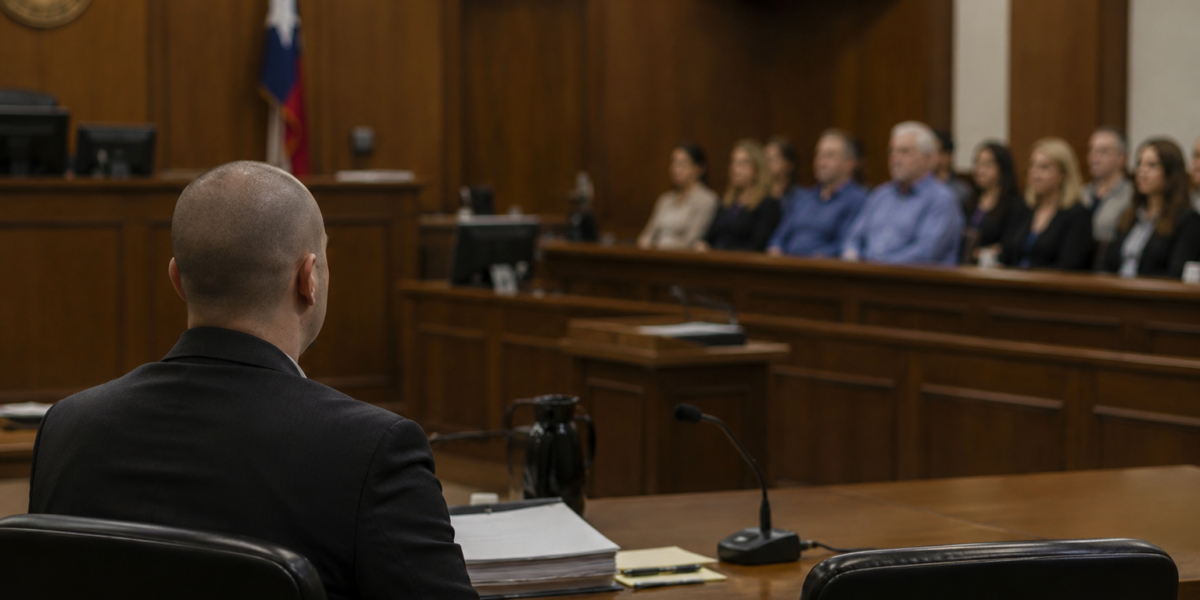
In this episode of Pushing Up Lilies, I continue Inside the Crime That Shook a Community with Part Three, focusing on the trial of the man responsible for the death of 7-year-old Athena Strand.
This is the part of the story where the legal process begins… but that doesn’t make it any easier.
As I walk through the courtroom proceedings, I do so with the same care and intention, because behind every testimony, every piece of evidence, and every legal argument is a family still living with unimaginable loss.
Trials are meant to bring answers.
They’re meant to bring accountability.
But they don’t always bring peace.
From an investigative perspective, I also share insight into what happens when a case moves from the scene into the courtroom, how evidence is presented, how timelines are reconstructed, and how the justice system works to piece together the truth in a way that can be understood by a jury.
And while this part of the story focuses on the trial…
I want to be very clear about something.
This is not about the man who committed the crime.
It is still about Athena.
Her life.
Her memory.
And the impact she left behind.
This episode contains discussion of child violence, courtroom testimony, and sensitive details surrounding the case. Please take care of yourself while listening, and step away if you need to.
EPISODE TRANSCRIPT:
00:06
Welcome to Pushing Up Lilies. I’m your host, Julie Mattson. Pushing Up Lilies is a weekly true crime podcast with spine-tingling, unusual, and terrifyingly true stories from my perspective as a forensic death investigator and a sexual assault nurse examiner.
00:24
Do I have some stories for you? Are you ready? Hey guys, welcome to another episode of Pushing Up Lilies. This is your host, Julie Mattson. I can’t even tell you how excited I am about CrimeCon. I have never been as a spectator, an exhibitor, or a creator.
00:47
So, I’m super excited to get to go this year. I’m an exhibitor. I could not get on Creator’s Row. I understand that that’s rather difficult. And so, I’m going as an exhibitor, kind of get my foot in the door.
00:58
And I’m hoping to go to Crime Cruise also in November, which travels out of Florida. So if you are planning on going, stop and see me. I would love to visit with you. I’ll have all my merch there. We’re going to do the canvas bags, pens, stickers, t-shirts, hoodies, and poker chips.
01:18
My chips are clay. I think I told y’all I ordered the clay ones. I wanted it to be like a real souvenir and not something that was easy to throw away and super lightweight. So anyway, they’re clay. I’m excited about those.
01:32
They’re cute. They’ve got like my QR code on the back. So, you can go straight to my website. But my merch will be available on the website soon. It’s all new designed stuff that will be available at CrimeCon.
01:46
The first time it’s been available was at Beyond the Crime when we went to New Mexico last month. So, it’s all kind of new design and we sold a lot of merch at Beyond the Crime. So that was so much fun.
01:59
I’m really looking forward to Crime Con. Three days, I think last year they said 6,000 people attended Caesar’s Palace and it’s May 29th through 31st and so super excited. Look forward to seeing you there.
02:13
This week, I want to talk a little more about the Athena Strand case. Again, it’s not one that I really wanted to cover, but I wanted to make sure that I covered just the facts, not guessing what’s happening or guessing what’s going on in people’s heads, but just kind of covering the story and what’s going on.
02:34
So, this episode is a heavy one. And before I get into it, again, I want to say out loud that there are a lot of cases that I cover and you just move on. And there are ones that kind of stay with you even after I stop recording.
02:48
And this is one of those because at the center of everything, we’re about to talk about, it’s not just a case and it’s not just evidence and it’s not just a defendant sitting in the courtroom. It’s a little girl.
02:59
Athena was only seven. What we’re walking through today is the sentencing phase of Tanner Horner’s trial. Now, he already pled guilty, so there’s no question about whether or not he did this. That part is done.
03:12
So now the jury is left with one decision. And it’s one of the hardest decisions any jury will ever have to make. Is he going to get life in prison without parole or the death penalty? And to get there, unfortunately, they had to sit through days of testimony and listen to witnesses who reminded the courtroom who Athena was.
03:36
Some of them walked through exactly what happened and others kind of tried to explain who Tanner Horner is and how he became the person sitting at the defense table. Now, I want to cover a little bit about like what happened during the trial days because like me, I work.
03:55
I can’t sit and watch the trial all day long. I would love to because it’s super interesting. And I did watch the O.J. Simpson trial. I remember back in the day, but that was before life started lifing.
04:09
On the first day, the tone was set pretty much. Tanner Horner stood up. He pleaded guilty. There was no drawn out trial over guilt and no uncertainty at all. It was just acknowledgement, basically. In a way, that shifts the entire weight of the trial because now the jury’s not trying to figure out if he did it.
04:31
They’re just trying to figure out what to do with the truth. Now, the prosecution opened by bringing Athena into the room. Obviously, not physically, but in the way that they talked about her. They talked about what is a normal day for her, a little girl who went to school, came home, had a regular evening ahead of her.
04:51
And that detail matters because it reminds you how ordinary this day was when this all started. There was obviously no warning. There was no sign that anything was about to go wrong. It was a normal day that turned into something completely unthinkable.
05:08
Then that day, and I did see this, Athena’s teacher took the stand. And this is always one of the moments that kind of hits differently because before you hear how a child died, you have to understand how they lived.
05:20
And she described Athena. She said she was a free spirit. She was a kid who loved to draw and write and the kind of child who leaves an impression on you. She talked about how the other students were affected by what happened.
05:34
Even years later, some of those kids are still struggling. And that tells you how far this kind of loss reaches. It’s not just contained to one family. It spreads. And many of us are touched by this because, again, we have kids and grandkids that are her age.
05:51
Athena’s stepmother also testified and her testimony brought everyone into that evening. Athena was supposed to do something simple, sort laundry while dinner was being made. And I think that detail sticks out because it’s so normal.
06:08
It’s the kind of thing happening in homes everywhere, every single day. Dinner gets ready, someone calls the kids in, and you expect them to come running. But that night, Athena did not come. At first, it didn’t seem like an emergency.
06:23
You know, our kids don’t always come the first time we call them. They thought maybe she was hiding. Maybe she was distracted. But every parent has that moment when a child is quiet for a little bit too long, but then it didn’t resolve.
06:37
And that’s when the normal evening turned into panic. As the search started and grew, law enforcement began to piece things together. At first, it looked like a missing child case, and those cases can go in a lot of different directions.
06:52
But then one detail changed everything, this package delivery, and that one piece started to narrow the focus and led investigators to Tanner. In day two, the testimony shifted into the investigation itself and the way Horner behaved.
07:09
A game warden testified about locating him. And what stood out is that Horner didn’t really resist. Sometimes people expect chaos in moments like that, but often when you see it, it’s the opposite. Someone who already knows what’s coming.
07:26
And then the lead investigator took the stand, and this is where the story started to become clearer, but also a lot more disturbing. Horner changed his story more than once. First, he said Athena had been left in a wooded area.
07:42
When nothing was found there, his story changed again, and eventually he admitted to killing her. But then he tried to separate himself from what he had done, blaming an alter ego that he called zero.
07:54
This is where the jury is really starting to make sense of what they’re hearing. Is this an attempt to avoid responsibility? Is this a reflection of mental illness? Is he trying to manipulate everyone?
08:07
At the same time, investigators were still trying to find Athena. That urgency doesn’t just go away because someone starts talking. He eventually led them to where her body was found in the water. And that moment shifts everything because until then, there’s still a part of you holding on to hope.
08:27
Very small amount of hope. But once she was found that hope was gone. Now, day three of the trial focused more on Horner’s own words. Jurors actually watched his interview, and they saw him move in and out of that zero persona.
08:46
Detectives stayed calm, which is what they’re trying to do, because of course they were trying to get information from him. And he kept changing details. He kept changing where she was and what she was wearing and how things happened.
09:02
And then there was a moment that stood out in a little bit of a different way. He asked for house arrest. He asked for an ankle monitor. And he said that he wanted to spend one last Christmas with his son.
09:15
When you hear that, it lands in a specific way because at the same time, there’s a family that will never have another Christmas with their child. I feel like the jury felt that contrast, whether they say it out loud or not.
09:29
On day four, the focus turned more into physical evidence. And this is where things become a little more concrete. The van became central to the case. Investigators processed it completely, looking for DNA, fingerprints, anything that could tell them what happened inside of that space.
09:50
Crime scene investigators testified about recovering Athena, and this is one of those parts of a trial that is clinical by necessity. But behind every word, there’s something deeply human and painful.
10:05
They’re describing the worst moment of someone’s life in technical terms, and the jury has to sit there and absorb it. They also examined Horner’s shoes, and this detail mattered because the tread pattern matched markings on Athena’s face.
10:21
That kind of evidence can’t really be explained away. It ties a person directly to what happened in a way that words cannot. Now, day five brought the medical examiner to the stand, and this is always one of the hardest moments in any trial because now there’s really no distance left.
10:40
The injuries are clearly described. Multiple blunt forced injuries, evidence of strangulation and smothering. And hearing that out loud in a courtroom really changes the atmosphere. It becomes very real and very heavy.
10:56
And then jurors have recordings of Horner’s jail calls. In one call, he described hitting a girl with his truck and panicking. In another, he laughs about being famous. And this is where jurors started kind of forming impressions that go beyond the facts because they’re listening to the tone and the emotion and to what’s missing.
11:22
On day six, more layers were added. There was digital evidence that showed that he had actually searched for information about the case after the event, but before he was arrested. So, a witness testified about an interaction with Horner one day earlier when he approached children during a delivery.
11:44
And that detail matters because it shows proximity and it shows opportunity. Then two women testified about alleged prior assaults. And this is where this expands. Now the jury is not only looking at one event, they’re being asked to consider whether there’s a pattern.
12:04
Day seven, the focus was on DNA and impact. Experts explain testing, which can be complicated because it adds a lot of weight to the evidence. And then Athena’s mother took the stand and everything kind of slowed down when that happened.
12:21
She talked about Athena as a child, how she was happy and playful and loved. And they showed photos of her. And it’s no longer just about evidence at that point. It’s about loss. On day eight, Athena’s father testified and he talked about Barbie dolls that were supposed to be Christmas gifts.
12:42
And that detail, it really stays with you because it’s so simple and so normal. It represents everything that was taken. He talked about guilt and about not being there. And that’s something that a lot of parents feel in situations like this, even when there’s nothing that they could have done.
13:03
Investigators presented video showing Horner covering the cameras, cleaning the van, moving items, and jurors heard audio from Athena’s final moments, which is something that no one in that room is ever going to forget.
13:19
After that, the prosecution rested and the defense began their case. And their focus was pretty consistent. They brought family members, teachers, and experts. They talked about childhood trauma, instability, a history of addiction in the home.
13:38
They talked about autism and mental health diagnoses, brain function, and lead exposure. They painted a picture of someone shaped by a difficult environment. And this is where things become complicated because two things can exist at the same time.
13:57
A person can have a traumatic background, but they can still be responsible for their actions. So that causes a lot of tension with the jury. And they heard people testify who described Horner as socially different and somebody who struggled to connect with others.
14:17
And they heard from family members who described chaos and instability in his life. And they heard from experts explaining how development and mental health might affect behavior. And they also heard from people who described him as kind and quiet and even sometimes sweet.
14:38
And then the state came back with a rebuttal witness focusing on future danger, on behavior in prison, and on testimony that challenged the idea that this incident was isolated. When you step back and look at the whole trial, you see two very different narratives being presented.
14:57
Of course, the prosecution focuses on Athena and her life and death and evidence and the choices. And the defense is focusing on Tanner Horner, his past, his mental health, and factors that they believe shaped who he was resulting in what he did.
15:20
And the jury has to sit there in the middle of those two stories and try to decide what justice looks like. But through it all, one thing doesn’t change. Athena was a child who went to school and came home, and she should have been safe.
15:36
She should have opened those Christmas gifts. She should have had a birthday this year and last year and the year before and milestones and a full life. Cases like this stay with you again because they make you look at your own life a little bit differently.
15:53
And that’s one reason why I got into death investigation. It really wakes you up, makes you realize you only live once. They make you pay attention to small moments that you might normally not notice or overlook.
16:09
And once the state rested, the entire tone of the courtroom shifted. Up to that point, you know, everything had kind of been centered on Athena and her life and the search and the evidence and what was done to her.
16:24
But then when the defense stood up, the focus moved almost entirely to Tanner Horner. And this is always the part of the sentencing trial that feels really uncomfortable because it’s supposed to feel uncomfortable.
16:35
The jury’s now being asked to look at the person who caused all of this and try to understand him, not excuse him and not justify what happened, but just understand him enough to decide whether he deserves to live or die.
16:50
That’s a lot of responsibility. And the defense started bringing in people who knew Horner growing up, family members, teachers, people that knew him when he was a child. And again, the picture they painted was one of instability from the very beginning.
17:07
His mother took the stand. She talked about her life, how it was an easy story. She described trauma, abuse, addiction, growing up too fast, and then having to raise a child in the middle of all of that.
17:22
She talked about dropping out of school at a young age, struggling with drugs and alcohol. And then there was a moment that she talked about Tanner finding her unresponsive and he thought she was dead from an overdose.
17:36
And when you hear that, you kind of understand what the defense is trying to show. They’re trying to say this did not start the day Athena was taken. This started years earlier in a home that was already unstable.
17:50
Other family members came in and added to that picture. They talked about Horner’s father, drug use, violence, how he’d spent time in prison, about a family system that never really had structure or stability.
18:03
And then the experts came in. This is where things get technical, but I’m going to keep it grounded in what matters. They brought in psychologists, neuropsychologists, specialists in brain development, people who study behavior and how trauma affects decision-making later in life.
18:22
They talked about autism, social deficits, about difficulty reading cues and difficulty forming relationships. And they talked about lead exposure. Apparently, he had eaten coins at one point in his life and they felt like that that could have impacted brain development or impulse control or maybe behavior in some way.
18:46
But they talked about bipolar disorder and anxiety and mental health diagnoses. And what they were building towards was this idea that Horner is not somebody who developed normally. His brain didn’t process things the way most people do.
19:03
And those differences played a role in what happened. I want to pause here kind of because this is the part where people tend to have strong reactions. Some people hear that and think, well, that explains it.
19:15
Like he’s messed up. He’s had a rough life. And other people hear that and say, that didn’t change anything. He’s a murderer. He committed murder. But the truth is the jury is being asked to sit in that tension.
19:28
They’re not being asked again to decide if he had a difficult life. That’s not being disputed. They’re being asked whether those factors matter when deciding his punishment. So, the defense also brought in teachers and people who worked with Horner as a child.
19:46
They said he was different, socially awkward, and struggled to connect with other kids. One teacher said everybody kind of thought he was odd. Another talked about how he couldn’t really form friendships, and he didn’t really understand social boundaries.
20:03
They also described some behaviors that stood out, like repetitive actions or how he had trouble controlling his emotions and even how he would sometimes eat non-food items. So unusual behaviors like that.
20:20
And again, the defense is trying to build a consistent picture, not really one isolated issue, but a pattern that started early and just continued into his adulthood. They also brought in people that knew him later in life, like coworkers and friends and acquaintances.
20:38
A lot of them said he was quiet and kind and even sometimes a little bit goofy, someone who kept to himself, was not outwardly aggressive. A former employer testified that he had a good work epic and that he showed up and did his work.
20:54
Those kinds of witnesses still matter in a sentencing trial because they speak to something very specific. They speak to whether he can function in a structured environment like prison without posing a constant threat.
21:10
But then there were other pieces of testimony, of course, that complicated that image. There was a testimony about anger, moments when he became agitated and would lash out, and behaviors that didn’t really match the idea of someone who was completely passive.
21:28
And this is where the defense was kind of challenged. They’re trying to show that he is not a future danger while also acknowledging that there were signs of instability. And then came the medical and scientific experts.
21:43
One expert talked about brain imaging and MRIs and PET scans and how certain areas of the brain related to social behavior and impulse control may not function typically. And then another talked about neurodevelopmental disorders and how exposure to substances either before birth or during early childhood can affect how the brain develops.
22:07
They explain concepts like executive functioning and decision making and the ability to plan to control impulses and to understand consequences. And again, the goal is not to say that he didn’t know what he was doing.
22:22
It’s to say that the way he processes decisions may not be the same as someone without those factors involved. There’s also some testimony about his time in jail. There was a witness who had been housed near him who said he was nonviolent and he seemed to follow the rules and didn’t cause problems.
22:42
And that’s strategic because one of the key questions the jury has to answer is whether Horner would be a future danger if he’s sentenced to life in prison. And so, if the defense can show that he can function safely in a controlled environment, that supports their argument for life without parole instead of death.
23:02
But then the state came back with a rebuttal witness and things shifted again. The state brought in testimony about how the prison system works, how inmates are classified and how they actually monitor their behavior.
23:15
And they pushed back on the idea that someone’s behavior in a short-term jail setting is enough to predict long-term safety in prison. They also brought in testimony that challenged the defense’s narrative directly.
23:30
There were some allegations of past behavior that had not been part of the defense’s presentation. So, allegations of prior misconduct, including incidents from childhood that painted a little bit of a more troubling picture.
23:47
And the jury had to start weighing credibility at this point. Who do they believe? Which version of this person feels more complete? Because at that point, they really heard two very different portrayals of the same individual.
24:02
And they heard about trauma, instability, developmental challenges. They’ve also heard about violence, manipulation, and then they know what he did to Athena. And then there was a final expert witness or witnesses, forensic psychologists who evaluated Harner directly.
24:23
So, they talked about diagnoses and his mental state and risk factors. And they explained how evaluations are done and how they look for things and how they determine things like dangerousness in the future.
24:37
And then again, it came back to kind of that central question. Is this someone who, if allowed to live in prison, would continue to pose a threat? Or is this someone who can be contained safely for the rest of his life?
24:51
And once the jury rested in a state-finished rebuttal, everything came down to closing arguments and the jury. And this is where the entire trial comes together, because now the jurors are not hearing new information.
25:04
They’re sitting with everything they’ve already heard. They’re thinking about Athena and about her teacher describing her as a free spirit and about her parents talking about Christmas gifts that were never opened and the evidence, the video, the audio, all the forensic findings.
25:21
And they’re thinking about Horner and his childhood and his mental health and the experts who tried to explain him. And they’re being asked to make a decision that can’t be undone. Life without parole means that he will spend the rest of his life in prison, but he’ll still be alive, maybe, until the other inmates get a hold of him is kind of my thought.
25:43
But the death penalty means that the state will take his life. So there’s no middle ground. And I think it’s important to say this. No verdict changes what happened to Athena and no sentence is going to bring her back.
25:57
And when the jury’s deciding what justice looks like, this is a situation where there’s really no way to make things right. And that’s something we don’t always sit with long enough because it’s easy to focus on the outcome, but the process, the weight of the decision and the responsibility placed on those 12 people matters too.
26:18
So as of now, this is where the case stands. The jury’s pretty much heard everything. They’ve been given the law. They’re left with the final question. What’s the appropriate punishment? And whatever the answer is, it’s not going to be enough because at the center of this all is still Athena, a little girl whose life was cut way too short in a way that no one can even fully understand.
26:42
And when you step away from all the legal arguments, from the experts and the strategy on both sides, that’s what remains. A child who deserved a lifetime, not a trial, not a sentencing phase, but a lifetime.
26:59
And that part stays with you. Not the courtroom, not the testimony, but Athena. I want you to hold on to that because that’s the piece that matters the most. And I’m a true believer that he should get whatever kills him the quickest.
27:19
I’m sorry if you don’t believe in the death penalty, but I think even if he got life in prison, those inmates will get a hold of him and he’ll get what’s coming. So that’s kind of where we’re at. Today is, hang on, let me look because I know we’re in day and there’s live coverage.
27:38
I always try to watch it throughout the day, but I believe we’re on day 17. And I have heard rumors that we can possibly expect a verdict today. Again, it’s not a matter of whether or not he did it. The jury is just simply trying to determine what his sentence is going to be.
27:59
I have heard rumors, and that’s kind of why I want to really try to listen today, because I’m hoping that we do get answers as far as what his punishment is going to be. It’s so hard to be fair to people that you know did something this terrible.
28:15
Like, you know, they moved his trial to Tarrick County because the crime happened in Wise County and, you know, they wanted him to get a fair trial. But, you know, it’s hard to want to be fair to somebody like that.
28:26
I would struggle. I heard something the other day. They were asking a defense attorney, you know, how do you defend somebody that you know did something wrong? And the specific attorney, I can’t remember who it was, not from Texas, said, you know, there’s absolutely no way that I could defend Tanner Horner.
28:43
And I’ve always kind of wondered, you know, how do defense attorneys bring themselves to defend somebody that they know committed the crime? I mean, my guess would be that they don’t necessarily think that the person didn’t do anything wrong, but that they’re just hired, and their job is to get them out of the charges or reduce the charges or whatever.
29:04
But that would be hard on me as a person just to like know that I got someone out of a crime that they actually did commit. I don’t know. I would struggle with that. I have a defense attorney friend that I may interview because I kind of want to hear what he has to say about this case and what he might have to say about the trial and whether or not he would defend him.
29:28
And if he did, what would he do differently? I don’t know. It’s interesting to me. Obviously, I can completely associate with the prosecution because that wouldn’t be hard. I’d want to put him down as quick as I could.
29:44
But with defense, I struggle with that psychologically and emotionally. I just don’t know if I could do that as work and live with myself. But it just seems so difficult. I know they make more money, but I don’t know.
29:58
I just don’t know if I could do it. Anyway, I am going to stand by today. I’m going to listen and I will definitely let you know if I hear a verdict. I’m sure that y’all are all following this case just as closely as I am and impatiently waiting for this trial to conclude and waiting for this jury to decide his fate.
30:20
It’s just a terrible story. I do love that Athena’s mom said that she is going to do everything she can to try to keep this from happening to other children. And that’s one thing I noticed at Beyond the Crime, and I’m sure I’ll notice at CrimeCon, there are a lot of victims and victims families and families of people who have disappeared and who are missing and families of philosophy whose exes killed their children and then just so many victims.
30:50
It’s heartwrenching. And I love meeting these people because they’re so kind and they want help so bad. And I have so many people reach out to me and ask me questions and want me to help them. And believe me, I want to, but I wouldn’t feel right charging.
31:08
And then how do you do that? Like, how do you leave your hometown for two months and go review court records in another state? Because then you’ve got airfare and you’ve got hotel and you’ve got time off work.
31:19
And I don’t know how you do it. I mean, if I was loaded, I’d do that in a heartbeat. I would do that in a heartbeat. And I would love more than anything to be able to help everybody. I do what I can, like from my house, which I feel like is not enough.
31:34
I’m obviously not one that has worked on cold cases before because I’m not in law enforcement per se. But if you have a case, you want me to look into, please don’t hesitate to reach out. I will help in any way I can.
31:49
It may be a while because I have a lot of people reaching out, but anything I can do, any of my two cents that’s worth, you know, exactly that. But I love when people reach out to me. I wish I had more time to spend on that.
32:07
Unfortunately, I do still own another business here in Texas. So trying to do all the things and finish freaking grad school. Let me tell you what, my clinical starts in two weeks. So that’s a whole nother story.
32:20
But I so appreciate y’all listening. If you’re in the area, there is some of my new merchandise at the Crime Mercantile. It is there and available for purchase. A majority of my stuff is being shipped to Vegas as we speak.
32:34
Again, if you’re coming to CrimeCon, stop by, pay me a visit. I’m in the exhibitor’s hall. And I hope you’ll have an amazing week and just hug your littles and hug your family. I will talk to y’all soon.
32:47
And when this verdict comes out, I’m going to be back on here as soon as I can to let y’all know. I’m sure you’ll probably hear it way before you hear it from me. Have a great week. I’ll talk to y’all next week.
32:57
Bye, y’all. Thank you so much for joining me today on Pushing Up Lilies. If you like this podcast and would like to share with others, please do me a quick favor and leave a review on Apple Podcast. This helps to make the podcast more visible to the public.
33:14
Thanks again for spending your time with me and be sure to visit me at pushinguplilies.com for merchandise in past episodes.