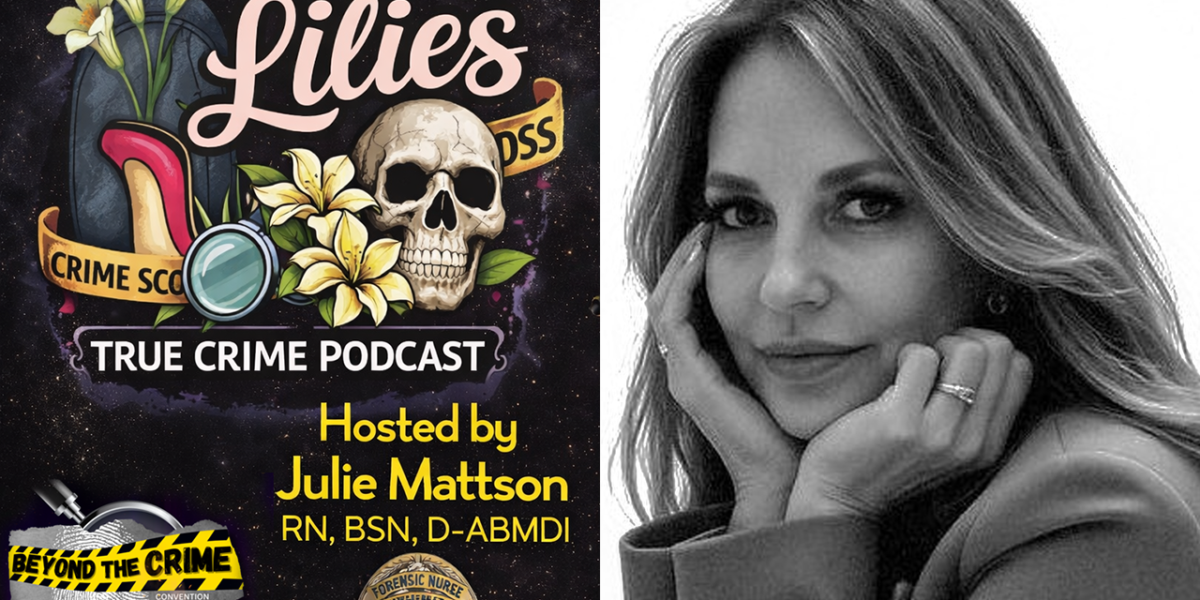
In this episode of Pushing Up Lilies, I’m coming to you live from Beyond the Crime 2026 at the Isleta Casino and Resort! And instead of focusing on just one case, I’m sharing something a little more personal… and a lot more unpredictable. I take you through my journey from the emergency room to becoming a forensic death investigator, and how my perspective on death, trauma, and investigation completely transformed along the way. This career wasn’t something I ever imagined for myself, especially as someone who once feared death so deeply, but it became one of the most defining parts of my life. From there, I share some of the cases that have stayed with me over the years, the strange, the shocking, the heartbreaking, and yes… even the ones that make you shake your head and say, there’s no way that actually happened. Because in this field, no two scenes are ever the same. We’re talking about everything from unexpected discoveries and bizarre death scenes to the realities of working with families on the worst day of their lives. I also open up about the emotional weight of this work, the importance of mental health, and how I learned to balance compassion with professionalism in situations most people never experience. This episode is raw, real, and at times unbelievable, but it’s also a look behind the curtain at what death investigation truly looks like, beyond what you see on TV. And if you’ve ever wondered what it’s really like to do this job…this is one you won’t forget. * Listener discretion is advised. EPISODE TRANSCRIPT: 00:06 Welcome to Pushing Up Lilies. I’m your host, Julie Mattson. Pushing Up Lilies is a weekly true crime podcast with spine-tingling, unusual, and terrifyingly true stories from my perspective as a forensic death investigator and a sexual assault nurse examiner. 00:24 Do I have some stories for you? Are you ready? Hey, this is Julie with Pushing Up Lilies again here for another episode. I’m happy to be LIVE, here at the Isleta Casino and Resort, and we’re at Beyond the Crime. 00:43 So, this is really exciting. And I thought instead of like telling one specific story, I would kind of share a little bit about my career and then tell some stories that kind of stand out because some of them are strange, really strange. 00:57 So, if you told me, though, years ago that I was going to be around death, I would have said there’s absolutely no way. I was terrified of death when I was a kid. I was afraid of dying. Every day I thought that might be the last day I saw my parents. 01:09 So, it was really weird. Like I obsessed about it. So, it was really crazy that I ended up in this career field. I worked in the ER for a long time. I was a brand new nurse. And of course, I wanted to fix everything and help everybody get better and stabilize them. 01:24 And so, when someone died, I felt like a failure. I would go home and kind of feel defeated. Like, what did we do wrong? What could we have done different? It was just heavy, you know, just a heavy feeling. 01:37 I always felt like we’d done something wrong, even when I knew we did everything right. So it was, it was a weird guilt feeling. But I learned fast in the ER. It’s very fast, unpredictable. And we never knew what we were going to get. 01:50 Saw a lot of trauma, did a lot of CPR. And we still had to be calm, which was learned. Because at first, you just want to panic because everything’s going fast and people are hurting and screaming and crying and pushing their call bell. 02:06 And it’s just, you start to get frantic, but you can’t ever show it. So, we always had to stay calm, but it really built confidence and resilience in me and exposed me to a lot of situations that people never see. 02:20 CPR was always hard, especially when it was someone I knew. Many times, in a small town, you end up doing CPR on, I did CPR on my doctor. Like, yeah, he coded comes in, you know, and it was like, oh my God. 02:33 And he did not make it. And again, you just feel because I knew his family. I knew his dad. I knew his kids. But that silence is really heavy and is really hard for me when they gave up the fight. We had to give up the fight. 02:49 But I always saw people in their worst day, and I saw trauma and fear and illness and a lot of resilience. But I had to stay focused, and I found myself asking questions like beyond treatment. So that’s when I realized maybe I would be a good investigator, you know, like I want to be nosy, but we always want to ask questions that are inappropriate. 03:13 And so, when I got a job as a death investigator, it was my job. So, I could be nosy and I was getting paid for it. So, it was kind of cool. But I remember the first time I saw a death investigator come into the ER when we lost a patient. 03:26 And I think it was a hanging. He’s 80 years old now. So, he’s still alive. But I asked him, what can I do to get your job? And a lot of people ask me that now. And he’s like, go to all the trainings you can. 03:38 You don’t have to pay a million dollars but get a certificate that says you learned and keep it behind your resume and just keep building it. When people see your desire to learn and the fact that you’ve educated yourself, they will know that you’re serious about it and take you