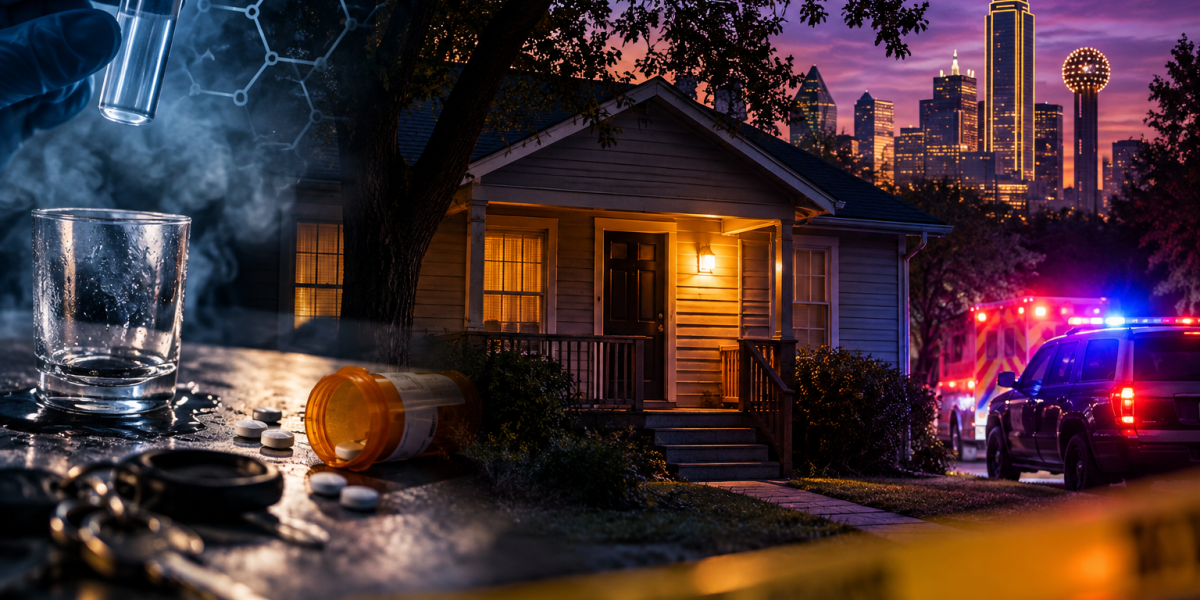
Four people found unconscious inside the same house. Three dead. One survivor. No obvious injuries, no clear explanation, and weeks later, still no publicly confirmed cause of death. When I heard about what happened on Berger Avenue in South Dallas, I immediately thought about the questions I would be asking if I were called to that scene. On August 31, 2026, emergency responders discovered four adults unconscious inside a residence. Carlos Alonso Celorio, Martin Rodela Jr., and Katoya Deshae Ferrell were pronounced dead, while a fourth person was transported to the hospital in critical condition. Neighbors reported activity at the house earlier that day, and speculation quickly began. But as a death investigator, I know how dangerous it can be to settle on an explanation before the evidence supports it. In this episode of Pushing Up Lilies, I’m taking you inside the investigative process to explore what happens when multiple people become unconscious in the same environment. What did they have in common? What might the scene reveal? And how could the person who survived help investigators understand what happened? I’ll walk you through how I would approach a case like this, from evaluating possible environmental hazards and documenting the original scene to examining food, drinks, medications, witness accounts, and medical evidence. We’ll also discuss why autopsy findings, toxicology, and the survivor’s hospital records may become essential pieces of the investigation. One of the most important lessons from my years in forensic death investigation is that a scene doesn’t always tell the story you expect. Something that seems insignificant when you first walk through the door could eventually become the detail that changes everything. As of this recording, the final causes and manners of death had not been publicly established, and authorities had not classified the deaths as homicides. I wasn’t involved in this investigation, and I’m not here to turn speculation into fact. Three people lost their lives, another survived, and their families deserve answers grounded in evidence. What happened inside that house on Berger Avenue? That’s the mystery we’re examining this week. Content Note: This episode discusses unexplained deaths, potential toxic exposures, and death investigation procedures. EPISODE TRANSCRIPT: 00:06 Welcome to Pushing Up Lilies. I’m your host, Julie Mattson. 00:10 Pushing Up Lilies is a weekly true crime podcast with spine-tingling, unusual, and terrifyingly true stories from my perspective as a forensic death investigator and a sexual assault nurse examiner. 00:24 Do I have some stories for you? Are you ready? Hey, guys. We’re back for another episode of Pushing Up Lilies. So glad that y’all could join me. 00:36 I am hurrying and rushing to get ready for this murder mystery dinner. Buy your tickets soon. Again, it’s on Eventbrite, so don’t forget. It’s gonna be October 10th, and it’s gonna be so much fun. 00:48 I’d just hate for y’all to miss it. Tickets are limited. We’re limiting it, I think we said, to 70 people or so. So be sure and get online and get ’em. I wanna talk to y’all this week about a story. 01:01 It’s here local, and it’s kinda crazy because I remember my old coworkers talking about it, but I didn’t get to be in on it. 01:09 And so that’s the hardest part for me now that I don’t have that job is to not know what’s happening. 01:15 Because used to, when something like this happened, everyone would call me and be like, “What’s going on?” And until someone died, I didn’t know, so they would know just as much as I would if they turned their scanner on. 01:28 But anyway, this is a story about three people dead and one survivor, and we’re gonna talk about what happened on Berger Avenue. 01:39 So, four people are found unconscious, and they’re all inside the same home in South Dallas. Now, three of them are dead, but one is alive, and there’s no obvious traumatic injury. 01:53 Police reportedly don’t find any obvious drug paraphernalia. 01:57 There’s no gas leak or anything like that, and investigators initially find nothing at the scene that immediately explains why four adults became unconscious at the same time and the same place. 02:10 So, three weeks later, we know the names of the people who died, but we still don’t publicly know what killed them. 02:18 And from a death investigation standpoint, this is exactly the kind of scene where what you don’t know matters just as much as what you do know, and this is what made the job so fun. 02:30 So, when multiple people become ill or die in the same environment, you have to ask a very different set of questions. What did they breathe? What did they eat? Did they drink something? 02:43 What medications or what substances did all of them take? And how long were they together? Who became symptomatic first? Because you know someone did. And were there other people there earlier? 02:55 Did anyone leave before the emergency, before the breathing stopped? And most importantly, what did these four people have in common? 03:05 So today we’re gonna go inside the investigation of the Berger Avenue deaths in South Dallas. 03:11 I’m gonna walk you through what we know, what we don’t know, and what a forensic death investigator would be looking for in a case like this. Now, again, I was not involved in this investigation. 03:24 I’m discussing the case from the perspective of my experience as a forensic nurse death investigator using publicly available information and established death investigation practices. 03:37 So, despite all the speculation surrounding this case, there’s one thing we have to remember. These deaths remain unexplained publicly, and unexplained doesn’t necessarily mean suspicious. 03:52 It doesn’t mean an overdose. It doesn’t mean someone was poisoned. It means that the investigation simply is not finished. So, let’s talk first about the call. 04:05 Monday, August 31st, 2026, Dallas Fire Rescue received what was described as a