
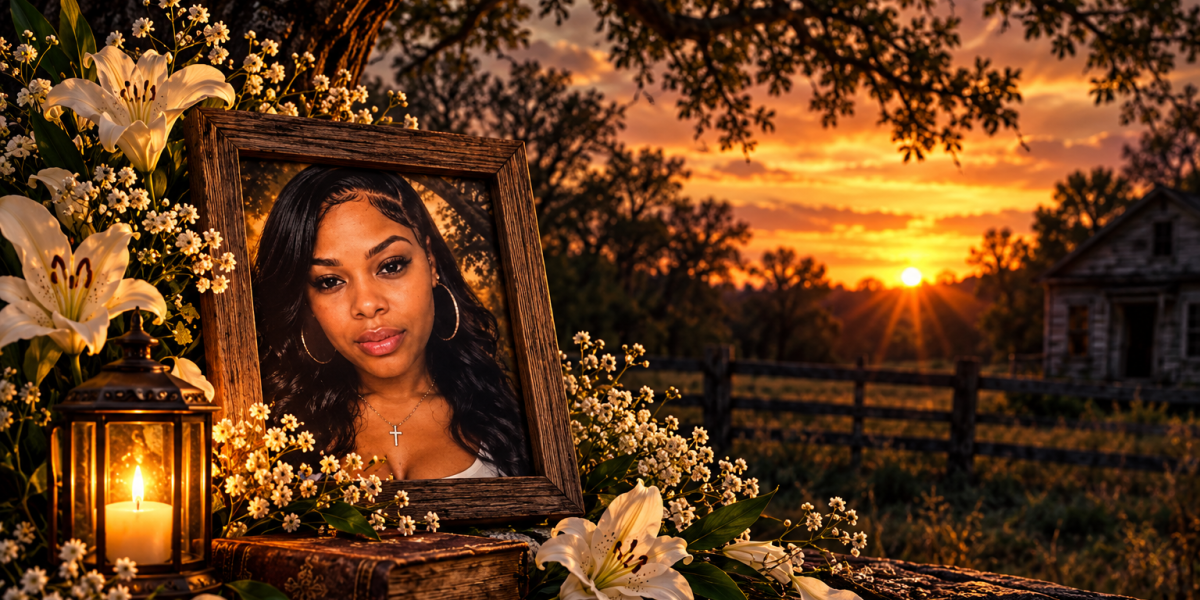
When you walk into a death scene and see someone hanging from a tree, it would be easy to assume you already know what happened. But as a death investigator, that’s exactly what you cannot do. In this episode, I’m talking about the death of 29-year-old Tasia Fortune, a mother of four who was found hanging from a tree behind a vacant home in Jackson, Mississippi. Investigators now believe Tasia was already dead before her body was suspended and that the scene was staged. Her death has been classified as a homicide, although her exact medical cause of death had not been publicly released when I recorded this episode. I’m going to walk you through this scene the way I would have approached it as a forensic nurse death investigator. What would I photograph? What would I look for around the tree and on the ground? Does the ligature make sense? Could she have reached the suspension point? What can lividity tell us about where her body was positioned after death? Are there injuries that don’t fit the scene? Could her clothing, shoes, DNA, phone records or surveillance footage tell us that she had been somewhere else? And this case demonstrates something I learned very quickly doing this work: your job isn’t to decide what the scene looks like. Your job is to determine whether the physical evidence supports what it looks like. Sometimes one piece of evidence that doesn’t fit is the piece you need to pay the most attention to. EPISODE TRANSCRIPT: 00:06 Welcome to Pushing Up Lilies. I’m your host, Julie Mattson. 00:10 Pushing Up Lilies is a weekly true crime podcast with spine-tingling, unusual, and terrifyingly true stories from my perspective as a forensic death investigator and a sexual assault nurse examiner. 00:24 Do I have some stories for you. Are you ready? Hey, guys. Welcome back to another episode of Pushing Up Lilies. I’m so glad that you’re here to join me again. 00:37 Anyway, I wanna talk about the hanging that wasn’t the cause of death. Most of y’all know I am Julie Matson, registered nurse, forensic nurse, and retired forensic nurse death investigator. 00:52 Today, I wanna talk to you about a case that immediately caught my attention, and the reason is because it shows exactly why you can’t walk into a death scene and look at one obvious thing and then decide automatically that you know what happened. 01:09 So, when most people hear that someone was found hanging from a tree, automatically your mind goes to suicide, and most people would. I understand why. 01:22 You see a body hanging, and your brain wants to automatically connect the dots. But as a death investigator, I don’t get to do that. 01:31 The position of the body tells me just that, how I found the person, but it does not automatically tell me how that person died, and there’s a big difference. 01:42 Now, that brings us to 29-year-old Tasia Fortune. Now, I don’t know if y’all have heard this story. Tasia was a mother of four. 01:52 She was African American female, found hanging from a tree behind a vacant home in Jackson, Mississippi. Now, this happened on August 3rd. 02:02 Because of where she was found and the way her body was positioned, this case immediately generated fear and questions and national attention. 02:13 But as the investigation developed, authorities actually revealed something incredibly important. Investigators actually believe that Tasia was already dead before her body was placed in the tree. 02:25 And so according to testimony from a Jackson police detective, this hanging had been staged. And cases like this are always interesting to me. 02:36 But today, I wanna talk to you a little bit about what happened to Tasia, and I also want to approach this the way that I would have approached it working a death scene. 02:47 If I walked into a scene and saw somebody hanging, I wanna let you know, what would I be looking for? What would make me start questioning suicide? 02:58 And what could tell me that this person died somewhere else and was actually moved? And what findings might tell the forensic pathologist that the person was already dead before they were suspended? 03:13 So, this was the fun part of my job, to kinda put the puzzle pieces together. Because when you work with death investigation, you learn pretty quickly that things are not always what they look like. 03:25 So, let’s talk a little bit about her being discovered. Tasia was found behind a vacant home, and this was in the 500 block of Road of Remembrance in West Jackson. So again, we’re in Mississippi. 03:44 Now, right away, that location would make me start asking questions. 03:50 It doesn’t really mean because suicide couldn’t have happened there, because people die in all kinds of locations of suicide, but I still wanna know, like, why she was there. 04:01 Why was she behind that abandoned house? Did she have some connection to that property, or had anyone seen her there before? Did she walk there? Was she brought there? W- was there a vehicle there? 04:17 Why was she there? Was she alone? Most importantly, is it actually where she died, or is this just where somebody left her body? 04:26 So that distinction is huge in death investigation because we talk about, and I know I’ve talked about this before with y’all, primary and secondary scenes. 04:37 So many deaths have two scenes, and the primary scene is gonna be where the fatal event occurred. Now, the secondary scene is somewhere the body, or other evidence was moved afterwards. 04:51 So, investigators in Tasia’s case now believe that she was killed somewhere else before being brought to the location where her body was actually discovered. 05:02 So, if I learn that, it’s gonna change the entire investigation. 05:09 When I first go to a scene
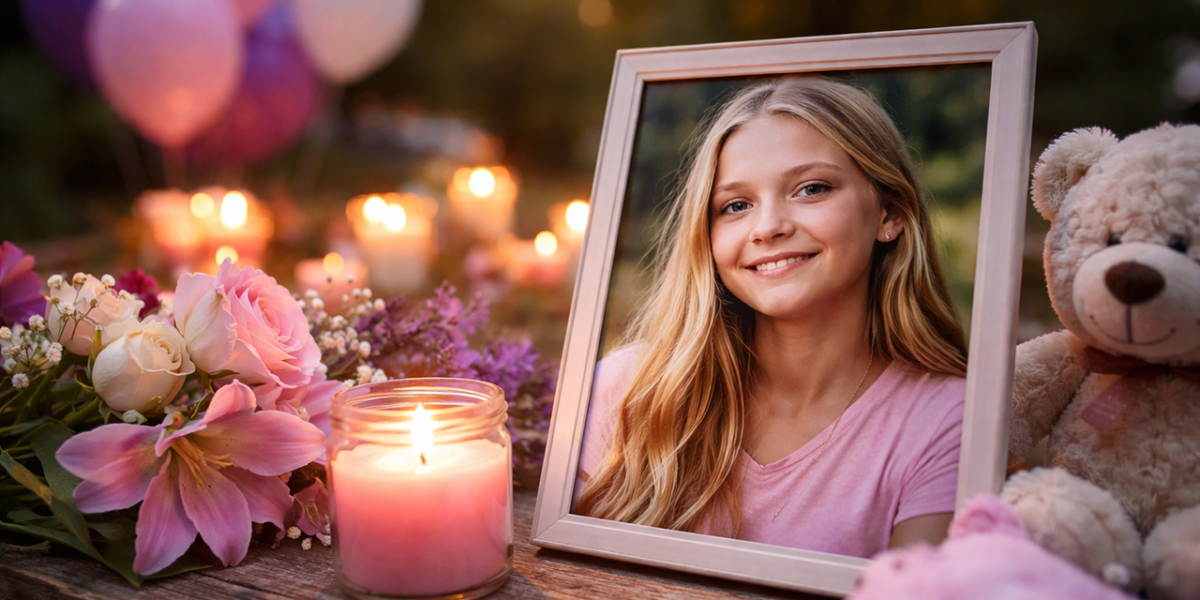
A Case That Still Hurts: Revisiting Aubreigh Wyatt’s Story
Hey y’all, it’s Julie Mattson… and today we’re revisiting a case that still sits heavy on my heart. In this episode of Pushing Up Lilies, I’m talking about thirteen-year-old Aubreigh Wyatt, a young girl whose life ended far too soon after enduring relentless bullying. We’re going to walk through her story together, not just to understand what happened, but to really look at the deeper impact bullying can have on someone’s life… especially at such a vulnerable age. I’ll share some of the signs that often go unnoticed, why open communication matters so much, and what we can all do to help protect the people around us, especially our kids. This one’s tough, y’all… but it’s important. Because sometimes the hardest conversations are the ones that can make the biggest difference. So if you’re listening today, I’m really glad you’re here. Let’s talk about it. * Listener discretion is advised. EPISODE TRANSCRIPT: 0:06 Welcome to Pushing Up Lilies. 0:08 I’m your host, Julie Mattson. 0:10 Pushing Up Lilies is a weekly True Crime podcast with spine tingling, unusual and terrifyingly true stories from my perspective as a forensic death investigator and a sexual assault nurse examiner. 0:24 Do I have some stories for you? 0:26 Are you ready? 0:31 Hey, y’all, I hope everybody is having a great week. 0:34 Our weather in Texas has been amazing. 0:38 It hasn’t been as hot as it was earlier in the month, which kind of surprises me, but we’ll be going to North Dakota soon at the end of the month. 0:47 I’m looking forward to the weather there. 0:49 I think it’s normally like in the seventies, we’re going to go to South Dakota and North Dakota. 0:55 But first I have a death investigation conference. 0:59 It’s the International Association of Coroners and Medical Examiners. 1:05 They have a training symposium every year and it’s in Vegas. 1:11 We go, well, we alternate in our office. 1:14 The investigators kind of take turns going because we have to get continuing education just like you have to in a lot of different career fields. 1:25 And it’s interesting, we hear a lot of really cool stories from a lot of investigators and pathologists all over the US or all over the world actually, to hear stories about deaths that occur in ways that we don’t really get to experience in our county. 1:44 For example, we had someone from Louisiana talking about alligator deaths after Katrina. 1:54 You know, we don’t have, well, I’m not going to say we don’t have alligators in Texas. 1:58 There have been a lot of pictures of huge alligators seen in Texas and seen in Texas Lakes. 2:06 But, as of yet, we in our county have not had an alligator related death, but to hear like deaths related to shark attacks, which, you know, we don’t have any oceans in Denton. 2:20 And so we have not experienced that. 2:23 And so it’s just interesting because certain parts of the country have deaths that we’ll probably never see here. 2:31 It’s interesting to see how they handle them. 2:34 And we get to see the photos too which I know may seem morbid, but I don’t know, I just, we really learn a lot. 2:43 It’s great to network and to get to know people. 2:48 I met some women at the conference in Atlanta when I went to the Child death investigation training that are going to be in Vegas. 2:55 I’m looking forward to seeing them again. 2:58 It’s fun. 2:59 It’s definitely a community kind of like, you know, firefighters and police officers, we are our own community, and we are filled with different people. 3:11 I absolutely love it. 3:12 I am looking forward to that conference as well and that is coming up. 3:17 We’ll be gone next week, and they have a lot of events for us. 3:21 A lot of fun things. 3:23 And I also occasionally I think the last time I went, I got to see a couple of doctors I used to work with in Houston. 3:30 It’s kind of like a reunion of sorts. 3:32 That’ll be a lot of fun. 3:35 I was at work yesterday and I wanted to kind of tell you all about part of my day. 3:42 It’s humbling to say the least. 3:44 But this is what I dislike. 3:48 I think the most about this career field. 3:52 And I think a lot of people will agree having to notify family of a death. 4:00 It’s always been the hardest part for me. 4:03 I know that I just always kind of imagine myself on the other end of the conversation. 4:09 And I’m sure that, you know, a lot of people when we have to do this question, whether or not we are, who we say we are. 4:19 A lot of people initially think that it’s a joke or that we’re kidding or it’s not possible, but I do not like calling people to tell them that their loved one has passed away. 4:33 We don’t like to do that. 4:35 We will typically go to the residence and tell them with an officer, but in this case, it was out of county, and I wasn’t able to or in these two cases, and I didn’t have addresses. 4:47 I didn’t know where to go. 4:50 Sometimes the urgency is of course, letting the family know as soon as possible. 4:56 In one of the cases, the gentleman was transported there from a public facility. 5:05 And so his wife did not know. If it happens to someone at home, obviously, you know, normally their family is going to find him. 5:13 But in this particular case, he was at a public venue and was found unresponsive and was transported to the hospital. 5:21 She did not know I did not have a

People’s Choice Replay: From Bullying to Tragedy – The Heartbreaking Case of Aubreigh Wyatt
In this episode of Pushing Up Lilies, we take a look at two very recent cases that highlight the severe consequences of toxic relationships and senseless violence. First, we’ll explore the tragic story of the missing Georgia firefighters who were found dead after trying to end a toxic relationship. The details of their disappearance and subsequent discovery reveal the dark side of relationships gone horribly wrong.

Suicide and the Dark Side of the Holidays
In this episode, I’m diving into a heartbreaking case of a man who took his own life while on vacation with his family—a devastating reminder that even joyful moments can be overshadowed by personal struggles.
From Bullying to Tragedy: The Heartbreaking Case of Aubreigh Wyatt
In this episode of Pushing Up Lilies, we take a look at two very recent cases that highlight the severe consequences of toxic relationships and senseless violence. First, we’ll explore the tragic story of the missing Georgia firefighters who were found dead after trying to end a toxic relationship. The details of their disappearance and subsequent discovery reveal the dark side of relationships gone horribly wrong.