

When I first started looking into the death of two-year-old Barrett Walsh, one detail immediately stood out to me: his mother, Corie Walsh, had reportedly been closely following the Lindsay Clancy trial and discussing it with friends just hours before Barrett was found. The similarities between the two cases are difficult to ignore. Both involve mothers accused of killing young children inside their family homes, suicide attempts, ligatures, and defenses centered around severe mental illness or psychosis. But similarities aren’t evidence, and they certainly don’t prove that one case inspired another. In this episode of Pushing Up Lilies, I want to slow the story down and look beyond that headline. Barrett, whose nickname was Bear, was found in the basement of his Illinois home with a ligature around his neck. A neighbor lowered him, began CPR, and called 911. Corie was found elsewhere in the home with injuries believed to be self-inflicted. Prosecutors have since charged her with three counts of first-degree murder, while her attorneys say she was experiencing a psychotic episode. From a death investigator’s perspective, though, those facts are only the beginning. I’m taking you through how I would approach a scene like this: documenting Barrett’s original position before lifesaving efforts changed the scene, examining the ligature and suspension point, preserving digital evidence, reconstructing the timeline, documenting medications and other evidence inside the home, and separating what witnesses actually observed from what they interpreted. We’ll also talk about Corie’s reported statements, the role mental illness may ultimately play in her defense, and why investigators have to be extremely careful about confirmation bias. If you walk into a case already believing it’s a Lindsay Clancy copycat, every message, search, and piece of evidence risks being interpreted through that assumption. There is still a great deal we don’t know. As of the recording of this episode, the final autopsy and toxicology findings had not been publicly released, the digital investigation was still incomplete, and Corie Walsh had not gone to trial. She remains presumed innocent unless and until the charges against her are proven in court. And through all of this, I don’t want Barrett to become a footnote in a story about his mother or the Lindsay Clancy comparison. He was two years old. His nickname was Bear. He deserved protection in life, and in death, he deserves an investigation built on facts, accuracy, and dignity. Content Note: This episode discusses the death of a child, ligature asphyxia, self-harm, alleged homicide, suicide, and severe mental illness. EPISODE TRANSCRIPT: 00:06 Welcome to Pushing Up Lilies. I’m your host, Julie Mattson. 00:10 Pushing Up Lilies is a weekly true crime podcast with spine-tingling, unusual, and terrifyingly true stories from my perspective as a forensic death investigator and a sexual assault nurse examiner. 00:24 Do I have some stories for you? Are you ready? Hey, guys, I’m coming to you from my closet again tonight. I wanna tell you a little bit about a case that I’ve been investigating. 00:39 It does allege violence against a child, self-harm, severe mental illness. So again, I like to say this at the very beginning, decide right now whether listening to this is right for you or not. 00:54 This is a case about Corie Walsh. Now, I don’t know if y’all have heard of Corie. It has a lot of clear parallels to Lindsay Clancy. 01:03 There’s also a lot of differences, so we’re gonna kinda talk about that. 01:06 Both of the cases, of course, involve mothers accused of killing a young child or children inside a family home, followed by a suicide attempt. 01:17 Now, mental illness also sits on the center of both of these defenses. Clancy’s attorney said that she was suffering from postpartum psychosis and that she was not criminally responsible. 01:29 Now, Walsh’s attorney, who’s Andrea Lyon is her name, she says that Walsh experienced just a psychotic episode. Now, the biggest difference is what authorities say about the mental states. 01:42 In Walsh’s case, prosecutors said that she told investigators that she believed that two-year-old Barrett was the devil and the Antichrist, and her attorney says that this supports the fact that she was psychotic at the time. 01:57 Now, Clancy’s case is a little bit different. 01:59 As we all know, the dispute at trial focused heavily on whether or not she understood the nature of her actions despite the fact that she had psychiatric illness. 02:11 We know that she had a psychiatric illness, but did she understand what she did? Did she know that it was wrong? Now, there’s another real unusual connection between these two cases. 02:23 Walsh had been, strangely enough, very invested in the Clancy trial, and so she had been texting friends about the Clancy trial hours before Barrett was found. 02:34 Now, that makes the comparison really interesting. 02:37 But still, it has not been established that Clancy’s case caused or inspired Barrett’s killing, and so Walsh’s defense strongly rejects the idea that this was a copycat crime. 02:53 Now, I know I talked about this last week. I’m always fearful when I watch a movie that somebody’s gonna be like, “Hey, that looks like a good idea. Let’s do that. Let’s try that. 03:02 I’ve always wanted to do it.” Most of the time, criminals have probably already got in their mind what they wanna do, but the stories always kinda scare me that somebody’s gonna jump out and be like, “I wanna try that.” Now, the outcomes of these two cases are also at very different stages. 03:18 As we all know, Clancy admitted to killing the three children. Her trial that recently ended in a mistrial because the jury failed to reach a unanimous verdict. 03:28 Now, Walsh has only recently been charged, so the allegations against her have not been tested. She’s not gone to trial. We don’t know what’s happening with this one. 03:37 Now, the really compelling question, was she copying
Eye Drops and Lies: The Richard Young Story
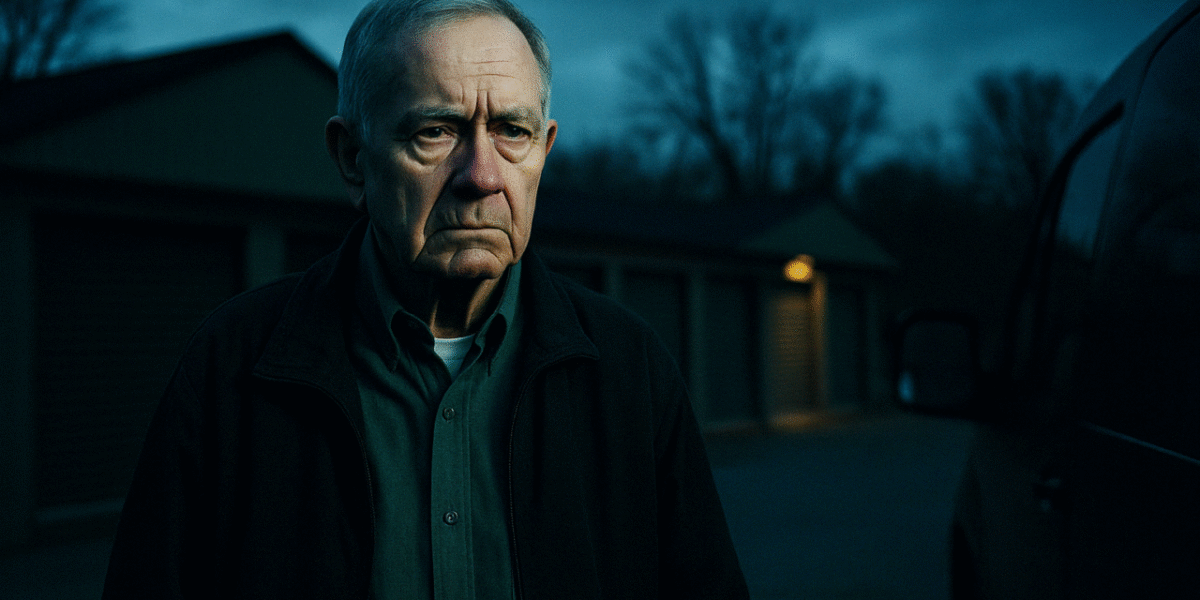
Hey y’all, it’s Julie Mattson, and in this week’s episode of Pushing Up Lilies, we’re diving into a heartbreaking case of betrayal that shocked the small town of Maquon, Illinois. This is the story of 71-year-old Police Chief Richard Young, a man who served his community with integrity and compassion. Even after retirement, he remained a mentor and protector to those around him. But behind closed doors, the person he trusted most, his longtime partner of 30 years, Marcy Oglesby, was slowly poisoning him. As Richard’s health began to fail in 2021, friends noticed the changes: dizziness, fatigue, erratic heart rhythms. But Richard dismissed it, leaning on the woman he loved, who was cooking his meals and preparing his drinks… with a hidden ingredient. It turns out, Marcy was slipping tetrahydrozoline, found in over-the-counter eye drops, into his food over a period of months. In today’s episode, I’ll walk you through the chilling details of this case, the toxicology behind the poison, and the shocking discovery made in a nearby storage unit that finally revealed the horrifying truth. * Listener discretion is advised. EPISODE TRANSCRIPT:00:06 Welcome to Pushing Up Lilies. I’m your host, Julie Matson. Pushing Up Lilies is a weekly true crime podcast with spine tingling, unusual and terrifyingly true stories from my perspective as a forensic death investigator and a sexual assault nurse examiner. 00:24 Do I have some stories for you? Are you ready? Hey guys, welcome back to another episode of Pushing Up Lilies. I wanted to say hello to all my new followers that I picked up from the CrimeCon 2026 Facebook page. 00:44 It’s so welcoming to post something and to just kind of share your podcast with other people who are going down the same road that you are trying to get into CrimeCon 2026, and I’ve already submitted my application. 01:00 I’ve tried to get in before and wasn’t able to. I’m kind of just trying to promote myself a little bit more so any help that you can give me would be much appreciated if you’re able to share my podcast, tell your friends about it. 01:14 Sharing it on your Facebook page helps a lot. For them to actually download it on Apple, Google, Pandora, iHeart, Spotify, all the different platforms, that’s what gets me recognition. So, if you like my Facebook page, thank you so much, but I need you to actually go to the platform and download it. 01:38 I have over 175 episodes there and I would love for you to listen to them. Of course, not all of them at one time. I mean if you could that’d be great, but a lot of the stories are local stories that I’ve worked, cases that I’ve been a part of. 01:56 Many of them are cases from all over the world. This week has been pretty busy. On Tuesday we are off for Veterans Day and so actually get the luxury of working from home, which is awesome. Some of the bigger offices don’t get that advantage because they have to be in the office all the time because bodies are coming in and bodies are going out and our office is small enough that we don’t actually have to have someone there all the time. 02:23 So, we do get the luxury of working from home when there’s a county holiday. Now we don’t have admin to answer the phone so many times it’s still busy, but I think the general public knows that we’re closed and so unless it’s an emergency they probably should not expect an answer from our office. 02:45 Of course, everyone always has the ability to contact dispatch and page the investigator on call. But you know that’s part of signing up for this job and just like being a nurse you know we knew when we did this that there would not be any days off unless we requested them. 03:02 Today I want to talk to you a little bit about police chief Richard Young. Now imagine a killer who doesn’t use a gun or a knife, there’s no forced entry, there’s no struggle, there’s just a few drops of something from the medicine cabinet. 03:23 Today we’re diving into a case where love turned lethal. A respected Illinois police chief was slowly poisoned to death by the woman he trusted the most and the weapon was ordinary eye drops. And I’d heard of this before, not this particular story, but I guess back when I was dating and there was so much fear of GHB and Rohypnol and date rape drugs and kidnapping and it was scary when you’d go out because you always feared that and you never left your drink, 04:01 you never set it down, you didn’t trust anybody with it. I had heard of people actually putting eye drops in people’s drinks and if you don’t give them too much you know it can cause nausea, vomiting, diarrhea, those types of things but of course if you give them too much you can actually kill them. 04:20 But I’ve heard of cases of people getting sick from people putting visine in their drinks at bars. This is a story of 71 year old police chief Richard Young. Now Richard was poisoned over a period of months by his long-time partner 53 year old Marcy Oglesby. 04:45 Maquon, Illinois is a small quiet community, and Richard Young was its heart. So as police chief he protected and served with honesty and compassion. described him as loyal, devoted, and kind. Now, after retiring, as many officers do, he still helped his neighbors and mentored younger, new police officers. 05:14 He shared his life with Marcy Oglesby, and the two had been together for about 30 years. They lived across from a small storage facility, one that would later hold a horrifying secret. By summer of 2021, Richard’s health began to fail. 05:34 He was fatigued,